In the realm of industrial automation and robotics, the precise detection of objects and measurement of distances is paramount. Two pivotal technologies that have revolutionized this domain are ultrasonic distance sensors and proximity sensors. While both serve the fundamental purpose of sensing, their operational principles, applications, and advantages differ significantly, making each suitable for specific scenarios in modern engineering.
Ultrasonic distance sensors operate on the principle of sound wave propagation. These sensors emit high-frequency sound waves, typically above 20 kHz, which are inaudible to the human ear. The waves travel through the air until they encounter an object. Upon striking the object, the sound waves are reflected back toward the sensor. A receiver within the sensor then captures these echoes. By precisely measuring the time interval between the emission of the sound pulse and the reception of its echo, the sensor calculates the distance to the object using the known speed of sound in the medium (usually air). This time-of-flight (ToF) method allows for highly accurate distance measurements over considerable ranges, often from a few centimeters up to several meters. One of the standout features of ultrasonic sensors is their insensitivity to color, transparency, or surface texture of the target object. They can reliably detect liquids, transparent glass, and even irregular surfaces, making them exceptionally versatile. Common applications include liquid level measurement in tanks, object detection in automated guided vehicles (AGVs), parking assistance systems in automotive industries, and height monitoring in packaging lines. However, their performance can be influenced by environmental factors such as temperature, humidity, and air turbulence, which affect the speed of sound. Additionally, very soft or sound-absorbing materials may not reflect waves effectively, posing a limitation.
Proximity sensors, on the other hand, are designed to detect the presence or absence of an object within a close range without any physical contact. They come in various types based on different sensing technologies, with inductive and capacitive being the most prevalent in industrial settings. Inductive proximity sensors generate an electromagnetic field. When a metallic object enters this field, it induces eddy currents within the object, causing a change in the sensor's oscillation amplitude. This change triggers a switch signal. These sensors are exclusively for detecting metals and are highly reliable in harsh environments with dust, oil, or moisture. They are widely used in machine automation for position sensing, counting metal parts on conveyor belts, and as safety interlocks. Capacitive proximity sensors create an electrostatic field. They can detect both metallic and non-metallic materials, including liquids, plastics, and wood, by sensing changes in capacitance when an object enters the field. This makes them suitable for level detection of non-conductive materials, such as detecting the fill level of a plastic bottle or presence of paper stacks. Other variants include photoelectric proximity sensors, which use light beams, and magnetic proximity sensors, which respond to magnetic fields. Proximity sensors generally offer very fast response times, high switching frequencies, and are compact in size. Their sensing range is typically limited, from a few millimeters to about 60 millimeters, which is ideal for precise, close-range detection tasks.
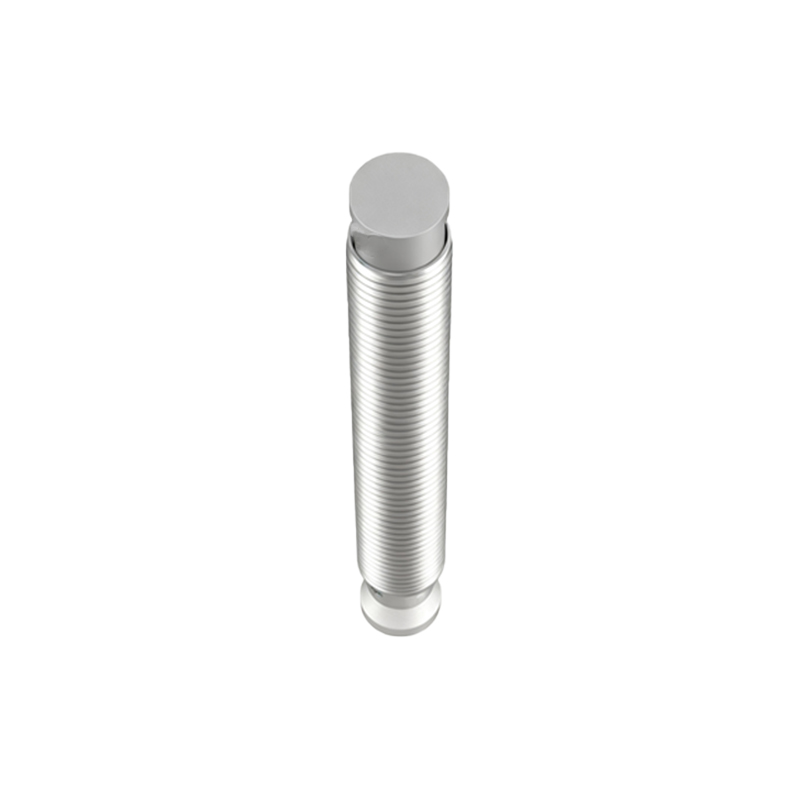
The choice between an ultrasonic distance sensor and a proximity sensor hinges on the specific application requirements. If the need is for accurate distance measurement over a longer range, especially for non-metallic or variably textured objects, ultrasonic sensors are the superior choice. For high-speed, close-range detection of objects—particularly metals in rugged industrial environments—proximity sensors, especially inductive ones, are unparalleled. In sophisticated automated systems, these sensors often work in concert. For instance, an AGV might use an ultrasonic sensor for long-range obstacle detection and navigation, while inductive proximity sensors ensure precise alignment when docking at a charging station.
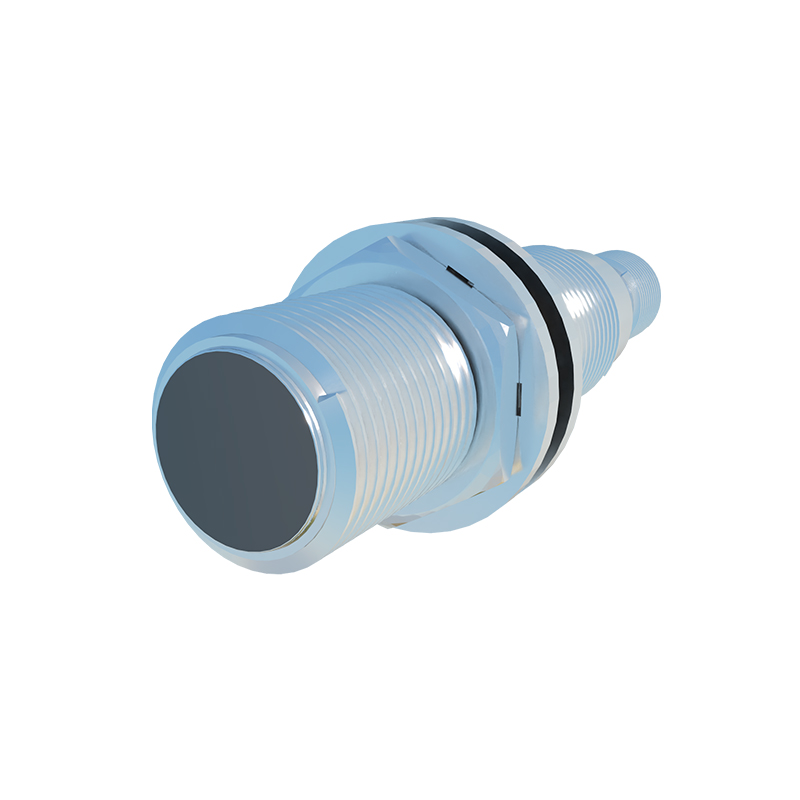
Advancements in sensor technology continue to enhance their capabilities. Modern ultrasonic sensors now feature integrated temperature compensation to offset environmental variations, while smart proximity sensors with IO-Link communication provide detailed diagnostic data for predictive maintenance. The integration of these sensors into the Industrial Internet of Things (IIoT) frameworks is creating smarter, more responsive, and efficient automation systems. Understanding their core principles and optimal use cases is essential for engineers to design robust, reliable, and cost-effective automation solutions that drive productivity and innovation across manufacturing, automotive, food and beverage, and logistics industries.