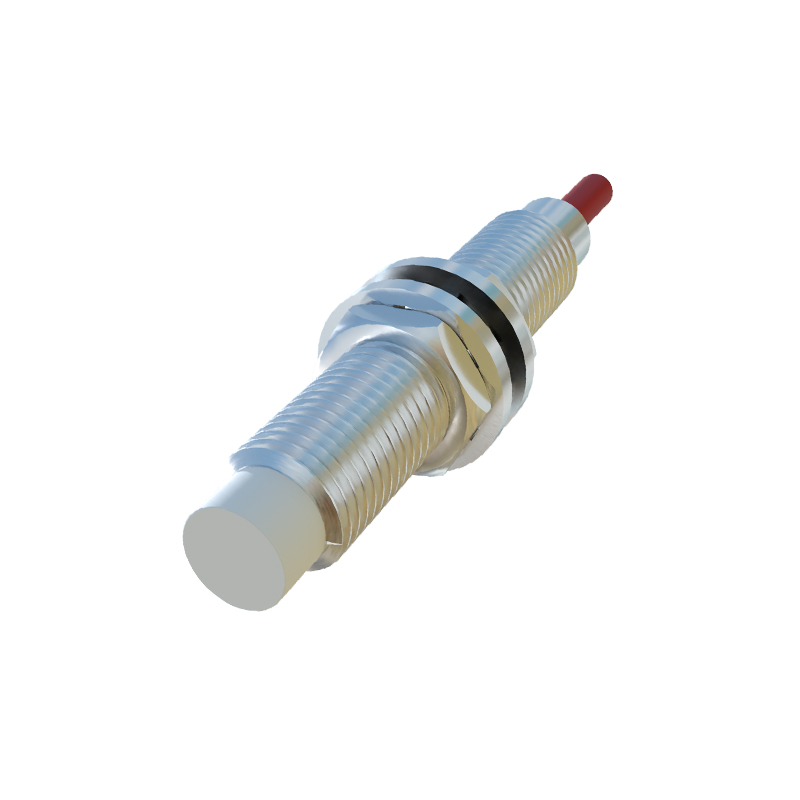
In the realm of industrial automation and control systems, the small proximity switch sensor, particularly the three-wire configuration, stands as a cornerstone component for non-contact object detection. These sensors, known for their reliability, precision, and compact design, are integral to countless applications, from assembly line monitoring to safety interlocks. Unlike their two-wire counterparts, three-wire proximity sensors offer distinct advantages in performance and wiring simplicity, making them a preferred choice for engineers seeking robust solutions.
A three-wire proximity sensor typically comprises three distinct leads: a brown wire for the positive supply voltage (V+), a blue wire for the common ground or negative supply (V- or 0V), and a black wire for the output signal. This clear separation of power and signal lines is a key differentiator. The sensor operates by generating an electromagnetic field from its active face. When a metallic target (ferrous or non-ferrous, depending on the sensor type) enters this detection field, it causes a change in the oscillation amplitude within the sensor's internal LC oscillator circuit. This change is processed by the subsequent evaluation circuitry, which then switches the state of the solid-state output transistor connected to the black wire.
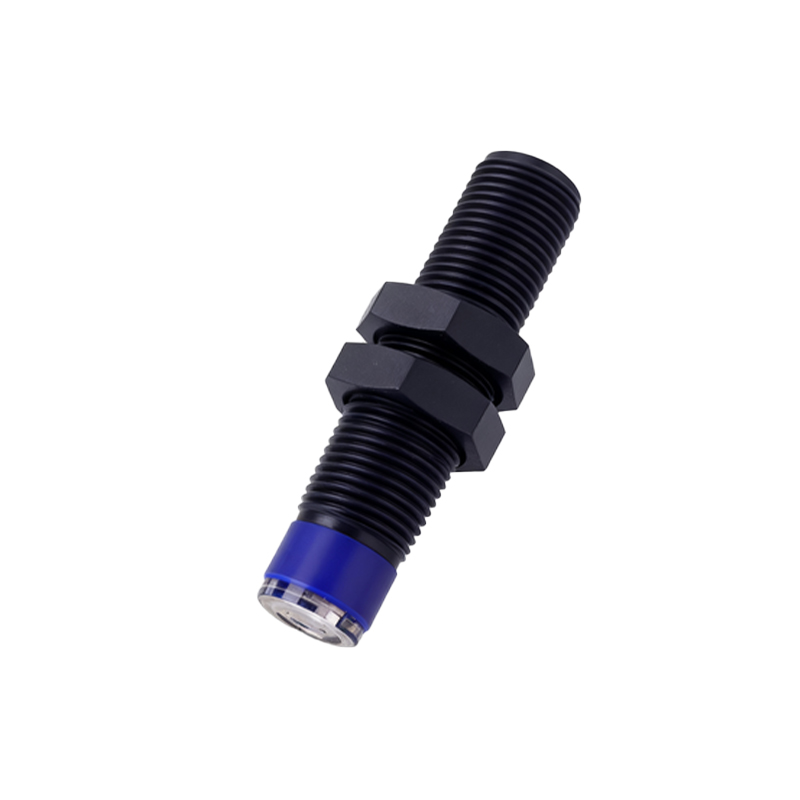
The output type is a critical specification. Three-wire sensors are predominantly available in two output configurations: NPN (sinking) and PNP (sourcing). An NPN output switches the negative (0V) line to the load, meaning the black wire acts as the switched negative connection. Conversely, a PNP output switches the positive supply voltage to the load. The choice between NPN and PNP is fundamental and depends on the control system's input card configuration (e.g., PLC). Most regions have common practices; for instance, PNP (sourcing) outputs are frequently standard in Europe, while NPN is common in Asia. It is imperative to verify compatibility with the controller to ensure proper circuit operation.
Wiring a three-wire sensor is straightforward. The brown wire connects to the positive terminal of the DC power supply (commonly 10-30V DC). The blue wire connects to the negative terminal or ground of the same supply. The black output wire is connected to the input of the controller (PLC, relay, etc.). A critical best practice is to always implement a protective fuse in the supply line and to use shielded cables in electrically noisy environments to prevent electromagnetic interference (EMI) from causing false triggering. The load (the controller input) is always connected between the black wire and the opposite supply rail relative to the output type.
The advantages of the three-wire design are significant. Firstly, they exhibit a very low residual current (leakage current) when in the "OFF" state, which is crucial for preventing unintended activation of highly sensitive control inputs. Secondly, they offer a higher switching capacity and faster response times compared to two-wire sensors. The dedicated output line allows for a clearer, stronger signal with less voltage drop. Their compact size, often in cylindrical M8, M12, or M18 threaded housings, enables installation in space-constrained locations.
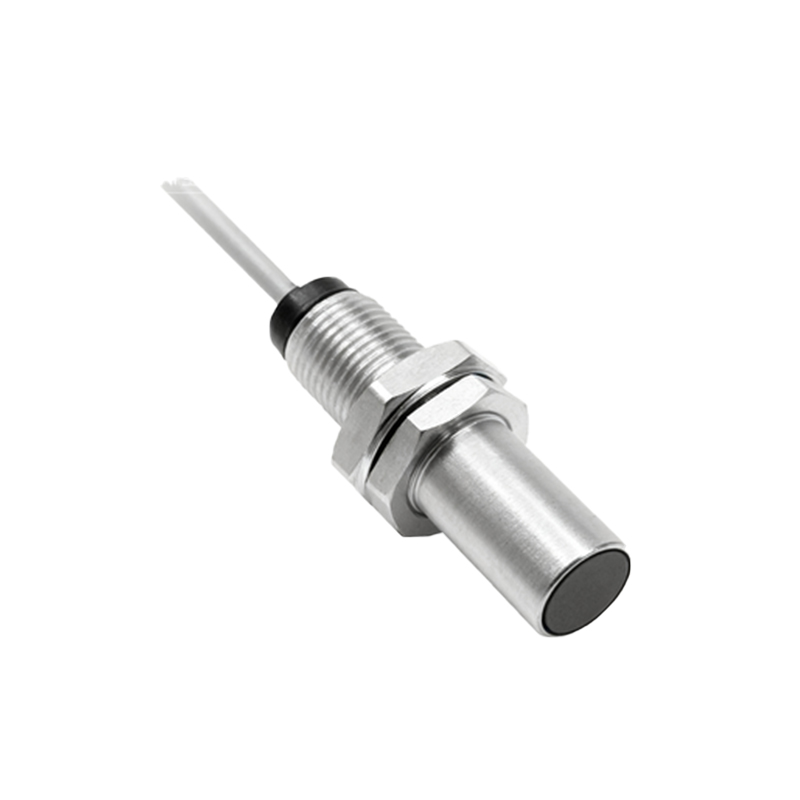
Selecting the right small three-wire proximity sensor requires careful consideration of several parameters beyond just size and output type. The sensing distance, or nominal range (Sn), must be suitable for the application, typically a few millimeters for these compact models. The target material (steel, aluminum, brass) influences the effective sensing range, often requiring a correction factor. Environmental factors like temperature rating, ingress protection (IP67/IP68 for washdown or outdoor use), and housing material (stainless steel, nickel-plated brass, or PBT plastic) are vital for durability. Inductive sensors detect metals, while capacitive types can detect non-metals like liquids or plastics, broadening application scope.
In conclusion, the small three-wire proximity switch sensor is an indispensable, high-performance tool for modern industrial automation. Its clear wiring scheme, reliable operation, and versatility across diverse and demanding environments make it a fundamental building block for machine designers and maintenance engineers. Understanding its operating principle, output configurations, and selection criteria is essential for implementing effective, fail-safe detection systems that enhance productivity, safety, and operational efficiency on the factory floor.