In the realm of industrial automation and precision measurement, Lion Laser Sensors have established themselves as a cornerstone technology. These sensors, renowned for their exceptional accuracy, reliability, and versatility, operate on the fundamental principle of laser triangulation or time-of-flight measurement, depending on the specific model and application requirement. This article delves into the technical intricacies, diverse applications, and the evolving landscape of this critical instrumentation.
At its core, a Lion laser sensor emits a focused beam of coherent light towards a target object. The reflected or scattered light is then captured by a high-resolution receiver within the sensor. In triangulation-based sensors, the position of the light spot on the receiver's detector array changes precisely with the target's distance. Sophisticated onboard processors analyze this positional shift to calculate the distance with micron-level resolution. For longer ranges, time-of-flight variants measure the phase shift or the direct time delay between the emitted and received pulse. This method enables non-contact measurement of distance, displacement, thickness, and even profile with remarkable speed, unaffected by the target's color or material in most calibrated setups, though highly reflective or absorptive surfaces may require specific tuning.
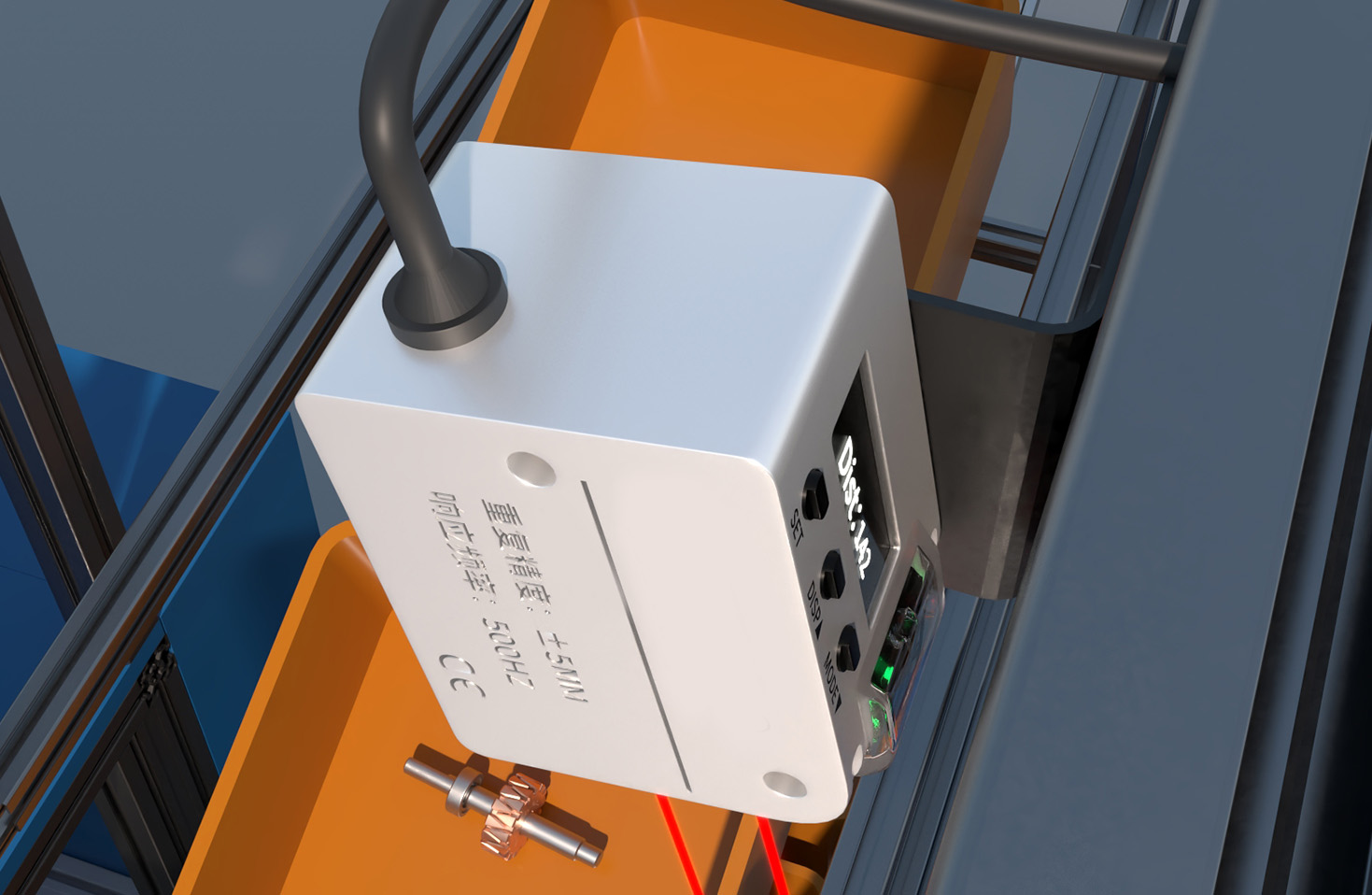
The engineering superiority of Lion Laser Sensors is evident in their robust design. They are typically housed in rugged, IP67-rated enclosures, making them resistant to dust, water jets, and the mechanical vibrations commonplace in harsh industrial environments like automotive assembly lines or metal fabrication plants. Advanced models incorporate features such as automatic background suppression, which intelligently ignores irrelevant background objects, and programmable multi-point measurement for complex profiling tasks. The integration of smart IO-Link communication is becoming standard, allowing for seamless parameter setting, real-time diagnostics, and data integration into Industry 4.0 frameworks and PLC systems.
Application scenarios for these sensors are vast and critical. In manufacturing, they are indispensable for precise gap and flush measurement in automotive body-in-white assembly, ensuring panel alignment meets stringent quality standards. They monitor the thickness of rolled steel, paper, or plastic films in continuous production processes, providing instant feedback for control loops. In electronics, they verify the coplanarity of component leads on PCBs or the precise dispensing of adhesives. Furthermore, they facilitate robotic guidance, enabling robots to accurately pick, place, and assemble parts with visual perception. Beyond traditional factories, they find use in logistics for parcel dimensioning, in agriculture for crop monitoring, and in automated warehousing for pallet detection and inventory management.
The ongoing advancement in Lion Laser Sensor technology focuses on enhancing performance boundaries. Key trends include the development of sensors with even higher repetition rates and shorter response times for ultra-high-speed production lines. There is a push towards miniaturization without compromising power or range, enabling integration into compact machinery. Enhanced software algorithms for edge computing allow for more complex data processing directly at the sensor, reducing the load on central controllers and enabling faster, decentralized decision-making. Additionally, the fusion of laser measurement data with 2D vision or other sensor inputs is creating more intelligent, multi-functional perception systems.
Selecting the appropriate Lion Laser Sensor requires a careful analysis of several parameters: the required measuring range, resolution, spot size, response frequency, and the environmental conditions (temperature, ambient light). Engineers must also consider the output interface (analog voltage/current, digital switch, RS-232, Ethernet) and the mounting constraints. Proper installation, alignment, and periodic calibration are paramount to maintaining specified accuracy over the sensor's operational lifespan.
In conclusion, Lion Laser Sensors represent a mature yet dynamically evolving technology that is essential for modern precision engineering and automated manufacturing. Their ability to deliver non-contact, high-speed, and exceptionally accurate measurements solves complex challenges across a multitude of industries. As industrial processes demand greater efficiency, flexibility, and intelligence, the continued innovation in laser sensing technology by manufacturers like Lion will undoubtedly play a pivotal role in shaping the future of automation, driving improvements in quality control, productivity, and operational safety. Their integration into interconnected digital ecosystems solidifies their status not just as measurement tools, but as vital data nodes in the smart factory of tomorrow.