In the intricate world of industrial automation and machinery, the reliability of sensing technology is paramount. Among the diverse array of sensors, proximity sensors stand as silent sentinels, enabling non-contact detection and precise control. The 90GT series of inductive proximity sensors has emerged as a particularly robust and versatile solution, widely adopted across various demanding sectors. This article delves into the technical specifications, operational principles, and key application areas of the 90GT proximity sensor, providing a detailed overview for engineers and procurement specialists.
At its core, the 90GT is an inductive proximity sensor. It operates on the principle of electromagnetic induction. The sensor's active face contains a coil that is part of an oscillator circuit, generating a high-frequency electromagnetic field. When a metallic object (the "target") enters this field, eddy currents are induced on the surface of the target. This causes a change in the oscillation amplitude or frequency within the sensor. An integrated evaluation circuit detects this change and triggers a solid-state switching output, typically in the form of a PNP (sourcing) or NPN (sinking) signal. This entire process occurs without any physical contact, making the sensor ideal for applications involving high-speed counting, position verification, or end-of-travel detection where mechanical wear is a concern.
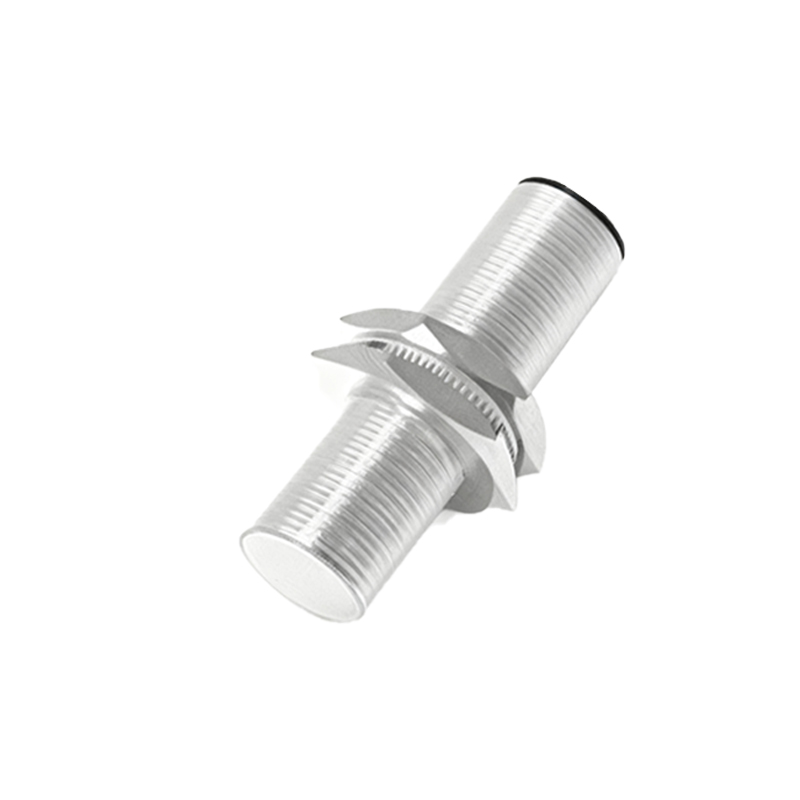
The designation "90GT" often refers to a family of sensors with specific form factors and performance characteristics. Common housing materials include nickel-plated brass or stainless steel (e.g., models like 90GT-2F), offering excellent resistance to corrosion, chemicals, and mechanical impact. Many variants in this series are fully submersible and boast high IP ratings (such as IP67 or IP68), ensuring reliable operation in harsh environments with exposure to coolants, oils, dust, and washdown procedures. The sensing distance, a critical parameter, is standardized. For instance, a 90GT-2F sensor might have a nominal sensing range of 2mm for ferrous metals like steel, with a reduced range for non-ferrous metals like aluminum or copper. This factor must be carefully considered during system design.
Electrical characteristics are another strength. The 90GT sensors typically operate on a wide range of DC voltages (commonly 10-30V DC), making them compatible with most industrial control systems like PLCs (Programmable Logic Controllers). The output is often a 3-wire configuration, providing a clear signal for the detected state. Their switching frequency is high, allowing them to detect rapidly moving objects on production lines. Furthermore, many models feature short-circuit and reverse polarity protection, enhancing system durability and simplifying installation.
The application spectrum for the 90GT series is vast. In automotive manufacturing, these sensors are indispensable for robotic welding arms, verifying the presence of metal components before a weld cycle begins. On packaging machinery, they detect the position of metallic parts on rotating cams or confirm the presence of foil-lined caps on bottles. Within metalworking and CNC machining centers, 90GT sensors perform tool breakage detection, monitor spindle position, and act as limit switches for axis movement. Their rugged construction also makes them suitable for material handling systems, such as detecting metal pallets on conveyors or monitoring the position of crane hooks.
Installation and maintenance are straightforward but require attention to detail. Proper mounting, with adequate clearance from surrounding metal (as per the manufacturer's flush-mount or non-flush-mount guidelines), is essential to avoid false triggering. The target material, size, and approach direction also influence performance. Regular maintenance primarily involves keeping the sensing face clean from debris, metal chips, or buildup that could attenuate the electromagnetic field. Diagnostic LEDs, a standard feature on most 90GT sensors, provide immediate visual feedback on power status and output activation, aiding in rapid troubleshooting.
In conclusion, the 90GT proximity sensor represents a mature and highly reliable technology in the field of industrial sensing. Its robust construction, environmental resilience, precise non-contact operation, and electrical compatibility solidify its position as a go-to component for engineers designing automated systems. By understanding its operating principles, key specifications, and ideal application contexts, professionals can effectively integrate the 90GT sensor to enhance machine reliability, improve safety, and optimize production efficiency. When selecting a specific model, always consult the detailed datasheet for exact electrical ratings, sensing distances, housing dimensions, and temperature ranges to ensure perfect compatibility with the intended application.