In the realm of advanced manufacturing, particularly within automated welding processes, the demand for unparalleled precision and repeatability has never been greater. Laser welding, a high-energy density fusion process, stands at the forefront of joining technologies for applications ranging from delicate medical devices to robust automotive components. However, the efficacy of laser welding is profoundly dependent on maintaining a consistent and optimal distance between the laser processing head and the workpiece surface. This is where laser welding height sensors emerge as a critical enabling technology, ensuring process stability, weld quality, and overall system efficiency.
A laser welding height sensor is a non-contact measurement device designed to precisely track the distance to the target surface in real-time. Its primary function is to provide continuous feedback to the welding robot or CNC system, allowing for dynamic adjustments of the Z-axis to compensate for part variations, thermal distortion, or fixture inaccuracies. The core operating principle typically involves triangulation or time-of-flight measurement using a laser source. In a common triangulation setup, a laser diode projects a visible or infrared spot or line onto the workpiece. The reflected light is captured by a receiver (such as a CCD or CMOS sensor) at a known angle. Any change in the target's height causes a proportional shift in the position of the laser spot on the receiver. This displacement is calculated by the sensor's internal processor to determine the exact distance, which is then transmitted as an analog or digital signal to the motion controller.
The integration of these sensors into laser welding systems delivers transformative benefits. First and foremost is the guarantee of consistent weld quality. By maintaining a constant standoff distance, the laser energy density and focus spot size on the workpiece remain stable. This prevents defects such as under-penetration, excessive spatter, or burn-through, which can occur if the focal point drifts. Secondly, it dramatically enhances process robustness. Manufacturers can weld parts with inherent dimensional tolerances or slight warping without the need for perfect fixturing, thereby reducing setup time and costs. Furthermore, it enables the welding of complex three-dimensional contours with high speed and accuracy, as the sensor can track the surface profile ahead of the welding point.
Several key technologies define modern laser welding height sensors. Laser triangulation sensors are widely favored for their high accuracy (often in the micron range) and fast response times, making them ideal for dynamic welding on seams with varying gaps or heights. Confocal chromatic sensors offer another high-precision solution, using white light and spectral analysis to measure distance, and are particularly effective on reflective or transparent materials that can challenge standard triangulation sensors. For applications requiring very high sampling rates or measurements over longer ranges, time-of-flight laser sensors may be employed. The choice of sensor depends on specific application parameters: required measurement range, accuracy, spot size, material surface properties (color, reflectivity, roughness), and environmental factors like ambient light or welding spatter.
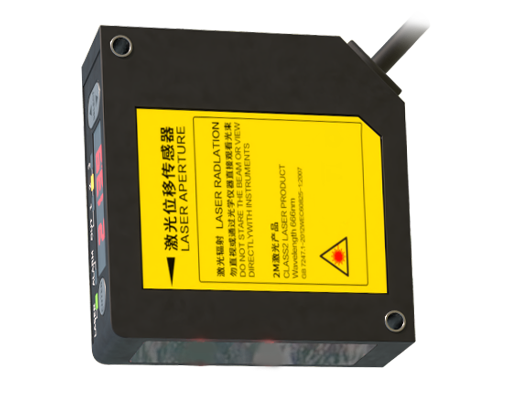
In practical application, the sensor is typically mounted on the welding head, either integrated into the same housing or as a separate unit positioned ahead of the welding nozzle. Advanced systems often employ seam tracking capabilities that combine height sensing with lateral tracking to follow a joint's path in three dimensions. This is crucial for applications like fillet welds or lap joints. The sensor data feeds into a closed-loop control system that continuously adjusts the robot's trajectory, ensuring the laser focal point remains perfectly positioned throughout the weld cycle.
Despite their advantages, implementing laser welding height sensors presents certain challenges. Highly reflective or specular surfaces can cause signal saturation or loss, requiring sensors with specialized filters or algorithms. The intense plasma and spatter generated during the welding process can also interfere with the sensor's laser, necessitating robust mechanical protection, air purge systems, or clever mounting strategies to keep the optical path clear. Additionally, the initial investment and system integration complexity must be justified by the gains in yield, reduction in rework, and increased throughput.
Looking forward, the evolution of laser welding height sensors is intertwined with Industry 4.0 trends. The next generation of sensors is becoming smarter, with embedded processing capabilities for edge analytics. They can not only provide distance data but also perform preliminary quality inspection by analyzing the reflected light pattern for surface defects. Integration with digital twins and AI-driven process optimization platforms will allow for predictive adjustments, further pushing the boundaries of what is possible in automated, high-mix, high-precision manufacturing.
In conclusion, laser welding height sensors are indispensable components in modern automated welding cells. They transform a static process into an adaptive, intelligent operation, directly contributing to superior weld integrity, reduced scrap rates, and greater manufacturing flexibility. As laser welding continues to expand into new materials and more complex geometries, the role of precise, reliable height sensing will only grow in significance, solidifying its status as a cornerstone technology for the future of precision fabrication.