In the realm of industrial automation and precision metrology, the demand for accurate, reliable, and non-contact measurement solutions is paramount. Among the array of technologies available, target laser displacement sensors have emerged as a cornerstone for countless applications, from quality control on assembly lines to intricate research and development projects. This article delves into the operational principles, key advantages, diverse applications, and critical selection criteria for these sophisticated instruments.
At its core, a target laser displacement sensor operates on the principle of optical triangulation. The sensor emits a focused beam of laser light, typically from a Class 2 laser diode for safety, onto the target surface. The diffusely reflected light from this point is then captured by a high-resolution receiving element, such as a Position Sensitive Detector (PSD) or a Complementary Metal-Oxide-Semiconductor (CMOS) linear image sensor. The position of the reflected light spot on this receiver shifts proportionally to the distance of the target. By precisely calculating this shift, the sensor's internal processor determines the displacement or distance with remarkable accuracy. Modern sensors employ advanced algorithms to filter noise, compensate for environmental factors, and provide stable readings even on challenging surfaces.
The advantages of using target laser displacement sensors are numerous and drive their widespread adoption. First and foremost is their non-contact nature, which eliminates the risk of damaging delicate or soft materials and prevents wear on the sensor itself. They offer exceptionally high resolution and sampling rates, capable of detecting minute changes in position at speeds that mechanical probes cannot match. This makes them ideal for dynamic measurements on moving objects. Furthermore, their compact size allows for integration into tight spaces within complex machinery. Unlike contact probes, they are immune to issues of hysteresis and mechanical friction, ensuring long-term measurement stability.
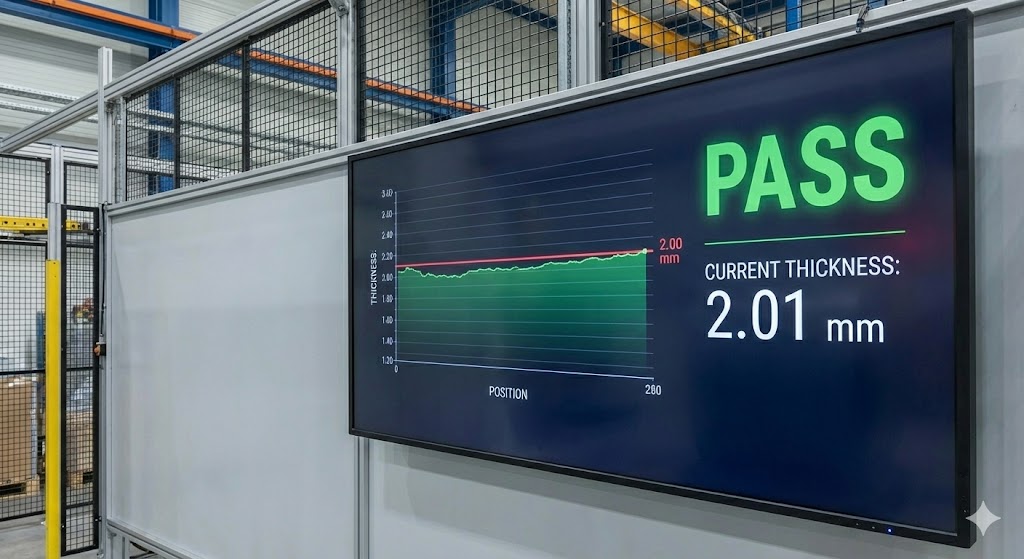
The applications for these sensors span virtually every manufacturing and engineering sector. In the automotive industry, they are used to measure body panel gaps, inspect weld seam profiles, and verify the thickness of brake rotors. In electronics manufacturing, they ensure the coplanarity of semiconductor packages and the precise height of components on printed circuit boards. In metal processing, they monitor sheet flatness, roll gap dimensions, and material thickness. Beyond traditional manufacturing, they play crucial roles in robotics for guidance and positioning, in 3D profiling for reverse engineering, and in laboratory settings for material research and deformation analysis. Their versatility is a key strength.
Selecting the appropriate target laser displacement sensor for a specific task requires careful consideration of several technical parameters. The measurement range defines the minimum and maximum distances over which the sensor can operate accurately. The standoff distance is the optimal working distance from the sensor head to the target. Resolution, often in micrometers or even nanometers, indicates the smallest detectable change. The spot size of the laser is critical for measuring small features or steep edges. The sampling rate determines how quickly the sensor can take measurements, which is vital for high-speed production lines. Material and surface properties of the target are equally important; glossy, transparent, or deeply colored surfaces can reflect light differently than standard matte surfaces, potentially requiring sensors with specialized functions like peak-hold or multi-peak detection modes to ensure reliable data.

Environmental factors must not be overlooked. Industrial settings often present challenges such as ambient light interference, dust, oil mist, and temperature fluctuations. Many sensors are built with robust housings (IP67 ratings are common) and feature optical filters or modulated laser light to reject ambient light. For harsh environments, models with air purge connections are available to keep the lens clean. Integration is another practical aspect; modern sensors offer various output options (analog voltage/current, digital RS-232/485, Ethernet, and fieldbus protocols like EtherCAT or PROFINET) and software tools for easy setup and data visualization.

In conclusion, target laser displacement sensors represent a mature yet continuously evolving technology that is essential for modern precision measurement. Their ability to deliver fast, accurate, and non-contact data makes them indispensable tools for enhancing quality, optimizing processes, and driving innovation. By understanding their operating principles and meticulously matching sensor specifications to the application requirements—considering target properties, environmental conditions, and necessary performance specs—engineers and technicians can leverage these powerful devices to achieve new levels of control and efficiency in their operations. As Industry 4.0 and smart factory concepts advance, the role of these sensors as critical data acquisition nodes will only become more pronounced.