In the realm of electrical engineering and photonics, the accurate measurement of laser power is not merely a convenience—it is a fundamental necessity. Laser power sensors, sophisticated devices designed to quantify the radiant power emitted by laser sources, are indispensable tools across a spectrum of applications, from telecommunications and medical device manufacturing to materials processing and scientific research. This article delves into the operational principles, key types, selection criteria, and best practices for utilizing these critical instruments.
At its core, a laser power sensor functions by converting incident optical energy into a measurable electrical signal. This transduction process relies on a detector element, the nature of which defines the sensor's category and optimal use case. The two primary families are thermal sensors and photodiode-based sensors. Thermal sensors, such as those employing thermopiles or pyroelectric detectors, absorb the laser radiation, causing a temperature rise. This temperature change is then converted into an electrical voltage. Their chief advantage lies in their broad spectral range and ability to handle high power levels, from milliwatts to kilowatts, with excellent uniformity across wavelengths. They are the go-to choice for measuring high-power continuous-wave (CW) lasers. Conversely, photodiode sensors operate on the photoelectric effect, where photons generate electron-hole pairs, producing a photocurrent proportional to the incident light intensity. These sensors offer superior sensitivity for low-power measurements (down to picowatts) and exhibit fast response times, making them ideal for pulsed lasers and low-level CW beams. However, their spectral response is typically narrower and more wavelength-dependent than thermal sensors.
Selecting the appropriate laser power sensor requires a careful analysis of several parameters beyond just power level. Wavelength compatibility is paramount; the sensor must exhibit a known and stable responsivity at the specific laser wavelength. The power range is equally critical—operating a sensor beyond its maximum damage threshold will result in permanent impairment, while using an insensitive sensor for faint signals yields poor accuracy. For pulsed lasers, considerations must extend to peak power density (watts per square centimeter) and pulse repetition rate, as these factors can induce localized heating beyond the sensor's dissipation capability. Beam size also plays a role; the sensor's active area must be sufficiently large to capture the entire beam profile to avoid measurement errors. Furthermore, engineers must consider the required accuracy, linearity, and response time of the measurement system.
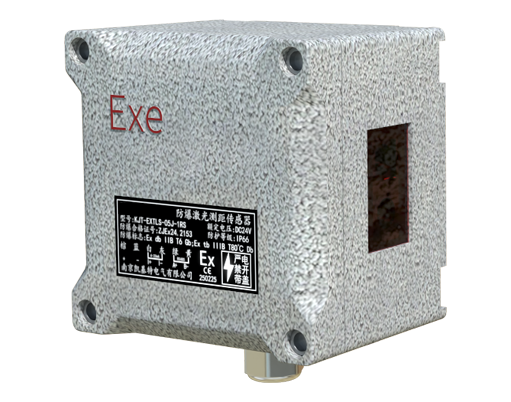
Modern laser power meters integrate the sensor head with sophisticated electronics for signal conditioning, display, and data logging. Features like analog and digital outputs, USB connectivity, and software compatibility enhance their utility in automated test environments. Calibration is the bedrock of measurement integrity. Reputable manufacturers provide sensors with traceable calibration to national standards (e.g., NIST). Regular recalibration, as recommended by the manufacturer or dictated by quality assurance protocols, is essential to maintain specified accuracy over time. Environmental factors such as ambient temperature, humidity, and stray light can influence readings; many high-end sensors incorporate temperature stabilization and baffling to mitigate these effects.
In practical application, proper technique is vital. Always allow the sensor, especially thermal types, sufficient warm-up and stabilization time. Ensure the beam is centered on the sensor's active area and is incident at the specified angle, often normal to the surface. For high-power beams, verify that the power density does not exceed the sensor's specification to prevent damage. It is also prudent to use beam attenuators or samplers when measuring unknown or potentially damaging power levels initially.
The evolution of laser technology continues to drive advancements in sensor design. Innovations include sensors capable of handling ultrafast femtosecond pulses with extremely high peak powers, compact array sensors for beam profiling concurrent with power measurement, and robust sensors for industrial environments. As lasers become more integrated into precision manufacturing and cutting-edge research, the role of the laser power sensor as the definitive arbiter of optical power remains unchallenged. For the electrical engineer, a deep understanding of these instruments is key to ensuring system performance, process control, and ultimately, the success of any laser-dependent application.