Laser displacement sensors represent a cornerstone technology in precision measurement and automation. Their operation is fundamentally based on the principle of triangulation or time-of-flight measurement. In a standard triangulation sensor, a focused laser beam is projected onto the target surface. The reflected light is detected by a position-sensitive element, such as a CCD or CMOS array. Any change in the target's distance causes a proportional shift of the light spot on the detector, which is then calculated with high accuracy to determine displacement. Time-of-flight sensors, often used for longer ranges, measure the phase shift or direct flight time of a modulated laser pulse.
The defining characteristics of these sensors set them apart in industrial metrology. First and foremost is their exceptional resolution and accuracy, capable of detecting sub-micron changes. This makes them indispensable for quality control in semiconductor manufacturing, precision machining, and electronics assembly. High-speed response is another critical feature. Modern sensors can perform tens of thousands of measurements per second, enabling real-time monitoring of fast-moving production lines, such as in automotive or packaging industries.
Non-contact measurement is arguably the most significant advantage. The sensor head does not physically touch the target, eliminating risks of surface damage, mechanical wear, or contamination. This is vital for measuring delicate materials like soft polymers, fresh coatings, or hot surfaces in metal processing. Furthermore, laser sensors exhibit remarkable versatility in handling diverse target surfaces, from specular metals to dark, absorbent materials, though specific models may be optimized for different surface types.
Compact design and robust construction are engineered to withstand harsh industrial environments. Many models feature IP67 or higher ingress protection, ensuring reliable operation amidst dust, oil, and coolant sprays. They are also designed to resist vibrations and electromagnetic interference common in factory settings. The integration of intelligent functions, such as analog/digital outputs, programmable logic, and Ethernet communication protocols (e.g., EtherCAT, PROFINET), allows for seamless connectivity with PLCs and industrial networks.

Applications are vast and varied. In robotics, they provide critical feedback for precise positioning and path guidance. On assembly lines, they verify component presence, thickness, and dimensional tolerances. In flatness inspection, multiple sensors scan surfaces to detect warpage or defects. They also play a key role in vibration analysis, profile scanning, and controlling roll diameters in web processing.
When selecting a laser displacement sensor, engineers must consider several parameters: measuring range, spot size, linearity, and repeatability. The choice between red laser and blue laser models is also important; blue lasers, with their shorter wavelength, offer superior performance on transparent objects or glossy surfaces by reducing penetration and diffuse reflection. Proper installation, alignment, and periodic calibration are essential to maintain specified performance levels.
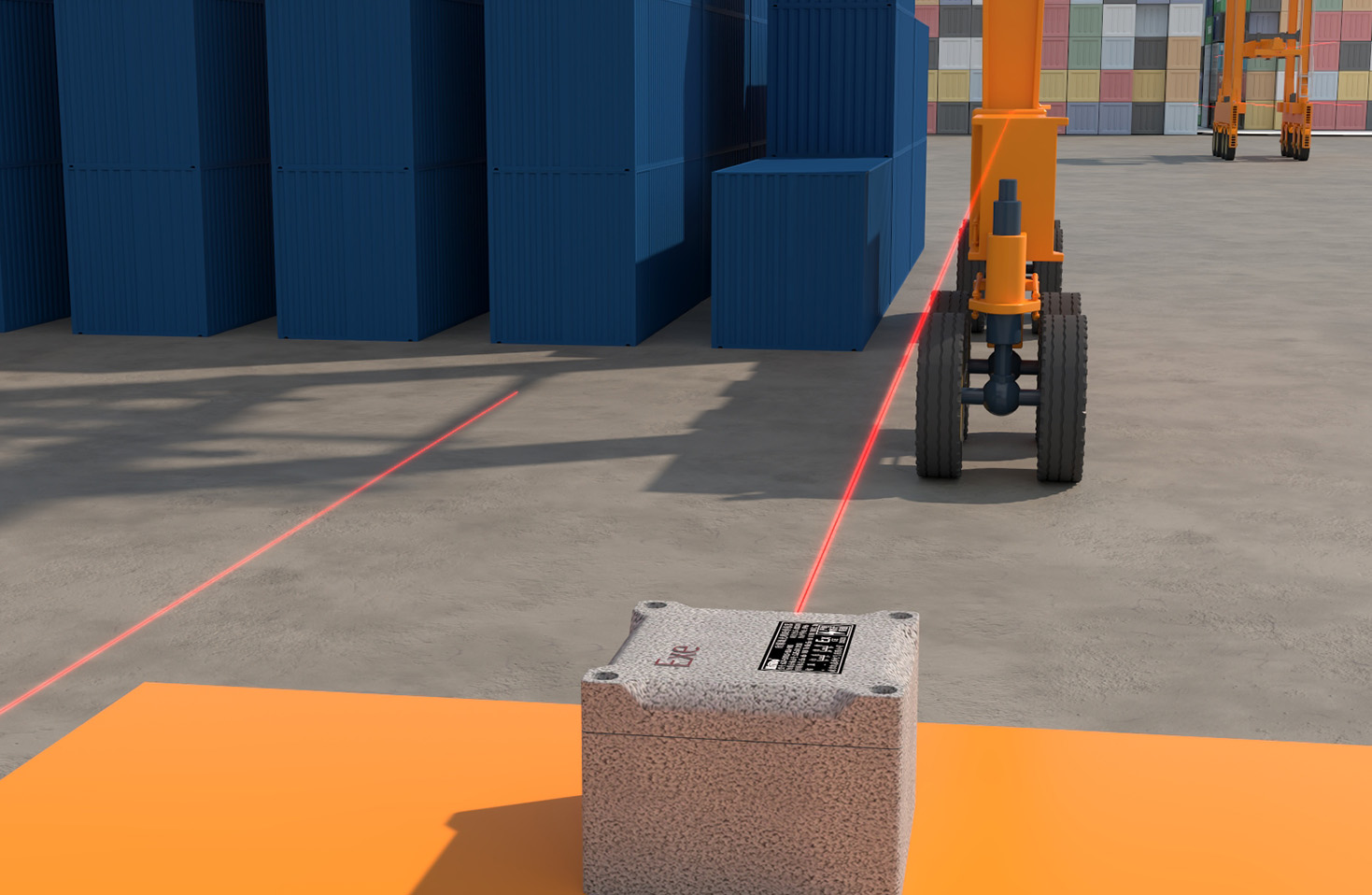
In conclusion, the evolution of laser displacement sensors continues to push the boundaries of what is measurable. With advancements in laser diode technology, detector sensitivity, and embedded signal processing, these sensors are becoming faster, more accurate, and more adaptable. They are fundamental enablers of Industry 4.0, providing the high-fidelity data necessary for closed-loop control, predictive maintenance, and the realization of fully automated, smart manufacturing systems. Their role in ensuring quality, enhancing efficiency, and driving innovation across industrial sectors is both profound and expanding.