In the realm of industrial automation, robotics, and consumer electronics, the ability to detect the presence or absence of an object without physical contact is fundamental. Among the plethora of non-contact sensing technologies, the simple infrared (IR) proximity sensor stands out for its reliability, cost-effectiveness, and straightforward implementation. This guide delves into the operational principles, key components, typical configurations, and practical considerations for engineers integrating these ubiquitous sensors into their designs.
At its core, an IR proximity sensor operates on the principle of modulated light reflection. It typically consists of two primary elements: an infrared emitter (usually an IR LED) and an IR photodetector (such as a phototransistor or photodiode). The emitter projects a beam of infrared light, which is invisible to the human eye. When an object enters the sensor's field of view, a portion of this emitted light is reflected back towards the detector. The photodetector converts the received infrared radiation into an electrical signal, typically a change in current or voltage. The strength of this signal is roughly proportional to the distance and reflectivity of the target object; closer or more reflective objects yield a stronger signal.
A critical design feature that distinguishes a robust proximity sensor from a simple ambient light detector is modulation. The IR LED is driven by a pulsed signal, often in the range of a few kilohertz. The receiver circuit is tuned to respond only to signals oscillating at this specific frequency. This technique effectively filters out ambient infrared noise from sources like sunlight or incandescent lighting, which is generally constant or fluctuates at different frequencies. This modulation-demodulation scheme is what grants these sensors their stability and immunity to environmental optical interference.
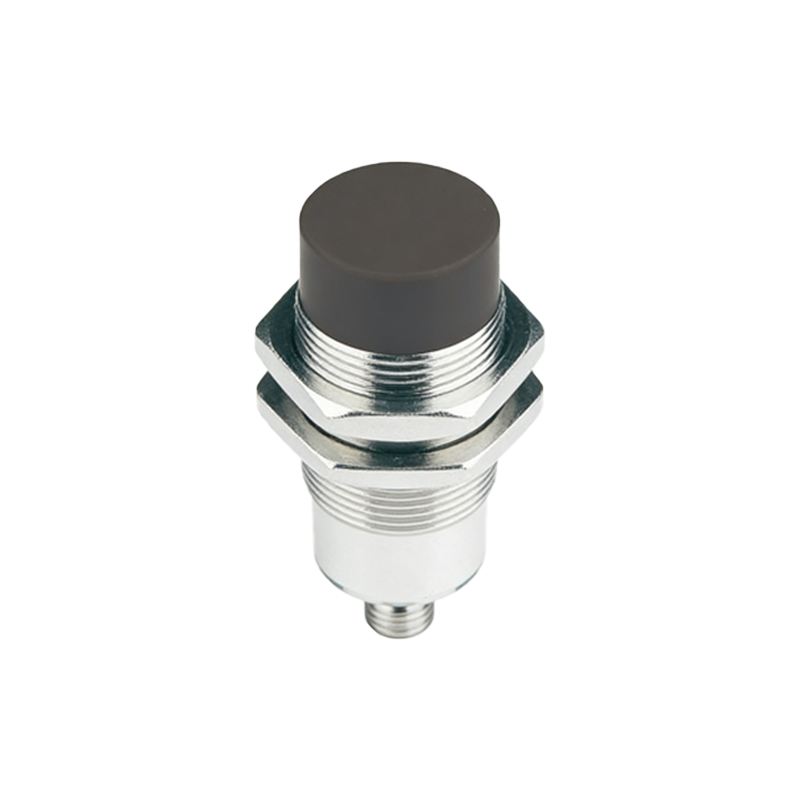
Common circuit configurations vary in complexity. The simplest form uses a voltage divider network where the phototransistor acts as a variable resistor. The output is an analog voltage that changes with the amount of reflected IR light. For digital on/off detection, this analog signal is fed into a comparator circuit. A potentiometer sets a reference threshold voltage; when the sensor signal exceeds this threshold (indicating an object is near), the comparator's output switches states, providing a clean digital signal to a microcontroller or logic circuit. More advanced integrated sensor modules incorporate the emitter, detector, modulation circuitry, and signal conditioning into a single package, often providing both analog and digital outputs.
When selecting and applying a simple IR proximity sensor, several engineering factors must be weighed. Sensing range is paramount and is influenced by the power of the IR emitter, the sensitivity of the detector, and the optics used. Most basic sensors have a effective range from a few centimeters up to perhaps 30-50 cm. The color and surface texture of the target object significantly impact performance. Shiny, light-colored objects reflect IR light well and are easily detected, while dark, matte, or absorbent surfaces can drastically reduce the sensing range or cause failure. Environmental conditions such as dust, fog, or direct sunlight can scatter or overpower the IR signal. Furthermore, mutual interference must be managed when multiple sensors are used in close proximity; this is often mitigated by operating adjacent sensors at different modulation frequencies or through time-division multiplexing.
Typical applications are vast. In industrial settings, they are used for object detection on conveyor belts, jam detection in machinery, and counting tasks. In consumer electronics, they enable touchless faucets, paper detection in printers, and screen blanking in smartphones when held to the ear. In robotics, they serve as simple obstacle avoidance sensors for bumpers or navigation.
In conclusion, the simple infrared proximity sensor remains a cornerstone of non-contact detection. Its elegance lies in the direct application of basic optical and electronic principles to solve a common engineering challenge. For an engineer, success with these devices hinges on understanding their limitations—particularly regarding target material and ambient light—and designing the supporting circuitry or selecting a pre-integrated module that provides the necessary noise immunity and output interface for the specific application. By mastering these fundamentals, engineers can reliably and economically incorporate robust proximity sensing into a wide array of automated systems.