In the realm of industrial automation, the synergy between Programmable Logic Controllers (PLCs) and sensing technologies forms the backbone of modern manufacturing and process control. Among these sensing technologies, proximity sensors stand out as critical components, providing the essential interface between the physical world and the digital control logic of a PLC. Their primary role is to detect the presence or absence of an object without physical contact, feeding this binary or analog information to the PLC to trigger, sequence, or halt automated operations.
The fundamental operation revolves around the PLC's input/output (I/O) system. A proximity sensor, when activated by a target object, changes its output state. This state change, typically a shift from a high to low voltage signal (or vice-versa depending on sensor type - NPN or PNP), is read by a discrete input module on the PLC. The PLC's ladder logic or structured text program continuously scans these input states. Based on the programmed logic—such as "IF Sensor_X is ON, THEN start Conveyor_Motor"—the PLC executes precise control actions through its output modules, commanding actuators like motors, valves, or solenoids.
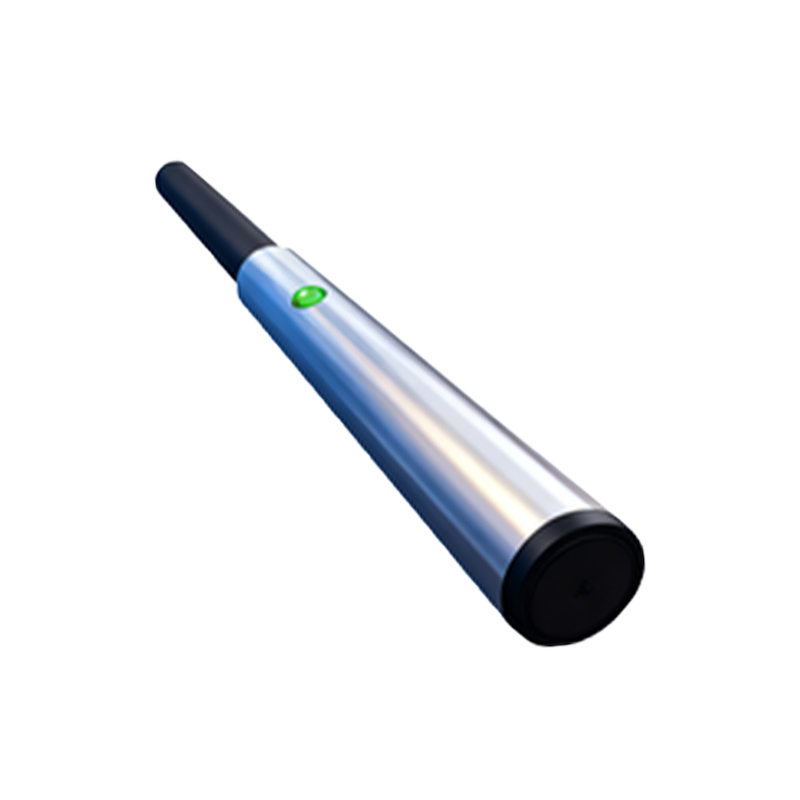
Several types of proximity sensors are commonly integrated with PLC systems, each suited for specific applications. Inductive proximity sensors are workhorses in metal detection, ideal for counting metal parts on a conveyor or confirming the position of a robotic arm. Capacitive sensors can detect both metallic and non-metallic materials (plastics, liquids, wood), making them perfect for fill-level control in tanks or detecting packaged goods. Ultrasonic sensors measure distance and are used in positioning and collision avoidance, while photoelectric sensors, using light beams, excel in long-range detection and differentiating colors.
The advantages of using proximity sensors within a PLC-controlled environment are manifold. First and foremost is reliability. Non-contact sensing eliminates mechanical wear and tear, ensuring long service life and reduced maintenance. They offer high switching speeds, enabling fast-paced production lines where milliseconds count. Their robustness allows them to perform in harsh industrial environments with exposure to dust, moisture, oils, and electromagnetic interference. From a safety perspective, they can act as vital components in safety interlocks, preventing machine operation unless a guard is in place or an operator is clear of a hazard zone.
Consider a typical bottling plant application. Inductive sensors verify metal caps are present and properly seated. Capacitive sensors check the liquid fill level inside glass or plastic bottles. Photoelectric sensors count bottles entering and exiting a labeling station. All these sensors send signals to the central PLC. The PLC's program synthesizes this data, ensuring only correctly filled and capped bottles proceed to packaging. If a sensor detects a fault—a missing cap, for instance—the PLC can trigger a reject mechanism and alert operators, all in real-time.
For engineers, successful integration requires careful consideration. Selecting the correct sensor type (inductive, capacitive, etc.) for the target material is paramount. The sensing range, environmental ratings (IP classification), and output configuration (NPN sinking vs. PNP sourcing) must match the PLC's input module specifications. Proper shielding and wiring are crucial to prevent electrical noise from causing false triggers. Furthermore, sensors must be strategically positioned to ensure consistent detection and avoid blind spots.
In conclusion, proximity sensors are the indispensable "eyes" of a PLC system. They transform physical events into actionable electrical signals, enabling the PLC to make intelligent, automated decisions. This partnership drives efficiency, consistency, and safety across countless industries, from automotive assembly and food processing to material handling and beyond. As automation evolves towards Industry 4.0 and the Industrial Internet of Things (IIoT), the role of smart proximity sensors with integrated diagnostics and communication capabilities will become even more profound, feeding richer data into PLCs and higher-level systems for optimized, data-driven manufacturing.