In industrial automation and control systems, proximity sensors are indispensable components for detecting the presence or absence of objects without physical contact. However, their performance can be significantly compromised by various forms of interference, leading to false triggers, reduced accuracy, or complete operational failure. Understanding and mitigating these interference sources is crucial for ensuring system reliability and efficiency. This article explores common interference types and effective mitigation methods, tailored for electrical engineers and industry professionals.
Electrical interference is a primary concern, often stemming from electromagnetic fields generated by nearby equipment such as motors, transformers, or high-frequency devices. This can induce unwanted signals in sensor circuits, causing erratic behavior. To counter this, proper shielding is essential. Using shielded cables—with the shield grounded at a single point to avoid ground loops—can significantly reduce electromagnetic interference (EMI). Additionally, sensors with metal housings should be grounded appropriately to dissipate stray currents. For environments with intense EMI, selecting sensors with built-in filtering or higher immunity ratings, as per standards like IEC 60947-5-2, is advisable.
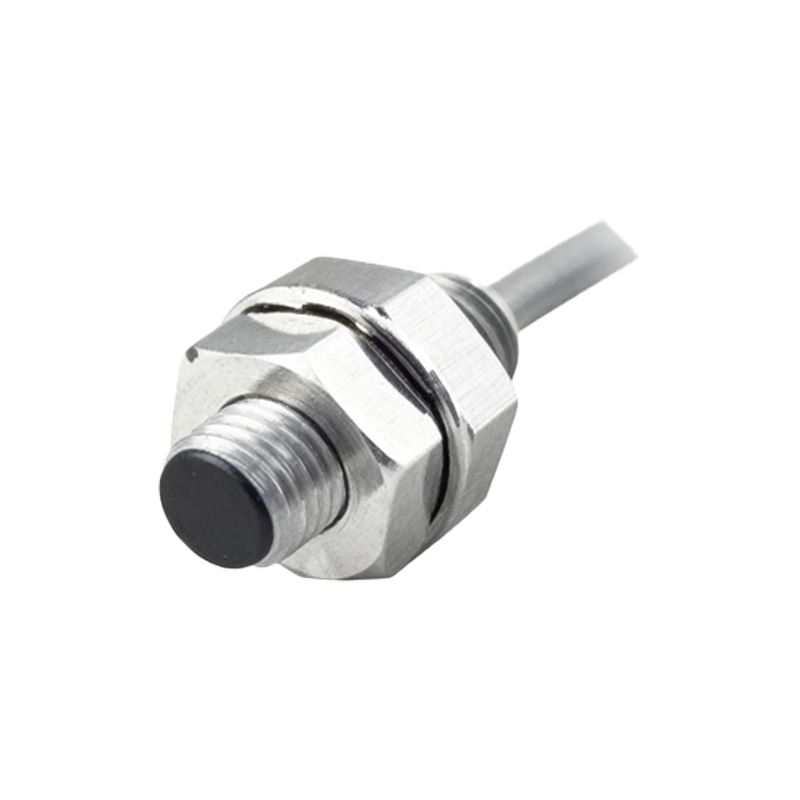
Another common issue is cross-talk between multiple sensors placed in close proximity. When sensors operate at similar frequencies, their signals may interfere, leading to mutual disruption. To prevent this, engineers can employ frequency modulation techniques, such as using sensors with different operating frequencies or implementing time-division multiplexing where sensors activate sequentially. Physical spacing is also critical; maintaining a minimum distance between sensors, as specified by the manufacturer, helps minimize interaction. In dense installations, sensors with directional sensing capabilities or reduced sensing ranges can be deployed to limit overlap.
Environmental factors, including temperature fluctuations, humidity, and contaminants like dust or oil, can also introduce interference by altering sensor properties or causing signal attenuation. For instance, inductive proximity sensors may experience drift in metallic environments due to temperature changes. Mitigation involves selecting sensors with robust environmental ratings—such as IP67 or higher for dust and moisture resistance—and ensuring proper enclosure sealing. Regular maintenance, including cleaning sensor faces and checking for buildup, is recommended. In extreme conditions, using sensors with temperature compensation or opting for non-contact optical variants can enhance stability.
Power supply noise is a subtle yet impactful interference source, often arising from unstable voltage or current ripples in the system. This noise can propagate through sensor wiring, affecting signal integrity. Solutions include using regulated power supplies with low noise output and incorporating decoupling capacitors near sensor connections to filter high-frequency noise. For DC sensors, adding ferrite beads or chokes on power lines can suppress electromagnetic disturbances. It’s also prudent to separate sensor wiring from high-power cables, routing them in different conduits or trays to avoid inductive coupling.
Software and signal processing offer advanced mitigation avenues. Many modern proximity sensors integrate microprocessors that enable digital filtering algorithms to distinguish between true signals and noise. Techniques like averaging multiple readings or implementing hysteresis thresholds can reduce false detections. In programmable logic controller (PLC) systems, engineers can configure delay timers or debounce logic to validate sensor inputs before triggering actions. For networked sensors, using protocols with error-checking mechanisms, such as IO-Link, adds an extra layer of reliability by ensuring data integrity.
Finally, installation practices play a pivotal role. Ensuring proper grounding of all system components—following star grounding principles to avoid loops—and using twisted-pair cables for signal transmission can minimize interference. Calibration and testing under real operating conditions are vital; engineers should verify sensor performance with actual loads and environmental factors before full deployment. Documentation, such as keeping interference logs during troubleshooting, aids in identifying patterns and implementing long-term fixes.
In summary, mitigating interference in proximity sensors requires a holistic approach combining hardware selection, environmental management, and intelligent design. By addressing electrical, physical, and operational factors, engineers can enhance sensor durability and accuracy, ultimately optimizing industrial automation processes. Continuous innovation in sensor technology, including the adoption of immune materials and smart algorithms, promises further resilience against interference challenges.