In the realm of industrial automation and precision measurement, laser autofocus sensors have become indispensable tools. Their ability to provide non-contact, high-speed, and highly accurate distance or position feedback is critical for applications ranging from semiconductor manufacturing to 3D scanning and robotic assembly. However, a persistent and often concerning issue faced by engineers and maintenance personnel is sensor overheating, colloquially described as the unit becoming "too hot to handle." This phenomenon not only poses a potential safety risk but can also lead to measurement drift, reduced operational lifespan, and catastrophic failure. Understanding the root causes and implementing effective mitigation strategies is paramount for ensuring system reliability.
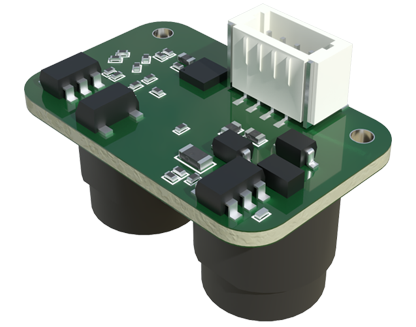
The primary source of heat generation within a laser autofocus sensor is internal. The core components—the laser diode, the photodetector (often a CCD or CMOS array), and the associated drive electronics—all dissipate power during operation. The laser diode itself, while efficient, is not 100% effective at converting electrical energy into coherent light; a significant portion is lost as heat. High-frequency sampling rates or continuous operation exacerbate this thermal load. Furthermore, the miniaturization trend in sensor design, which packs powerful functionality into compact housings, often compromises the available surface area for passive heat dissipation. This creates a high power density scenario where heat cannot escape efficiently.
Ambient environmental conditions play a substantial role. Installing sensors in enclosures with poor ventilation, in close proximity to other heat-generating machinery like motors or drives, or in high-temperature factory environments directly elevates the sensor's baseline temperature. The sensor must then work harder to cool itself, often exceeding its designed thermal management capabilities. In such cases, the external housing can become烫手, indicating that internal temperatures are likely approaching critical thresholds for sensitive electronic components.
The consequences of chronic overheating are severe. Firstly, the wavelength and output power of the laser diode are temperature-sensitive. As temperature rises, the emitted wavelength can shift, and the output power may fluctuate or degrade. This directly translates to measurement inaccuracy, as the sensor's calibration is typically performed at a nominal operating temperature. Secondly, excessive heat accelerates the aging process of electronic components, particularly electrolytic capacitors and the laser diode itself, leading to premature failure. In extreme cases, thermal runaway can occur, resulting in permanent damage to the sensor's core circuitry.
Addressing overheating requires a multi-faceted approach, starting with proper selection and installation. Always consult the sensor's datasheet for its specified operating temperature range and thermal dissipation requirements. Ensure the sensor is mounted in a location with adequate airflow, away from external heat sources. If necessary, use thermally conductive mounting pads or brackets to channel heat away from the sensor body and into a larger heatsink or the machine frame itself.
For applications demanding high duty cycles or in hot environments, active cooling solutions may be imperative. Small axial fans directed at the sensor housing can dramatically improve convective cooling. For more critical or sealed applications, consider sensors that are explicitly designed with integrated thermoelectric coolers (Peltier elements). These devices actively pump heat away from the laser diode and detector, maintaining a stable internal temperature and ensuring optimal performance. Another effective strategy is implementing operational interlocks. Program the system controller to pause measurements or reduce the sampling rate if internal temperature sensors (available in some advanced models) indicate a nearing threshold, allowing the unit to cool down.
Regular maintenance is also crucial. Keep ventilation paths and heatsink fins clean from dust and oil accumulation, which act as thermal insulators. Periodically check for signs of physical damage or degradation of thermal interface materials. For legacy systems experiencing new overheating issues, consider retrofitting with a newer sensor model that boasts improved thermal design and higher efficiency components, which generate less waste heat for the same performance.
In conclusion, while a laser autofocus sensor feeling烫手 is a clear tactile warning sign, it represents a symptom of underlying thermal management challenges. By comprehensively analyzing the power dissipation profile, environmental factors, and application demands, engineers can proactively design systems that manage heat effectively. Through strategic selection, intelligent installation, and the judicious use of passive or active cooling techniques, the reliability, accuracy, and longevity of these critical precision instruments can be secured, ensuring uninterrupted operation in the most demanding industrial settings.