In the demanding landscape of modern industry and scientific research, particularly within nuclear energy, aerospace, and high-energy physics, the need for reliable sensing technology in high-radiation environments is paramount. Standard laser sensors, while precise and versatile in conventional settings, often succumb to the debilitating effects of ionizing radiation, leading to signal degradation, material damage, and eventual failure. This is where radiation-hardened (rad-hard) laser sensors emerge as a critical engineering solution. These specialized devices are meticulously designed and manufactured to maintain operational integrity and measurement accuracy when exposed to significant levels of gamma rays, X-rays, and particle radiation.
The core challenge in radiation environments lies in the interaction between high-energy particles and the sensor's materials. Ionizing radiation can induce three primary damaging effects: ionization damage, displacement damage, and single-event effects. Ionization creates electron-hole pairs within semiconductors and optical components, leading to photocurrent noise, increased dark current, and temporary functional upsets. Displacement damage physically knocks atoms out of their lattice sites, causing permanent alterations in material properties, such as increased optical absorption in lenses or waveguides and changes in semiconductor electrical characteristics. Single-event effects can cause catastrophic bit-flips in digital control circuits. A rad-hard laser sensor must be engineered to mitigate all these phenomena.
Design philosophy for these robust sensors operates on several key principles. Material selection is the first and most crucial line of defense. Engineers opt for radiation-tolerant materials like fused silica or cerium-doped glasses for optical windows and lenses, which exhibit minimal radiation-induced darkening. For semiconductor components, such as photodiodes and laser diodes, specific semiconductor technologies are chosen. For instance, silicon carbide (SiC) and gallium nitride (GaN) based components show superior radiation hardness compared to conventional silicon or gallium arsenide, owing to their wider bandgap and stronger atomic bonds. Furthermore, shielding strategies, though adding mass, are sometimes employed in conjunction with hardening. Selective use of tantalum or tungsten shielding can attenuate specific radiation spectra.

At the component level, the laser source itself requires hardening. The laser diode's active region is vulnerable. Techniques include using robust semiconductor materials and designing for lower operating currents to reduce susceptibility. The photodetector, often a photodiode or an avalanche photodiode (APD), is another critical point. Rad-hard versions utilize special doping profiles and guard-ring structures to manage leakage current surges. The sensor's internal electronics, including amplifiers, analog-to-digital converters, and microcontrollers, are either sourced as rad-hardened-by-design (RHBD) integrated circuits or are protected with error-correcting codes and redundant circuit architectures.
The packaging and assembly of the sensor are equally vital. Radiation can degrade adhesives, polymers, and insulating materials. Therefore, high-purity, inorganic materials are preferred for sealing and insulation. Hermetic sealing, often using laser welding or high-temperature brazing in a controlled atmosphere, prevents outgassing and protects internal components from environmental contaminants that could exacerbate radiation effects.
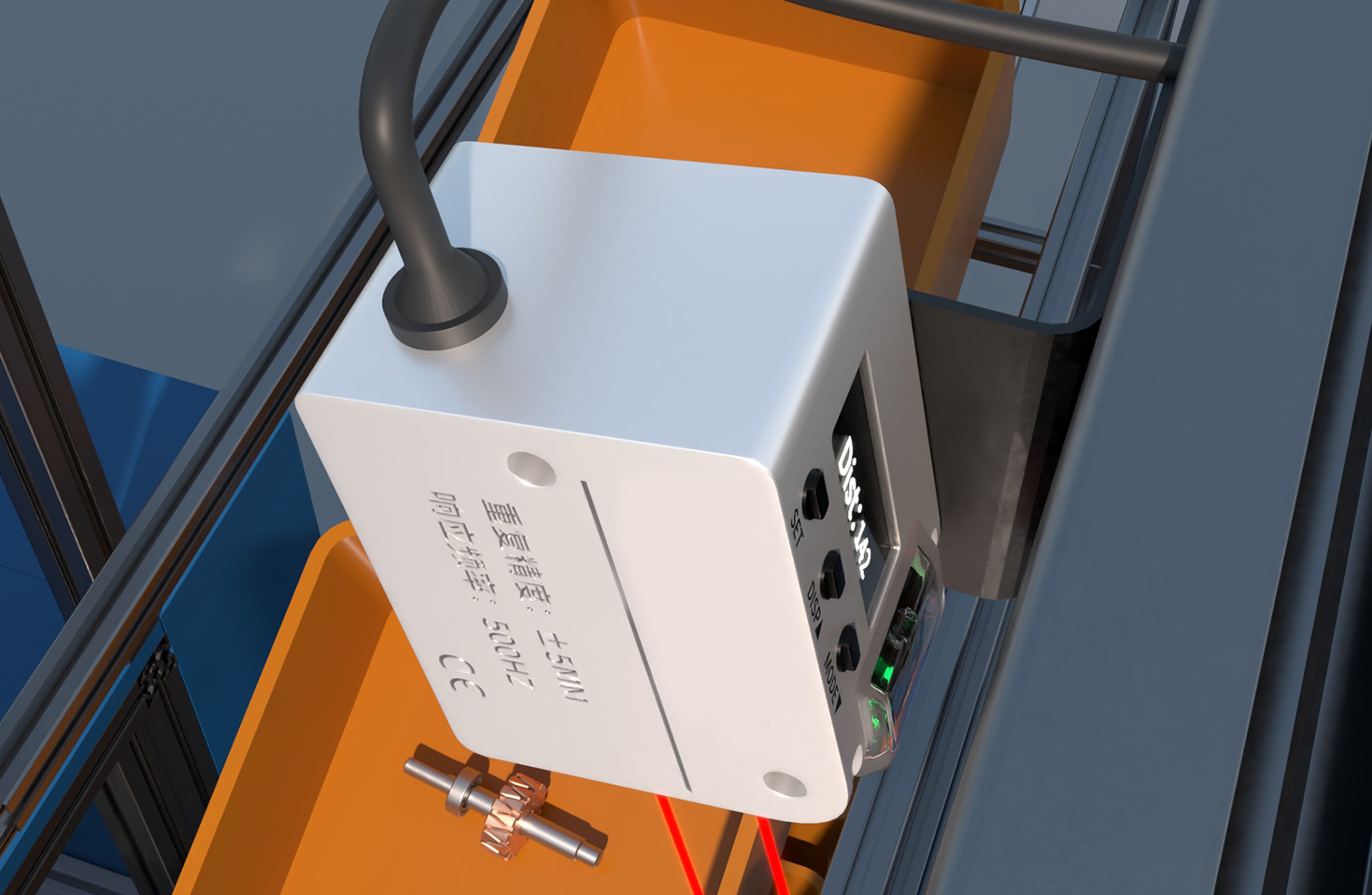
Testing and qualification form the final, non-negotiable pillar of rad-hard laser sensor development. Components and full assemblies undergo rigorous testing in radiation facilities, such as gamma irradiators or particle accelerators. Engineers perform Total Ionizing Dose (TID) tests to assess cumulative damage over time and Single-Event Effects (SEE) testing using heavy ion beams. The sensor's performance parameters—including laser output power stability, wavelength shift, detector responsivity, noise floor, and communication integrity—are monitored in situ during and after irradiation. Standards from organizations like the ESA (European Space Agency) or MIL-STD (U.S. Military Standards) often guide these qualification protocols.
Applications for these hardened sensors are found in extreme and mission-critical scenarios. In nuclear power plants, they are deployed for remote fuel rod inspection, waste handling, and structural integrity monitoring within containment vessels. In space exploration, satellites and probes operating in the Van Allen belts or on the surfaces of other planets rely on rad-hard laser sensors for lidar, altimetry, and spectroscopic analysis. Particle physics experiments, like those at CERN, use networks of these sensors for beam alignment and diagnostics in accelerator tunnels flooded with secondary radiation.
In conclusion, radiation-hardened laser sensors represent a sophisticated fusion of optical engineering, materials science, and electronic design. They are not merely "ruggedized" versions of standard sensors but are fundamentally re-engineered systems. The development process involves a deep understanding of radiation-matter interactions, strategic material choices, innovative circuit design, and exhaustive validation. As humanity pushes further into harsh environments, from the depths of next-generation fission and fusion reactors to the frontiers of deep space, the role of these resilient optical sentinels will only grow in importance, enabling precise measurement and control where conventional technology would simply fail.