In the realm of industrial automation, sensors serve as the critical eyes and ears of machinery, enabling precise control and monitoring. Among the diverse sensor types, proximity sensors and diffuse reflective sensors are fundamental components widely employed for object detection, positioning, and counting applications. This article delves into their operational principles, key distinctions, and practical considerations for deployment in various industrial environments.
Proximity sensors, specifically inductive and capacitive variants, function by detecting the presence or absence of metallic or non-metallic objects without physical contact. Inductive proximity sensors generate an electromagnetic field; when a metallic object enters this field, it induces eddy currents, causing a change in oscillation amplitude that triggers the sensor output. These sensors are ideal for detecting metals like steel, aluminum, or copper, commonly used in machinery for part positioning or metal detection on conveyor lines. Capacitive proximity sensors, on the other hand, sense both metallic and non-metallic materials (e.g., plastics, liquids, or wood) by detecting changes in capacitance when an object alters the electrostatic field. They are suitable for level detection in tanks or material handling where diverse substances are present. A key advantage of proximity sensors is their reliability in harsh conditions, as they are less affected by environmental factors like dust, dirt, or ambient light, making them robust for heavy-duty industrial settings.
Diffuse reflective sensors, a subtype of photoelectric sensors, operate on the principle of light reflection. They emit a light beam (typically infrared or visible LED) and detect the portion reflected directly from the target object. Unlike proximity sensors, diffuse sensors do not require a separate reflector; instead, they rely on the object's surface to bounce light back to the receiver. This makes them versatile for detecting a wide range of materials, including non-metallics, with varying colors and textures. However, their performance can be influenced by factors such as object color, surface finish, and environmental interferences. For instance, dark or matte surfaces absorb more light, reducing reflection and potentially affecting detection range, while shiny surfaces may cause specular reflection, leading to false triggers. To mitigate this, modern diffuse sensors often incorporate background suppression technology, which uses triangulation to measure distance and ignore reflections beyond a set range, ensuring accurate detection even with challenging surfaces.
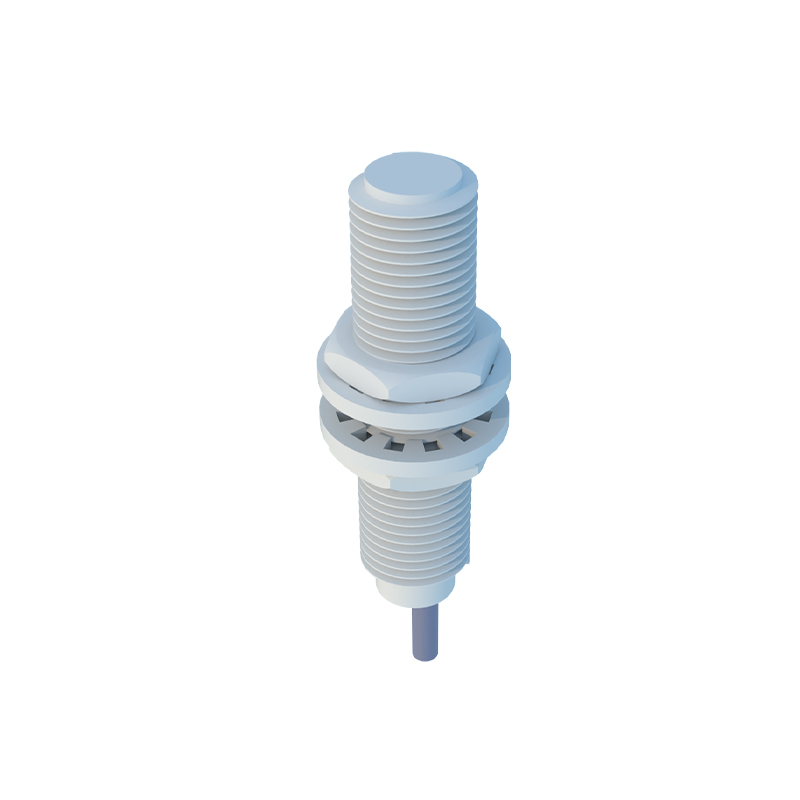
When comparing these sensors, several factors guide selection in industrial applications. Proximity sensors excel in environments with high contamination or variable lighting, as they are immune to optical interference. They offer short to medium detection ranges (typically up to 60 mm for inductive types) and provide consistent performance with metallic targets. In contrast, diffuse reflective sensors offer longer detection ranges (often up to several meters) and greater flexibility for non-metallic objects, but they may require careful calibration to avoid issues from ambient light or reflective backgrounds. For example, in packaging lines, diffuse sensors are commonly used to detect cardboard boxes or plastic containers, while proximity sensors might monitor metal components in automotive assembly.
Installation and maintenance are crucial for optimal sensor performance. For proximity sensors, ensure proper mounting alignment and avoid metal interference in the surrounding area to prevent false readings. Regular cleaning of sensing faces is recommended to prevent buildup from oils or debris. For diffuse reflective sensors, positioning is key: angle the sensor to minimize direct light interference and test with actual objects under operating conditions. Environmental seals (e.g., IP67 ratings) are essential for both types in dusty or wet environments to prolong lifespan. Additionally, consider output types (e.g., NPN/PNP for digital signals or analog outputs for distance measurement) based on control system compatibility.
In summary, proximity and diffuse reflective sensors each offer unique advantages tailored to specific industrial needs. Proximity sensors provide robust, contactless detection for metals and varied materials in tough conditions, while diffuse sensors deliver versatile optical detection for a broader material range. By understanding their principles and applications, engineers can enhance automation efficiency, reduce downtime, and ensure reliable operation in complex manufacturing processes. As technology advances, integration with IoT and smart systems is further expanding their capabilities, paving the way for more adaptive and interconnected industrial solutions.