The development of laser sensors is a meticulous process that blends physics, engineering, and practical application needs. It begins with a clear definition of the sensor's purpose. Will it measure distance with high precision, detect minute particles, or map environments in 3D? This initial requirement phase dictates every subsequent decision, from the choice of laser type to the selection of photodetectors. Engineers must balance desired parameters like range, accuracy, speed, and power consumption against physical constraints and cost targets.
Once the specifications are locked, the core optical design takes center stage. This involves selecting the appropriate laser diode. Common choices include Vertical-Cavity Surface-Emitting Lasers (VCSELs) for structured light applications, edge-emitting lasers for longer ranges, or even specialized pulsed lasers for LiDAR. The laser's wavelength is critical; near-infrared is common for its balance of performance and eye-safety considerations. The optical system, comprising lenses and sometimes mirrors, is then designed to shape and direct the laser beam with precision. A parallel path is the design of the receiver subsystem. The photodetector, be it a simple photodiode, an avalanche photodiode (APD) for sensitive low-light detection, or a CMOS/CCD array for imaging, must be matched to the laser's wavelength. The circuitry for amplifying and processing the tiny electrical signal from the detector is equally vital, often requiring custom-designed analog front-ends to minimize noise.

The heart of a laser sensor is its signal processing and timing electronics. For time-of-flight (ToF) sensors, this means creating circuits capable of measuring the time between a laser pulse emission and the detection of its reflection with nanosecond or even picosecond accuracy. Phase-shift measurement is another common method for continuous-wave lasers. This stage requires sophisticated algorithms, often embedded in a dedicated microcontroller, FPGA, or DSP, to calculate distance, filter out ambient light interference, and handle multiple returns. For scanning LiDAR sensors, this is coupled with precise control of rotating or oscillating mirrors.
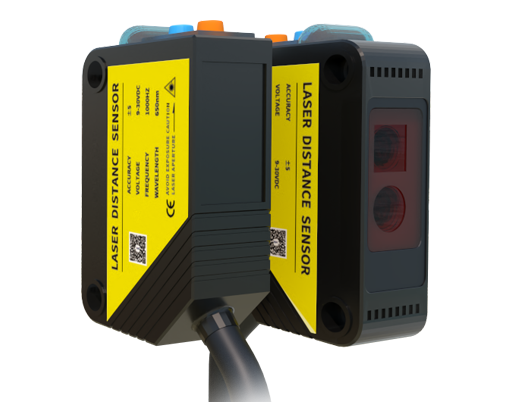
Prototyping follows the design phase. Engineers assemble a functional, often bulky, prototype to validate the core principles. This "breadboard" stage is for testing and iteration. Does the laser maintain coherence over the intended distance? Is the signal-to-noise ratio sufficient? Prototypes undergo rigorous environmental testing—subjected to temperature extremes, vibration, and humidity—to uncover weaknesses. This empirical data feeds back into the design, leading to refinements in thermal management, component placement, and mechanical housing.
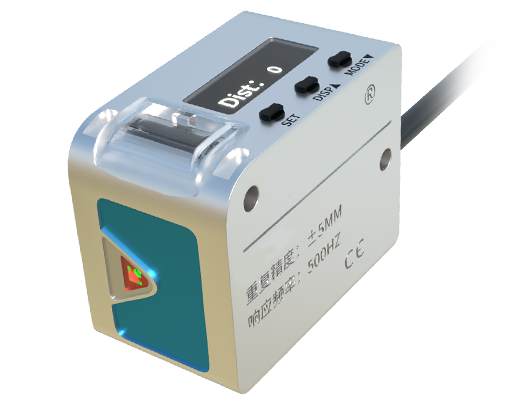
The transition from a working prototype to a manufacturable product is a significant leap. Design for Manufacturing (DFM) principles are applied to reduce part count, simplify assembly, and ensure consistency. The optical alignment, a sensitive procedure, must be designed for speed and accuracy on a production line, sometimes using active alignment with robotic arms. Sourcing reliable, cost-effective components at scale becomes paramount. The final product design must also integrate safety features, ensuring laser output remains within Class 1 or Class 2 limits for consumer or industrial use, which may involve incorporating diffusers or monitoring circuits.
Finally, comprehensive calibration and software integration complete the development. Each sensor unit is calibrated against known references to correct for minor component variances. The software driver and API are developed to provide a clean interface for the end-user's application, whether it's a robot, a smartphone, or an industrial machine. Only after passing stringent quality assurance tests does the laser sensor move into volume production, ready to enable advancements in automation, mobility, and measurement technology.