In the realm of industrial automation and control systems, proximity sensors are indispensable components for detecting the presence or absence of objects without physical contact. Among their various output configurations, the Analog Output (AO) mode stands out for its ability to provide continuous, nuanced data, offering a significant advantage over simple digital on/off signals. This article delves into the intricacies of AO in proximity sensors, exploring its principles, applications, and key considerations for optimal implementation.
At its core, a proximity sensor with analog output generates a continuous electrical signal—typically a voltage (e.g., 0-10V) or current (e.g., 4-20 mA)—that is directly proportional to the distance between the sensor and the target object. Unlike a digital PNP or NPN output that merely indicates a state (object present/absent within a set threshold), the analog signal varies linearly or non-linearly across the sensor's sensing range. This continuous output allows for precise measurement and monitoring of position, displacement, or even variations in the target's characteristics, such as material composition in certain inductive or capacitive sensors.
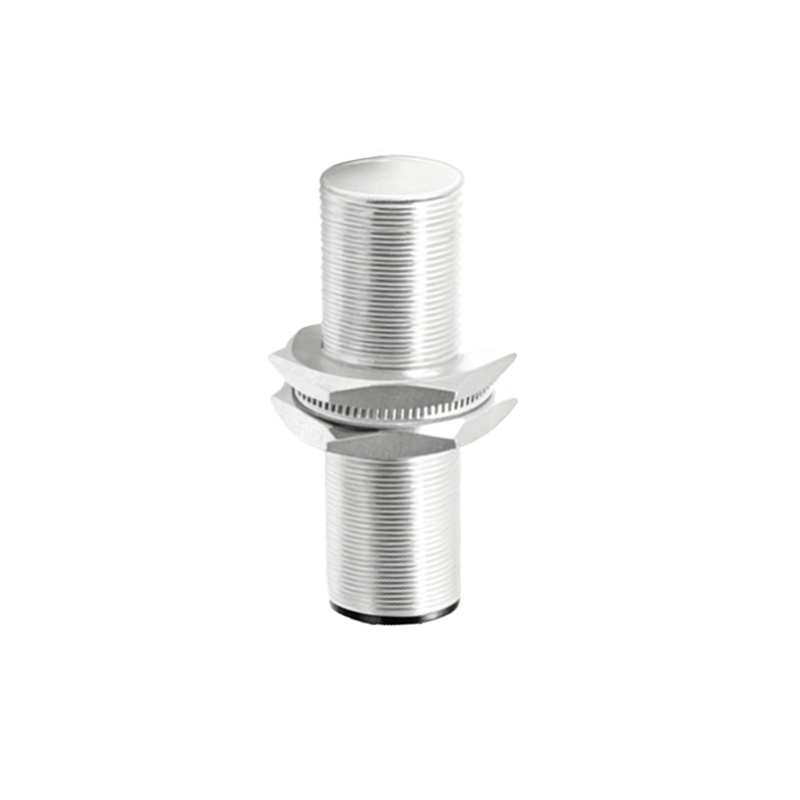
The operational principle hinges on the sensor's internal circuitry. For instance, in an inductive proximity sensor designed for metallic targets, the oscillation amplitude of its LC tank circuit changes with the proximity of the metal. This change is not simply converted to a binary switch but is processed through specialized analog circuitry to produce a smooth, proportional output signal. Similarly, capacitive sensors can translate changes in capacitance caused by the approach of any material into a variable analog signal. This raw analog data is then transmitted to a receiving device, such as a Programmable Logic Controller (PLC), a data acquisition system, or an analog input module.
The advantages of employing analog output proximity sensors are substantial. Firstly, they enable continuous monitoring and control. In applications like tension control in winding machines, the exact position of a dancer arm or roller, measured via an analog sensor, allows for real-time adjustment of motor speed to maintain consistent material tension. Secondly, they facilitate precision measurement. Tasks requiring exact positioning, such as controlling the stroke of a hydraulic cylinder or monitoring fill levels in tanks with continuous level sensing, benefit greatly from the resolution provided by AO. Thirdly, they simplify system architecture. A single analog sensor can often replace multiple digital sensors set at different thresholds, reducing hardware complexity and cost.
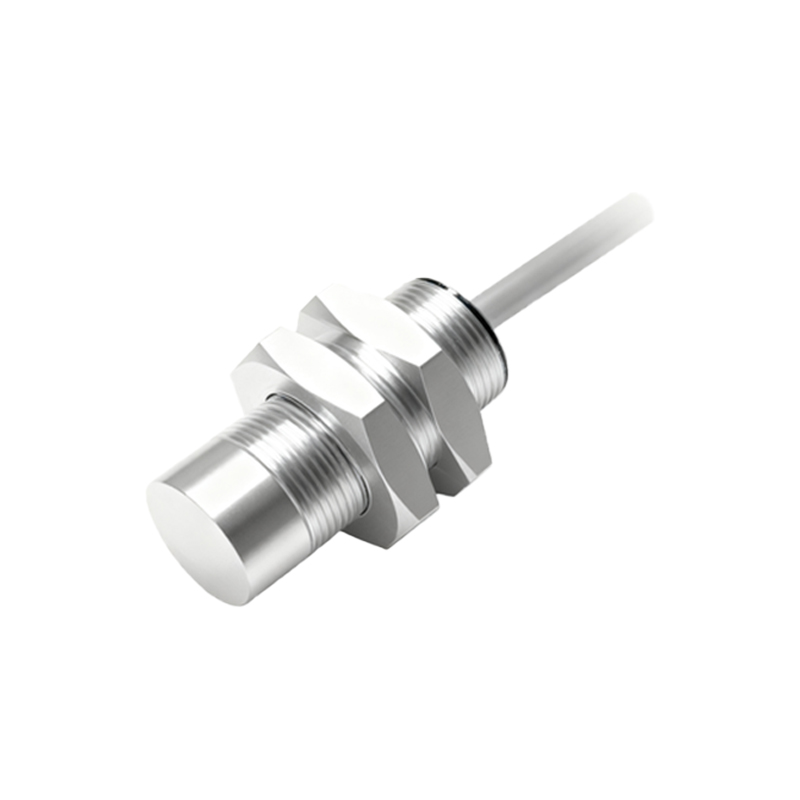
Common industrial applications are widespread. In automotive assembly, analog ultrasonic or laser sensors measure gap and flush dimensions between body panels with high accuracy. In packaging machinery, they control the precise cutting length of materials. In metal forming, they monitor bend angles or thickness variations. The 4-20 mA current loop output is particularly favored in process industries for its inherent noise immunity and ability to power the sensor over long distances (two-wire configuration), making it ideal for level or position monitoring in harsh environments.
However, integrating analog output sensors requires careful consideration. Signal integrity is paramount. Analog signals are susceptible to electrical noise from motors, drives, and other equipment. Proper shielding of cables, grounding practices, and separation from power lines are essential. Calibration and scaling are critical steps. The sensor's output range (e.g., 2V at 5mm, 8V at 20mm) must be accurately mapped to the engineering units (mm, inches) within the controller's software. Resolution and linearity specified in the sensor datasheet determine the smallest detectable change and the accuracy across the range, directly impacting system performance. Lastly, environmental factors like temperature can affect analog stability, necessitating sensors with good temperature compensation for demanding applications.
In conclusion, the analog output capability transforms a standard proximity sensor from a simple switch into a versatile measurement device. By providing a continuous signal proportional to distance, it unlocks advanced functionalities in automation, process control, and quality assurance. While demanding more attention to installation and configuration than its digital counterparts, the payoff in terms of precision, flexibility, and richer data acquisition is invaluable for sophisticated industrial systems. Engineers must weigh the requirements of resolution, noise immunity, and environmental robustness to select and implement the appropriate analog output proximity sensor for their specific application, ensuring reliable and accurate operation on the factory floor.