Proximity sensors have become an integral, often invisible, component in our daily lives. These devices detect the presence or absence of an object within a specific range without any physical contact. The core principle is simple: a proximity sensor emits an electromagnetic field or a beam of radiation, and then looks for changes in the field or return signal. The object being detected is often referred to as the sensor's "target.
The most common types are inductive, capacitive, and photoelectric sensors. Inductive proximity sensors are widely used in industrial settings. They generate an oscillating electromagnetic field. When a metallic target enters this field, it induces eddy currents on the metal's surface, which dampens the oscillation. The sensor's circuit detects this damping and triggers a switch. These sensors are robust, reliable for detecting metals, and unaffected by dust or oil.
Capacitive proximity sensors, on the other hand, can detect both metallic and non-metallic materials like liquids, plastics, or wood. They function by generating an electrostatic field. Any object that enters this field alters the capacitance of the sensor's circuit. This change is measured, and once it reaches a predetermined threshold, the sensor activates. This makes them ideal for applications like liquid level detection or sensing powdery materials through a container wall.
Photoelectric sensors use light, typically infrared, to detect objects. They consist of an emitter and a receiver. In one common configuration, the emitter sends a constant light beam to a reflector; when an object interrupts this beam, the receiver detects the loss of light and signals the presence of the object. These sensors have the longest sensing ranges and are excellent for detecting small or clear objects.
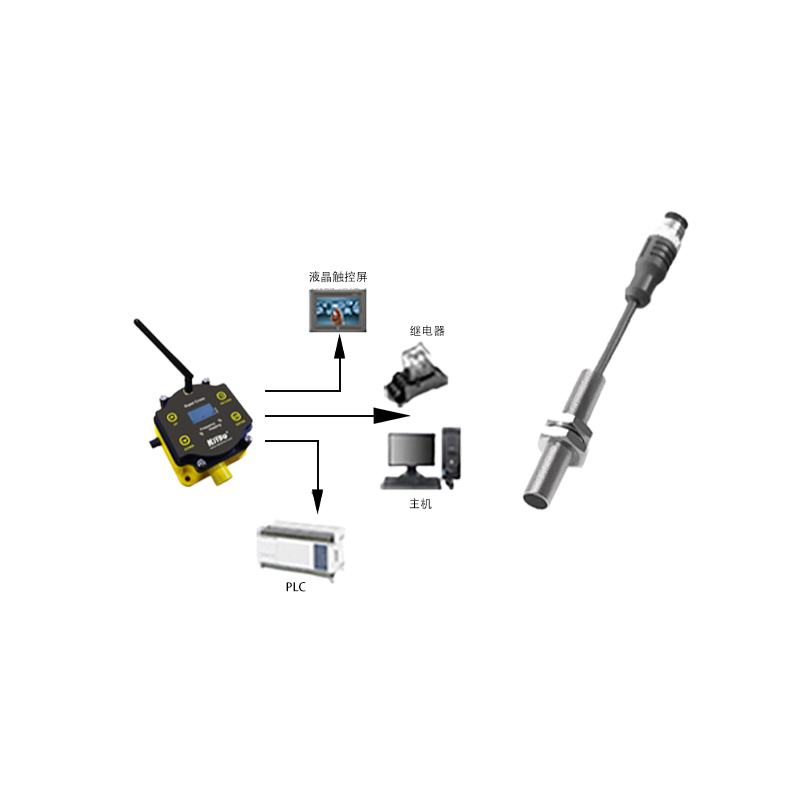
The applications are vast and varied. In smartphones, a small proximity sensor (often infrared-based) detects when the phone is held to the ear during a call, turning off the touchscreen to prevent accidental inputs and saving battery. In the automotive industry, they are crucial for parking assistance systems, alerting drivers to obstacles. Advanced driver-assistance systems (ADAS) rely on arrays of these sensors for functions like blind-spot monitoring and automatic emergency braking.
Industrial automation is perhaps the largest domain. Here, proximity sensors are workhorses on assembly lines, counting products, verifying the position of machine parts, and ensuring robotic arms operate safely by detecting human presence. They enable precise, high-speed, and repeatable operations that would be impossible with mechanical limit switches.
When selecting a proximity sensor, several key factors must be considered. The sensing range, or the maximum distance at which the sensor can reliably detect its target, is paramount. The nature of the target material—metal, plastic, liquid—dictates whether an inductive or capacitive sensor is needed. Environmental conditions like temperature extremes, humidity, or the presence of contaminants can affect performance and housing material choice. Finally, the output type, such as a simple digital on/off signal or a more complex analog signal proportional to distance, must match the control system's requirements.
The future of proximity sensing is leaning towards miniaturization, increased intelligence, and integration. Sensors are becoming smaller, cheaper, and more energy-efficient, allowing them to be embedded in more consumer devices and Internet of Things (IoT) applications. Smart sensors with built-in microprocessors can perform self-diagnostics, adjust sensitivity automatically, and communicate data over industrial networks. Furthermore, the fusion of proximity data with other sensor inputs in systems like LiDAR is pushing the boundaries of robotics and autonomous vehicles.
In essence, proximity sensors are the silent sentinels of the technological world. By providing a reliable, non-contact method of detection, they enhance safety, improve efficiency, and enable automation across countless industries, from manufacturing floors to the smartphones in our pockets.