Point laser sensors have become indispensable components in modern industrial automation, offering unparalleled precision, reliability, and versatility. These sensors operate by emitting a focused laser beam onto a target surface and measuring the reflected light to determine distance, displacement, or presence. Their non-contact measurement capability makes them ideal for applications where physical contact could damage the target or the sensor itself, such as in delicate electronics assembly or high-speed production lines.
One of the primary applications of point laser sensors is in precision dimensional measurement. In manufacturing, they are used to verify the thickness of materials, check part dimensions, and ensure components meet strict tolerances. For example, in the automotive industry, these sensors measure the gap between car body panels to guarantee consistent quality and fit. Similarly, in semiconductor manufacturing, they monitor wafer thickness and flatness with micron-level accuracy, which is critical for device performance.
Another significant application is in displacement and vibration monitoring. Point laser sensors can detect minute changes in position or movement, making them valuable for predictive maintenance. By monitoring the vibration levels of rotating machinery like motors, pumps, or turbines, these sensors help identify early signs of wear or misalignment, allowing for timely maintenance and reducing downtime. This proactive approach enhances operational efficiency and extends equipment lifespan in industries such as energy and heavy machinery.
In robotics and automation, point laser sensors play a crucial role in guidance and positioning systems. They enable robots to accurately locate objects on conveyor belts, align parts for assembly, or navigate through dynamic environments. This capability is essential in logistics warehouses, where automated guided vehicles (AGVs) use laser sensors to avoid obstacles and optimize routing, improving throughput and safety. Additionally, in packaging lines, sensors ensure products are correctly positioned for labeling, sealing, or sorting, minimizing errors and waste.
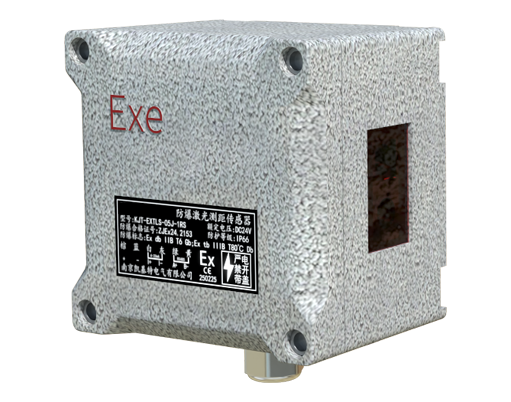
Quality control and inspection processes also benefit from point laser sensor technology. They can detect surface defects, such as scratches, dents, or contamination, by analyzing the reflected laser pattern. In food processing, for instance, sensors inspect packaging for seal integrity or measure fill levels to comply with regulatory standards. In metalworking, they verify surface finishes or identify imperfections before products proceed to further stages, ensuring high-quality outputs and reducing rework costs.
Environmental adaptability is a key advantage of point laser sensors. Many models are designed to withstand harsh conditions, including extreme temperatures, dust, moisture, or vibrations, making them suitable for outdoor or rugged industrial settings. In agriculture, they monitor crop growth or soil levels, while in construction, they assist in alignment and leveling tasks. Their robustness ensures consistent performance across diverse sectors, from aerospace to pharmaceuticals.
Looking ahead, advancements in point laser sensor technology continue to expand their applications. Integration with IoT (Internet of Things) and AI (Artificial Intelligence) enables real-time data analysis and predictive insights, fostering smarter factories and automated systems. For example, sensors can now communicate with central control systems to adjust processes dynamically, optimizing production flow and energy use. As industries embrace Industry 4.0, the demand for high-precision, reliable sensors like point lasers is expected to grow, driving innovation in automation and efficiency.
In summary, point laser sensors are vital tools in industrial automation, offering precise measurement, non-contact operation, and durability. Their applications span from manufacturing and robotics to quality control and beyond, enhancing productivity, safety, and quality. As technology evolves, these sensors will likely become even more integral to automated systems, supporting the transition toward more intelligent and connected industrial environments.