In the intricate world of industrial automation and smart systems, proximity sensors stand as silent yet indispensable sentinels. These devices, designed to detect the presence or absence of an object within a specific range without physical contact, have revolutionized how machines interact with their environment. Their role extends far beyond simple detection, forming the backbone of countless safety, efficiency, and precision-driven applications across diverse sectors.
At its core, a proximity sensor operates by emitting an electromagnetic field, beam, or acoustic wave and monitoring for changes in the return signal or field. When a target object enters this field, it causes a detectable alteration—such as a change in capacitance, inductance, or the reflection of light or sound. This triggers the sensor's output circuit, sending a signal to a control system like a PLC (Programmable Logic Controller). The primary advantage is the non-contact nature of detection, which eliminates mechanical wear, allows for high-speed operation, and enables use in harsh environments where physical touch is impractical or damaging.
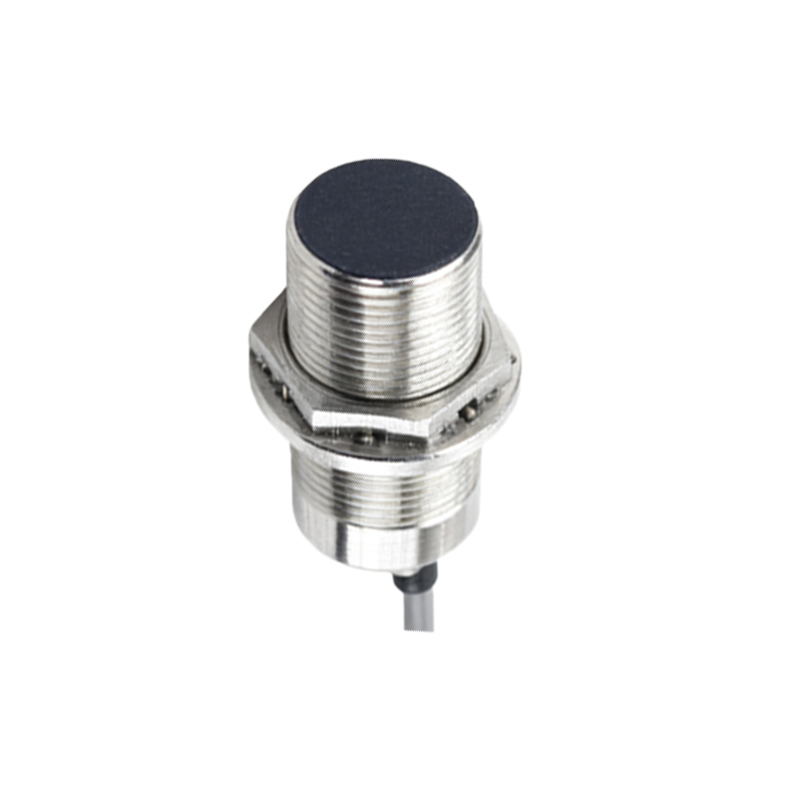
Several key technologies define the proximity sensor landscape. Inductive sensors are the workhorses for detecting metallic objects, commonly used in machine tools, automotive assembly lines, and material handling for tasks like counting, positioning, and end-of-travel detection. Capacitive sensors, on the other hand, can detect a wider range of materials, including liquids, plastics, and wood, making them ideal for level sensing in tanks or detecting non-metallic containers. Ultrasonic sensors use sound waves to measure distance or detect objects, excelling in challenging conditions with dust, moisture, or varying colors. Finally, photoelectric sensors utilize light beams (often infrared) for long-range detection and are pivotal in packaging, pharmaceutical, and conveyor belt systems.
The practical applications are vast and critical. In manufacturing, they ensure robotic arms precisely pick and place components, verify part presence in assembly jigs, and provide safety interlocks on machinery guards. In the automotive industry, sensors monitor wheel speed for anti-lock braking systems (ABS) and control engine valve timing. Consumer electronics rely on them for touchless screen activation and battery cover detection. Furthermore, they enable predictive maintenance by monitoring vibration or positioning in rotating equipment, alerting operators to misalignment before catastrophic failure occurs.
Selecting the right proximity sensor involves careful consideration of several factors. The sensing distance, target material, size, and required output type (e.g., NPN/PNP, analog, or digital) are fundamental. Environmental conditions are equally crucial; sensors may need specific ingress protection (IP) ratings for dust and water resistance, temperature tolerance for foundries or cold storage, and immunity to electrical noise in high-interference areas. Proper installation is key—sensors must be mounted securely, with attention to avoiding mutual interference between multiple units and ensuring the target approaches the sensing face correctly.
Looking ahead, the evolution of proximity sensors is intertwined with Industry 4.0 and the Internet of Things (IoT). Modern sensors are becoming smarter, integrating IO-Link communication to provide not just a binary signal but also diagnostic data like temperature, operating hours, and signal strength. This facilitates condition monitoring and seamless integration into digital twin systems. Miniaturization continues, allowing embedding into ever-smaller devices, while enhanced sensing technologies improve accuracy and reliability in complex scenarios.
In conclusion, proximity sensors are fundamental components that translate physical presence into actionable electronic data. Their ability to operate reliably, swiftly, and without contact makes them a cornerstone of modern automated systems. From ensuring the smooth flow of a production line to safeguarding human operators and enabling sophisticated process control, their role is both foundational and transformative. As automation grows more intelligent and interconnected, the humble proximity sensor will undoubtedly continue to be a critical enabler of efficiency, safety, and innovation.