In the realm of industrial automation and control systems, inductive proximity sensors are indispensable components for non-contact detection of metallic objects. Among the various configurations available, the PNP 24V Normally Closed (NC) inductive proximity sensor stands out for its specific electrical characteristics and operational logic, making it a preferred choice in numerous applications. This article delves into the working principle, wiring, advantages, and typical use cases of this sensor type, providing a comprehensive guide for engineers and technicians.
An inductive proximity sensor fundamentally operates on the principle of electromagnetic induction. It generates an oscillating electromagnetic field from its sensing face. When a metallic target enters this field, eddy currents are induced on the target's surface. This causes a change in the oscillation amplitude within the sensor's internal LC tank circuit. This change is detected by the sensor's circuitry, which then triggers a change in the output state. For a Normally Closed (NC) sensor, the output circuit is initially closed, allowing current to flow when the sensor is powered but no target is present. When a target is detected within the specified sensing range, the output circuit opens, stopping the current flow.
The designation "PNP 24V" defines two critical aspects: the switching type and the supply voltage. "PNP" refers to the transistor output type. In a PNP sensor, the output switch is a PNP transistor. When active (or "on"), it switches the positive supply voltage (24V) to the load. Essentially, the sensor acts as a sourcing device, providing a positive voltage to the connected device, such as a PLC input or a relay coil. The "24V" indicates the nominal operating voltage, typically within a range of 10-30V DC, aligning with the standard control voltage used in many industrial panels and systems.
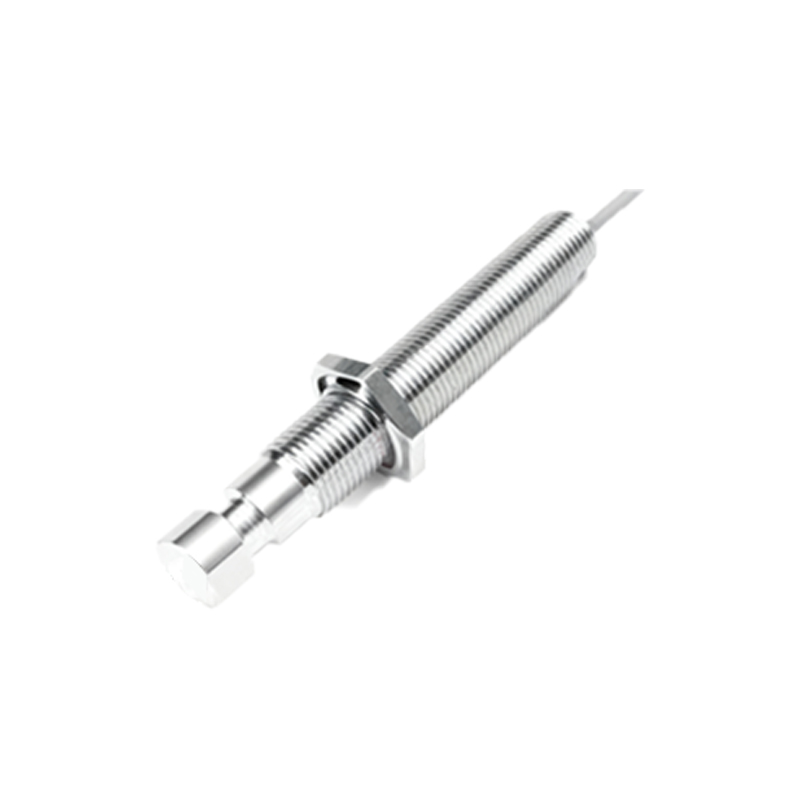
Combining these features, a PNP 24V Normally Closed sensor has the following behavior: In its idle state (no target detected), the output is electrically closed, connecting the signal line to the positive supply (24V). When a target is detected, the output transistor turns off, opening the circuit and bringing the signal line to a high-impedance state (effectively disconnected from the positive supply). This logic is inverse to the more common Normally Open (NO) type and is crucial for fail-safe design.
Wiring a PNP NC sensor is straightforward but requires attention to detail. Typically, the sensor has three wires: Brown, Blue, and Black. The brown wire connects to the positive DC supply voltage (+24V). The blue wire connects to the common negative or 0V. The black wire is the signal output wire. For a Normally Closed configuration, when no metal target is present, the black wire will have +24V relative to the blue wire. When a target is detected, the voltage on the black wire drops to near 0V (high impedance). It is vital to connect the load (e.g., a PLC digital input) between the black signal wire and the positive supply (+24V). This is because the PNP sensor sources current; the load completes the circuit to common negative.
The choice of a Normally Closed configuration offers distinct advantages, primarily in safety and error detection. In a fail-safe circuit design, an NC sensor is often used to monitor a safe condition. For instance, a sensor checking that a safety guard is closed would be wired as NC. If the guard is properly closed (no target for the sensor), the circuit remains closed, and the system operates. If the guard opens or if the sensor wire is cut or loses power, the circuit opens, signaling a fault and triggering a machine stop. This inherent safety feature makes PNP 24V NC sensors ideal for critical monitoring applications where a fault must cause a safe shutdown.

Common applications for PNP 24V NC inductive proximity sensors are found across various industries. They are frequently used in material handling for detecting the absence of a metal part on a conveyor, triggering a replenishment signal. In machine tools, they can serve as end-of-travel limit switches in a fail-safe manner. In automated assembly lines, an NC sensor might verify that a metal component has been successfully ejected from a mold or fixture; if the component remains (target detected), the output opens, signaling an error. Their robustness, resistance to environmental contaminants like dust and oil, and non-contact nature ensure long-term reliability in harsh industrial environments.
When selecting a PNP 24V NC inductive sensor, engineers must consider key parameters such as the sensing distance (rated operating distance), the target material (steel, aluminum, brass, etc.), housing material (often nickel-plated brass or stainless steel), and environmental protection ratings (IP67 or IP69K for washdown areas). Understanding the difference between PNP and NPN (sinking) outputs and between Normally Open and Normally Closed logic