The Q10 proximity sensor represents a significant advancement in non-contact detection technology, designed to meet the rigorous demands of modern industrial automation. As a key component in countless manufacturing and processing systems, its performance directly impacts efficiency, safety, and reliability. This article delves into the core technology, operational principles, and primary application scenarios of the Q10 sensor, providing a comprehensive overview for engineers and system integrators.
At its heart, the Q10 is an inductive proximity sensor. It operates by generating a high-frequency electromagnetic field from its sensing face. When a metallic target enters this field, eddy currents are induced within the target. These currents cause a measurable change in the sensor's internal oscillation circuit, which is then detected and processed. The output signal switches state, indicating the presence or absence of the target. The "Q10" designation typically refers to a specific form factor and sensing distance, often a 10mm diameter cylindrical housing with a standardized sensing range, though specifications can vary by manufacturer.
Key technical features distinguish the Q10 in the marketplace. First is its robust construction. Housed in stainless steel or nickel-plated brass, it offers exceptional resistance to mechanical impact, vibration, and harsh industrial environments, including exposure to coolants and cutting oils. Many models are fully submersible and comply with IP67 or higher ingress protection ratings. Second is its sensing performance. It provides a stable and repeatable detection point with minimal hysteresis. The sensing distance is typically rated as "nominal" (Sn), with factors like target material, size, and temperature influencing the effective range. For standard mild steel, a Q10 sensor might offer a sensing distance of 1.5mm to 5mm, depending on the exact model. Third is its electrical integration. The Q10 commonly features a 3-wire DC configuration (PNP or NPN output) or a 2-wire AC/DC version, allowing for straightforward connection to Programmable Logic Controllers (PLCs), relays, and other control systems. Built-in protection against short-circuits, overload, and reverse polarity is standard, enhancing system durability.
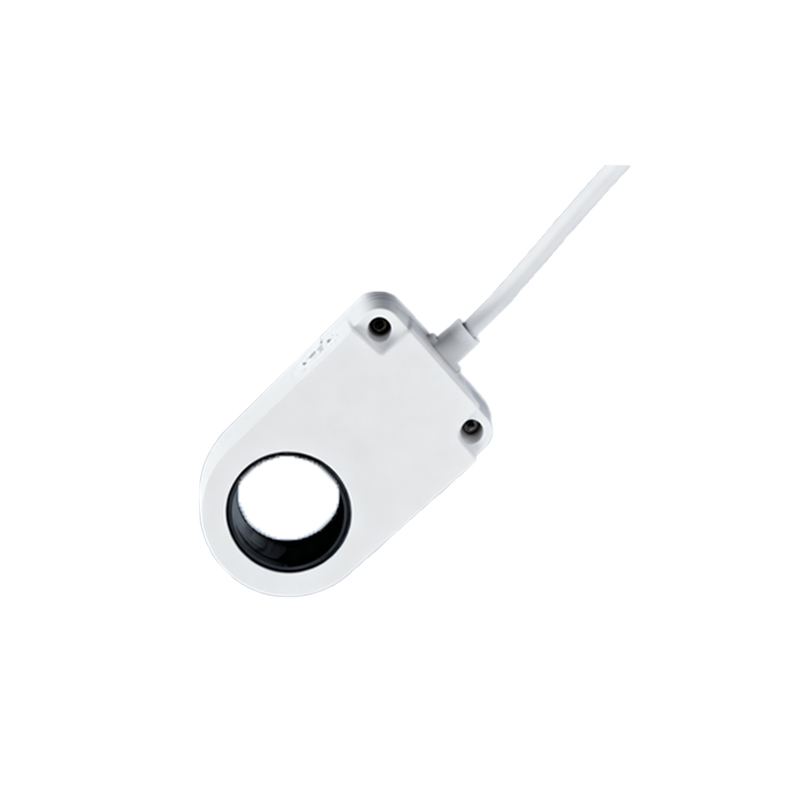
The application spectrum for the Q10 proximity sensor is vast. In automated assembly lines, it is indispensable for part presence verification, ensuring a component is in place before a robotic arm performs an operation or before a machining cycle begins. It acts as a precise limit switch for positioning control, for instance, confirming a cylinder has fully retracted or extended. On conveyor systems, Q10 sensors count passing metallic objects, monitor product flow, and detect jams. Within machine tools, they provide critical end-position detection for slides and tool changers, contributing to machining accuracy and preventing collisions. In packaging machinery, they control the filling level by detecting the position of metallic pistons or actuators.
Selecting the correct Q10 sensor requires careful consideration of several parameters. The target material is paramount; inductive sensors are optimized for ferrous metals like steel and iron. For non-ferrous metals like aluminum or copper, the effective sensing distance is reduced, and a sensor with a factor-1 correction or a specialized model may be necessary. The required sensing distance must account for installation tolerances and safety margins. Environmental conditions dictate the needed housing material and protection rating; high-temperature applications require sensors with extended thermal operating ranges. Finally, the electrical characteristics—operating voltage, output type (sourcing PNP or sinking NPN), and current capacity—must match the control system's requirements.
Installation and maintenance are straightforward but crucial for optimal performance. The sensor should be mounted securely to avoid misalignment. A non-metallic surroundings area must be maintained to prevent false triggering from adjacent metal structures—manufacturers provide specific mounting recommendations. Regular cleaning of the sensing face from accumulated debris, metal chips, or oil film is essential to maintain the nominal sensing range. While extremely reliable, diagnostics are simplified through LED status indicators that show power and output switching states.
In conclusion, the Q10 proximity sensor is a versatile, robust, and critical workhorse in industrial automation. Its ability to provide reliable, wear-free detection of metallic objects in challenging environments makes it a foundational element for building efficient, safe, and intelligent manufacturing systems. Understanding its technology and proper application principles is key for engineers to leverage its full potential, ensuring seamless integration and long-term operational success in diverse industrial settings.