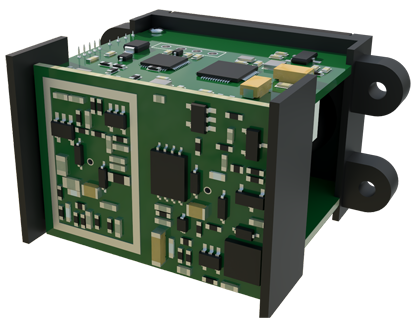
Laser distance sensors, also known as laser rangefinders or LiDAR (Light Detection and Ranging) sensors in specific configurations, have become indispensable tools across numerous industries. Their core function is to measure distance with high precision, speed, and reliability by analyzing the properties of a reflected laser beam. The fundamental principle revolves around the emission of a focused laser pulse or modulated continuous wave towards a target. The sensor then captures the reflected signal, and the distance is calculated based on the time-of-flight (ToF) or phase-shift measurement of this returning light.
The signal generated and received by these sensors is rich with information, and its integrity is paramount for accurate measurement. In Time-of-Flight (ToF) pulsed systems, the sensor measures the elapsed time between the emission of a short laser pulse and the detection of its reflection. Distance (d) is derived from the simple equation d = (c * t) / 2, where 'c' is the speed of light and 't' is the measured time. The signal here is essentially a precise timestamp. The challenge lies in accurately detecting the returning pulse, which can be weak and noisy, especially over long distances or from low-reflectivity surfaces. Advanced signal processing algorithms are employed to filter out ambient light noise and precisely identify the pulse's leading edge.
In contrast, phase-shift measurement, often used in continuous-wave (CW) modulated systems, involves emitting a laser beam whose intensity is sinusoidally modulated. The reflected beam's phase is shifted relative to the emitted beam due to the travel time. The sensor detects this phase difference (Δφ), and the distance is calculated using the formula d = (c * Δφ) / (4π f_mod), where f_mod is the modulation frequency. This method can achieve sub-millimeter resolutions. The signal in this case is an analog waveform, and its phase must be extracted with high fidelity amidst potential distortion.
The quality of the laser distance sensor signal is influenced by several critical factors. Target surface properties are primary; a smooth, reflective surface like polished metal provides a strong, coherent return signal. Conversely, dark, rough, or absorptive materials (like black rubber or velvet) significantly attenuate the signal, reducing the signal-to-noise ratio (SNR) and potentially causing measurement dropouts or errors. Environmental conditions also play a major role. Ambient light, particularly direct sunlight which contains intense infrared radiation, can saturate the sensor's photodetector. Atmospheric conditions like fog, dust, or rain can scatter and absorb the laser beam, weakening the return signal. Industrial environments add challenges such as vibrations, which can affect optical alignment, and electrical interference from motors or drives, which can introduce noise into the signal processing circuitry.
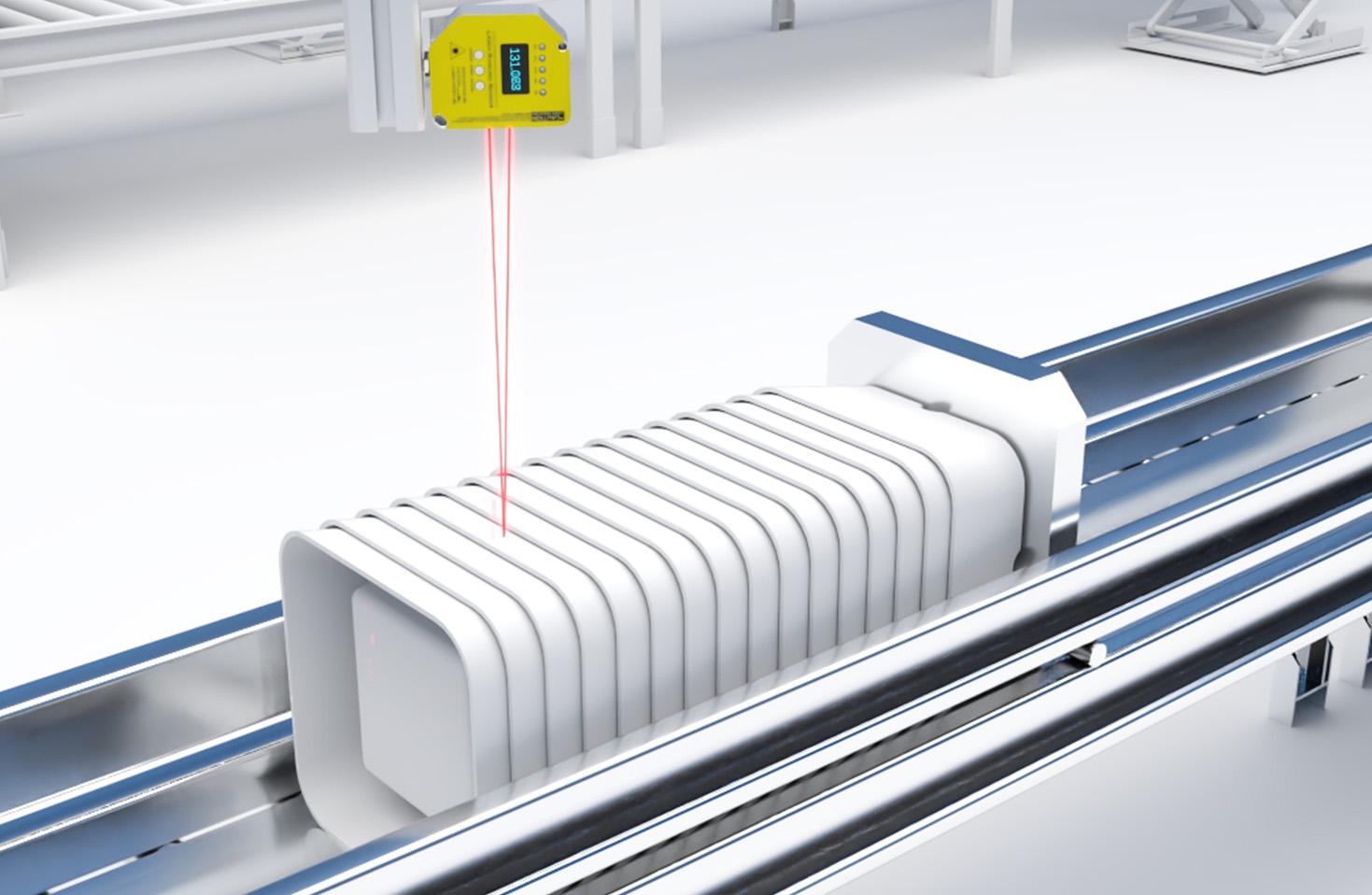
To combat these challenges, modern laser sensors incorporate sophisticated signal processing and hardware design. Optical filters are used to block wavelengths outside the laser's narrow band, dramatically reducing ambient light interference. Specialized algorithms, including averaging, digital filtering, and peak detection routines, are implemented in onboard microprocessors to stabilize readings and reject spurious signals. For demanding applications, sensors may offer programmable response times or background suppression features to ignore distant objects. The choice of laser wavelength is also strategic; while many industrial sensors use visible red or Class 2 infrared lasers (e.g., 650nm, 850nm), some applications utilize lasers in the eye-safe range (e.g., 1550nm) for longer ranges or better performance in specific atmospheric conditions.
The applications of laser distance sensors are vast and growing. In industrial automation, they are crucial for precise positioning, robotic guidance, conveyor belt monitoring, and fill level control in tanks. In the automotive sector, they form the backbone of Advanced Driver-Assistance Systems (ADAS) and autonomous vehicle navigation, providing real-time 3D mapping of the surroundings. In construction and surveying, they enable fast and accurate distance and volume measurements. Furthermore, they are integral to drones for terrain mapping, obstacle avoidance, and landing assistance. In each application, the reliability of the distance measurement is directly tied to the robustness of the signal chain—from laser diode driver stability to the sensitivity of the avalanche photodiode (APD) or position-sensitive device (PSD) and the efficacy of the digital signal processor.
In conclusion, the signal from a laser distance sensor is far more than a simple reflection. It is a carefully generated, transmitted, and analyzed piece of data that must be preserved and interpreted accurately under often challenging conditions. Understanding the principles of signal generation (ToF vs. phase-shift), the factors that degrade signal quality, and the technologies used to enhance it is essential for selecting the right sensor and ensuring optimal performance in any application. As technology advances, with improvements in laser diodes, detector sensitivity, and processing power, these sensors will continue to push the boundaries of precision, range, and reliability, enabling new levels of automation and measurement capability.