In the realm of industrial automation, proximity sensors are indispensable components, widely used for detecting the presence or absence of objects without physical contact. Common types include inductive, capacitive, and photoelectric sensors, each operating on distinct principles. A frequent query among engineers and technicians is whether these sensors can reliably detect paper materials. This article delves into the technical aspects, examining the feasibility and limitations of using proximity sensors for paper detection.
Inductive proximity sensors generate an electromagnetic field to detect metallic objects. When a metal target enters this field, it induces eddy currents, causing a change in the sensor's oscillation amplitude, which triggers an output signal. However, paper is non-metallic and non-conductive, making it invisible to inductive sensors. Thus, inductive sensors are entirely unsuitable for detecting paper, as they rely solely on the electrical conductivity of materials.
Capacitive proximity sensors, on the other hand, operate by detecting changes in capacitance. They generate an electrostatic field and respond to any object that alters the dielectric constant within their sensing range. Since paper has a different dielectric constant than air, capacitive sensors can theoretically detect it. In practice, factors such as paper thickness, moisture content, and environmental conditions (e.g., humidity) significantly influence sensitivity. Thin, dry paper may yield weak signals, while damp or thick paper stacks are more detectable. Engineers often adjust the sensor's sensitivity threshold to optimize performance, but false triggers from nearby non-target materials can be a challenge.
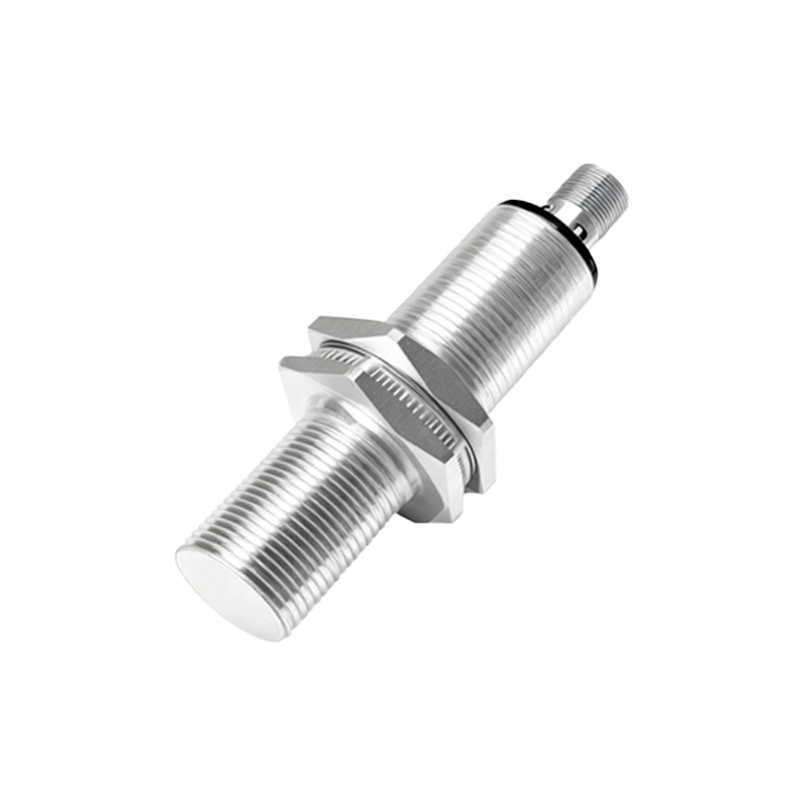
Photoelectric sensors use light beams (infrared or visible) to detect objects by measuring reflected or transmitted light. For paper detection, diffuse-reflective photoelectric sensors are commonly employed. These sensors emit light and detect the reflection from the paper's surface. Paper, being opaque or semi-opaque, generally reflects enough light to trigger a response. However, variations in paper color, texture, or transparency (e.g., translucent tracing paper) can affect reliability. Dark-colored paper may absorb more light, reducing reflectivity, while glossy paper might cause specular reflections that misalign with the receiver. Through-beam photoelectric sensors, which use separate emitter and receiver units, offer higher accuracy for paper detection by measuring light blockage, but require precise alignment and are more susceptible to environmental interference like dust or ambient light.
Ultrasonic proximity sensors emit high-frequency sound waves and measure the time delay of echoes to determine object distance. They can detect paper regardless of color or transparency, as sound waves reflect off most solid surfaces. However, paper's lightweight and porous nature may absorb some sound energy, potentially reducing detection range or consistency. Additionally, environmental factors such as temperature fluctuations or air turbulence can impact ultrasonic sensor accuracy.
In real-world applications, selecting the right sensor for paper detection depends on specific requirements. For instance, in printing machinery, photoelectric sensors are preferred for counting sheets or monitoring paper feed due to their fast response and precision. In packaging lines, capacitive sensors might be used to detect paper-based materials in humid conditions. Key considerations include sensing distance, response time, environmental robustness, and cost. Engineers must conduct thorough testing under operational conditions to ensure reliability, as paper properties (e.g., weight, coating) vary widely across industries.
Maintenance and calibration are crucial for sustained performance. Sensors should be kept clean from dust or debris, and sensitivity settings may need periodic adjustment to account for wear or environmental changes. Innovations in sensor technology, such as smart sensors with self-diagnostic features, are enhancing adaptability for diverse materials like paper.
In summary, while inductive sensors cannot detect paper, capacitive, photoelectric, and ultrasonic sensors offer viable solutions with trade-offs. The choice hinges on material characteristics and application demands, underscoring the importance of technical evaluation in industrial design.