In the demanding landscape of industrial automation, where milliseconds and microns dictate efficiency and safety, the role of proximity sensors is foundational. Among the leaders in this critical field stands Turck, a company synonymous with innovation, durability, and precision. Turck proximity sensors are engineered to deliver unparalleled performance in the harshest environments, making them a cornerstone technology for countless applications across manufacturing, material handling, automotive, and packaging industries.
At their core, Turck proximity sensors are non-contact devices designed to detect the presence or absence of an object within their sensing range. They operate on various principles, primarily inductive, capacitive, and magnetic, each tailored to specific material types and environmental conditions. Inductive sensors, for instance, are the workhorses for detecting metallic objects. Turck's inductive sensors are renowned for their exceptional switching frequency and extended sensing ranges, capable of reliably detecting ferrous and non-ferrous metals even when obscured by dirt, dust, or non-metallic barriers. This robustness is achieved through advanced coil designs and sophisticated ASIC (Application-Specific Integrated Circuit) technology, which ensures stable operation despite electrical noise or temperature fluctuations common in industrial settings.
For non-metallic targets such as wood, glass, liquids, or plastics, Turck offers a comprehensive range of capacitive proximity sensors. These sensors detect changes in the dielectric constant, allowing them to sense materials through container walls or monitor fill levels in tanks and silos. Turck engineers have mastered the art of shielding and sensitivity adjustment, minimizing false triggers and enabling precise detection of challenging materials. Furthermore, the company's magnetic sensors, including reed and magnetostrictive types, provide highly reliable position sensing for cylinders and valves, often featuring compact designs that fit into tight spaces without compromising performance.
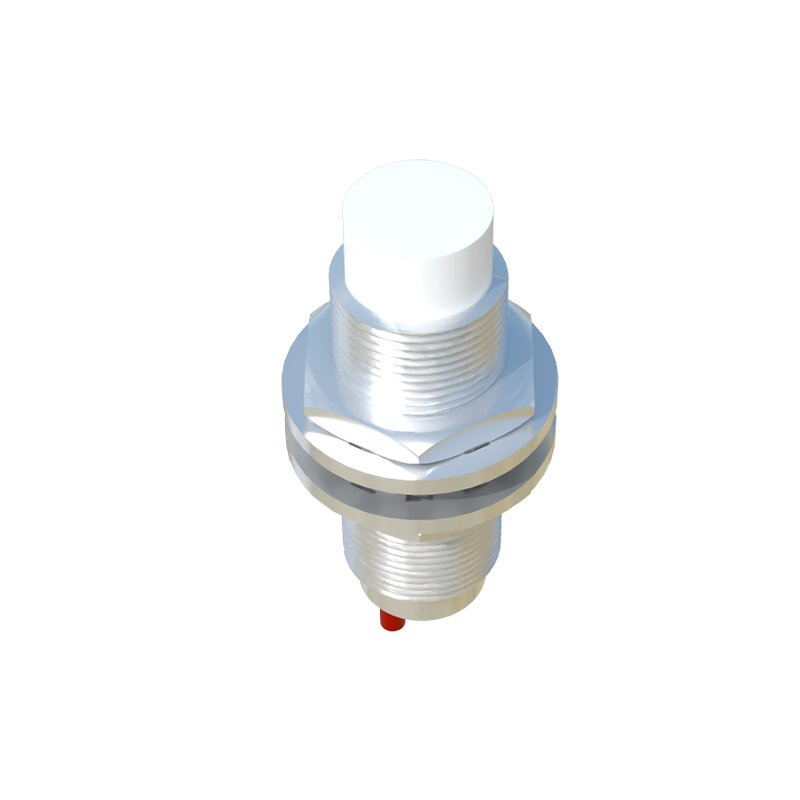
What truly differentiates Turck in the competitive sensor market is its relentless focus on durability and connectivity. The housings of Turck sensors are typically constructed from high-grade stainless steel (V4A/AISI 316L) or rugged PBT plastic, offering exceptional resistance to chemicals, oils, and mechanical stress. Many models boast IP67, IP68, and even IP69K protection ratings, meaning they can withstand high-pressure washdowns, temporary immersion, and extreme temperatures from -30°C to +85°C. This makes them ideal for food and beverage processing, pharmaceutical production, and outdoor applications.
The evolution towards Industry 4.0 and the Industrial Internet of Things (IIoT) has been a key driver for Turck's product development. Modern Turck proximity sensors are no longer simple binary switches; they are intelligent nodes in a networked system. The integration of IO-Link communication protocol across many product lines is a game-changer. IO-Link transforms a standard sensor into a smart device capable of transmitting detailed diagnostic data—such as operating temperature, signal strength, switch cycle counts, and device health status—to a central controller. This enables predictive maintenance, reducing unplanned downtime by alerting operators to potential failures before they occur. Parameterization via IO-Link also allows for remote configuration and quick device replacement, slashing machine setup times.
Turck's design philosophy also emphasizes ease of installation and flexibility. The company's extensive portfolio includes cylindrical sensors in M8, M12, M18, and M30 threaded barrels, as well as rectangular block-style sensors for specialized mounting. The Q-Port connector system, a Turck hallmark, allows for fast, tool-less connection of sensors to cabling, dramatically reducing wiring time and enhancing reliability by eliminating loose wire connections. This plug-and-play approach is critical for maintaining high uptime in fast-paced production environments.
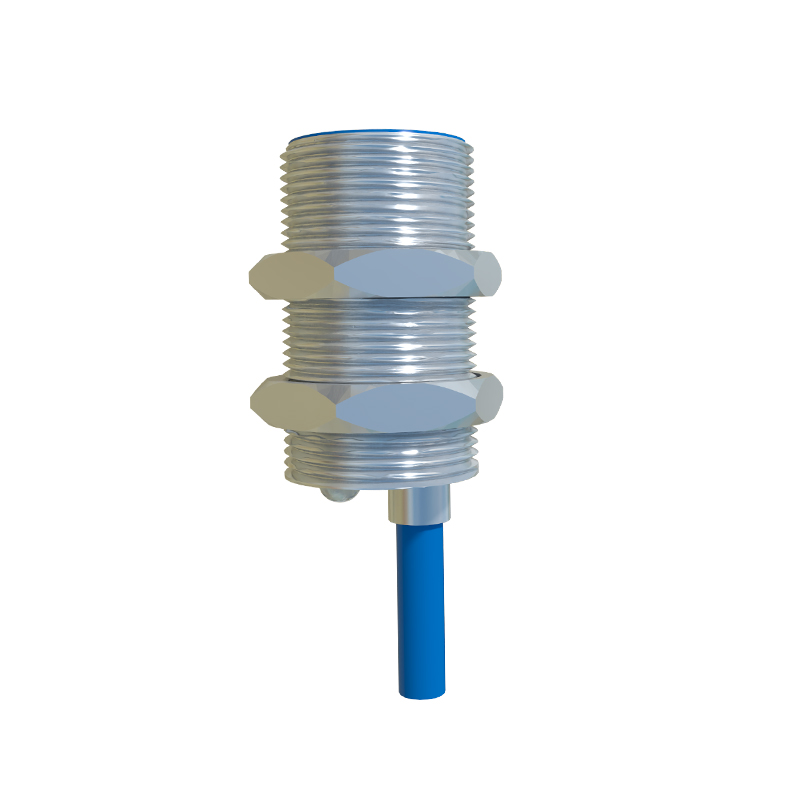
Application examples abound. In automotive assembly, Turck inductive sensors ensure robotic arms precisely locate car body panels for welding. In packaging machinery, capacitive sensors verify the presence of liquid in bottles before capping. On automated guided vehicles (AGVs), magnetic sensors provide accurate positioning for docking and navigation. In metal stamping presses, ruggedized sensors monitor tool position and part ejection with millisecond accuracy, ensuring both productivity and operator safety.
In conclusion, Turck proximity sensors represent the convergence of mechanical robustness, electronic precision, and digital intelligence. They are not merely components but reliable partners in the automation process, built to endure and excel. By consistently pushing the boundaries of sensing technology—through enhanced materials, smarter electronics, and seamless connectivity—Turck empowers industries to achieve higher levels of automation, efficiency, and data-driven insight. For engineers and system integrators seeking a sensor solution that delivers consistent performance with minimal lifecycle cost, Turck proximity sensors stand as a benchmark of quality and innovation in the global industrial arena.