In the rapidly evolving landscape of industrial automation and precision measurement, laser sensors have become indispensable components. Their applications span from simple object detection and positioning to complex 3D scanning, distance measurement, and quality control in manufacturing. However, the very properties that make laser sensors so effective—such as high-intensity, coherent light beams—also introduce significant risks, including potential eye damage, skin burns, and fire hazards. Consequently, a robust framework of mandatory standards is not merely a regulatory formality but a critical foundation for ensuring safety, reliability, and interoperability on a global scale. This article delves into the core mandatory standards governing laser sensor design, manufacturing, and deployment.
The cornerstone of laser safety regulation is the IEC 60825 series, "Safety of laser products," which is harmonized with similar standards like the US FDA's 21 CFR Part 1040.10. These standards are unequivocally mandatory for market access in most jurisdictions. IEC 60825 classifies lasers into specific classes (1, 1M, 2, 2M, 3R, 3B, 4) based on their potential to cause biological damage. For industrial laser sensors, common classifications fall within Class 1, Class 2, or Class 3R. A Class 1 laser sensor is considered safe under all conditions of normal use, often achieved through engineering controls that enclose a higher-class laser. Class 2 applies to visible lasers where the blink reflex (aversion response) is assumed to provide protection. Class 3R lasers pose a low risk but require labeling and certain control measures. Compliance mandates rigorous testing for accessible emission limits (AEL), labeling with the correct class warning symbol, and the inclusion of safety features like key controls or emission indicators for higher classes. Manufacturers must provide comprehensive technical documentation and a user manual detailing safe operation procedures.
Beyond pure laser safety, electromagnetic compatibility (EMC) is another mandatory domain. Standards like the IEC 61326 series for electrical equipment for measurement, control, and laboratory use are often invoked. For the European market, the EMC Directive (2014/30/EU) makes compliance with harmonized EMC standards de facto mandatory, requiring sensors to neither emit excessive electromagnetic disturbance nor be unduly immune to such disturbance from their environment. This ensures that a laser sensor in a factory does not interfere with nearby control systems or communication networks and continues to operate reliably amidst electrical noise. Testing involves emissions tests (conducted and radiated) and immunity tests (e.g., to electrostatic discharge, fast transients, and surges).
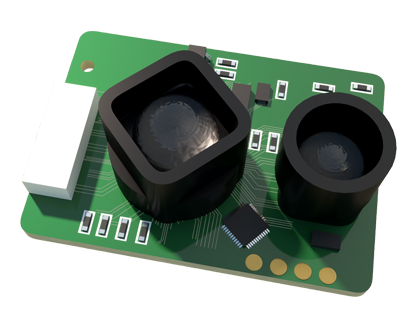
For sensors used in potentially explosive atmospheres (e.g., in chemical plants or grain silos), the ATEX Directive (2014/34/EU) in Europe and similar standards like IECEx or NEC in North America impose mandatory requirements. A laser sensor intended for such zones must be specifically designed and certified to prevent it from being an ignition source. This involves concepts like intrinsic safety (limiting electrical energy), flameproof enclosures, or encapsulation. The certification process is stringent, involving assessment by a notified body and marking with the appropriate Ex symbol, protection type, temperature class, and gas group.
Performance and interoperability standards, while sometimes voluntary, can become de facto mandatory through industry adoption or specific procurement specifications. For example, communication protocol standards like IO-Link, PROFINET, or EtherNet/IP are essential for seamless integration into modern industrial networks. Dimensional and interface standards ensure mechanical compatibility. Accuracy and repeatability specifications, though often defined by the manufacturer, must be verifiable and truthful under standards like ISO/IEC 17025 for testing laboratories that calibrate them.

The responsibility for compliance is shared across the supply chain. Manufacturers bear the primary burden of design compliance, conformity assessment, and maintaining a technical file. System integrators and end-users, however, have a mandatory duty under workplace safety regulations (like OSHA guidelines or the EU's Machinery Directive) to perform risk assessments, ensure proper installation, and provide operator training. Using a laser sensor outside its specified parameters or in an uncertified environment can void its compliance and create liability.
In conclusion, the mandatory standards for laser sensors form a multi-layered shield protecting people, property, and processes. From IEC 60825 for laser radiation safety to EMC and ATEX directives for operational integrity in harsh environments, these regulations are non-negotiable. They drive innovation in safety engineering while creating a level playing field for global trade. For any professional specifying, installing, or operating industrial laser sensors, a thorough understanding of these mandatory requirements is not just about legal compliance—it is a fundamental aspect of professional engineering ethics and operational excellence. The future will likely see these standards evolve to address new challenges, such as those presented by higher-power lasers in additive manufacturing or the integration of AI-driven sensor systems, ensuring that safety and reliability keep pace with technological advancement.
