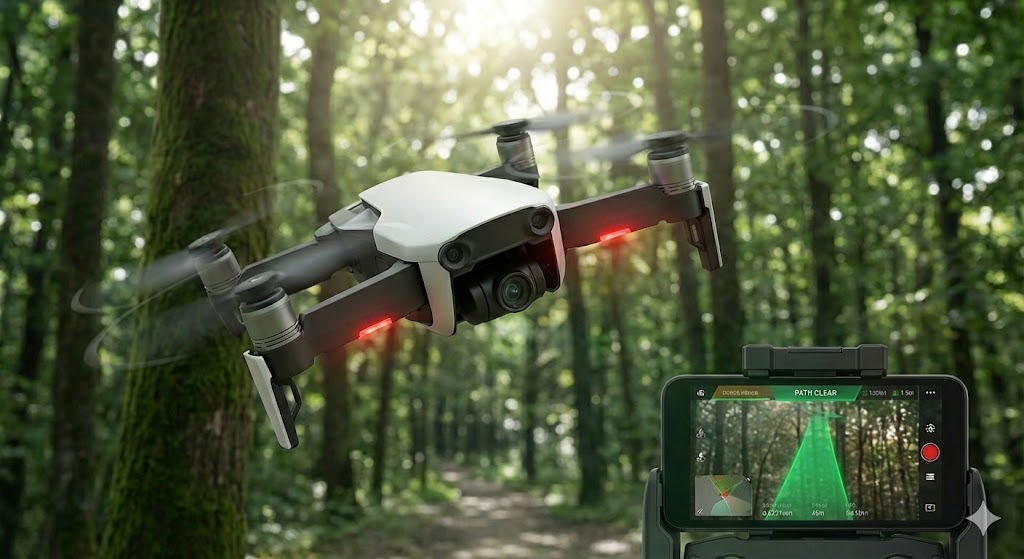
In the evolving landscape of industrial safety and environmental monitoring, the advent of airborne laser methane sensor technology represents a significant leap forward. This sophisticated instrumentation leverages the principles of Tunable Diode Laser Absorption Spectroscopy (TDLAS) to detect and quantify methane (CH4) emissions with unprecedented precision from aerial platforms, such as drones, helicopters, and fixed-wing aircraft.
The core operational mechanism is both elegant and robust. A laser diode emits a beam of light at a specific wavelength that corresponds to a strong absorption line of the methane molecule. As this laser beam is directed towards a target area—be it a pipeline right-of-way, a landfill, a natural gas processing facility, or agricultural land—any methane present in the path absorbs a portion of the light. A detector then measures the intensity of the light that is either reflected back from a surface (in a reflective configuration) or passes through a gas plume to a remote receiver. The degree of absorption is directly proportional to the methane concentration along the beam path, allowing for precise quantification. This method is highly selective to methane, minimizing false positives from other gases, and is exceptionally sensitive, capable of detecting leaks at parts-per-million (ppm) or even parts-per-billion (ppb) levels.
The integration of this sensor technology onto airborne platforms unlocks transformative capabilities. Traditional ground-based surveys are often limited by terrain accessibility, safety concerns in hazardous areas, and the sheer scale of infrastructure networks. Airborne systems overcome these limitations comprehensively. They enable rapid, large-scale screening of thousands of miles of pipeline or vast production fields in a single mission. Surveys can be conducted from a safe standoff distance, protecting personnel from potential hazards. Furthermore, the aerial perspective allows for the detection of diffuse or elevated plumes that might be invisible at ground level. Modern systems integrate real-time GPS and data logging, creating precise geospatial maps of methane concentrations. These maps can pinpoint leak locations with meter-level accuracy, enabling swift and targeted repair responses, thereby reducing product loss and environmental impact.

The applications for airborne laser methane sensors are extensive and growing. In the oil and gas sector, they are indispensable for leak detection and repair (LDAR) programs, midstream pipeline integrity management, and monitoring of upstream production sites. Regulatory compliance, such as meeting requirements set by the EPA or other international bodies, is a major driver. In the waste management industry, these sensors are used to monitor methane emissions from landfills, supporting efforts to capture this potent greenhouse gas for energy generation. The agricultural sector utilizes this technology to assess emissions from livestock operations and rice paddies. Increasingly, the technology plays a critical role in scientific research for quantifying natural and anthropogenic methane fluxes on a regional scale, contributing vital data to climate models.
The advantages over legacy detection methods, such as manual "sniffer" probes or less-specific optical gas imaging (OGI) cameras, are substantial. Airborne laser systems offer quantitative data, not just qualitative imagery. They provide a much higher survey speed and area coverage rate. The data is digital and readily integrable into Geographic Information Systems (GIS) and asset management software for trend analysis and reporting. However, the technology is not without its considerations. Performance can be influenced by atmospheric conditions like heavy rain, fog, or extreme turbulence. The initial capital investment for high-end systems is significant, though the return on investment through reduced loss and improved efficiency is compelling. Effective operation requires skilled personnel who understand both the sensor technology and flight operations.
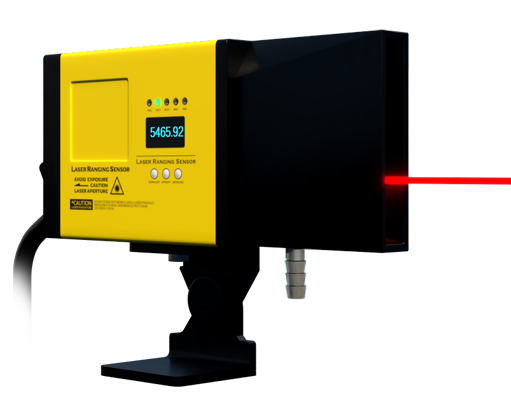
Looking ahead, the trajectory for airborne laser methane sensors points towards greater miniaturization, enhanced sensitivity, and deeper integration with autonomous systems. The development of smaller, lighter sensors is making them accessible for a wider range of drone platforms. Advances in data analytics, including artificial intelligence and machine learning algorithms, are being applied to automatically differentiate between natural background methane and anomalous leak signals, and to predict potential failure points. The future will likely see these sensors operating as part of larger, networked "Internet of Things" (IoT) ecosystems, providing continuous, automated monitoring of critical infrastructure.
In conclusion, airborne laser methane sensor technology has firmly established itself as a cornerstone tool for modern gas detection and emissions management. By combining the pinpoint accuracy of laser spectroscopy with the mobility and perspective of aerial platforms, it delivers a powerful solution for enhancing operational safety, ensuring regulatory compliance, protecting the environment, and optimizing economic performance across multiple industries. As the global focus on methane mitigation intensifies, the role of this advanced sensing technology will only become more central and indispensable.