This experiment report details the fundamental operating principles, classifications, and practical applications of proximity sensors, based on a series of laboratory tests and measurements. Proximity sensors are non-contact devices designed to detect the presence or absence of an object within a specified sensing range without physical contact. Their operation hinges on the disturbance of an electromagnetic field, acoustic wave, or light beam.
The core principle involves the generation of an oscillating electromagnetic field at the sensing face. When a metallic target enters this field, eddy currents are induced on the target's surface. These eddy currents draw energy from the oscillator, causing a reduction in the oscillation amplitude. This amplitude change is detected by a threshold circuit, which subsequently triggers a solid-state output switch (typically NPN or PNP). For non-metallic targets, capacitive or ultrasonic principles are employed. Capacitive sensors detect changes in capacitance caused by the target material's dielectric constant, while ultrasonic sensors measure the time-of-flight of reflected sound waves.
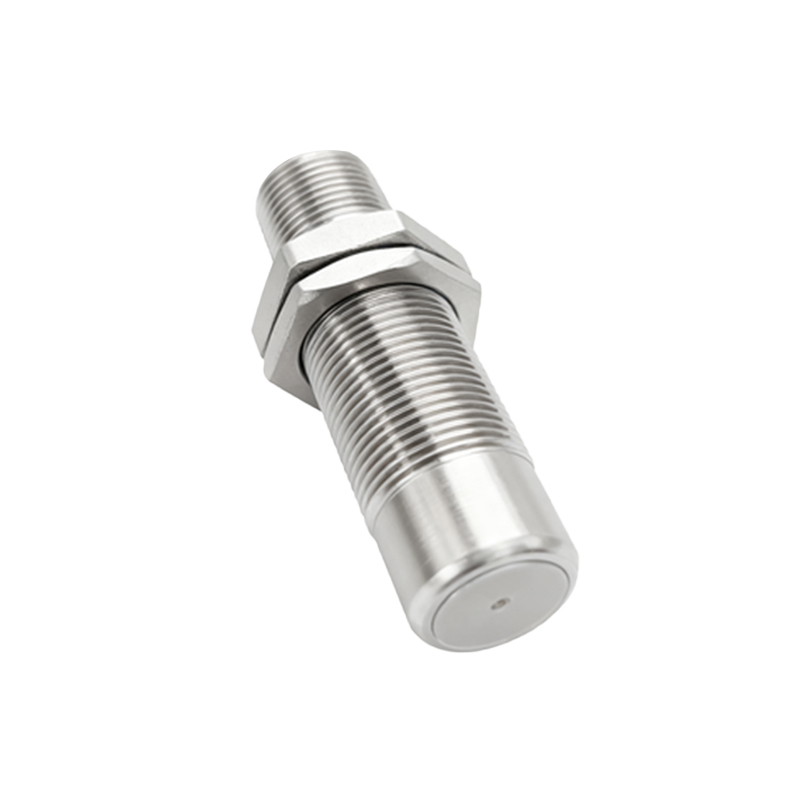
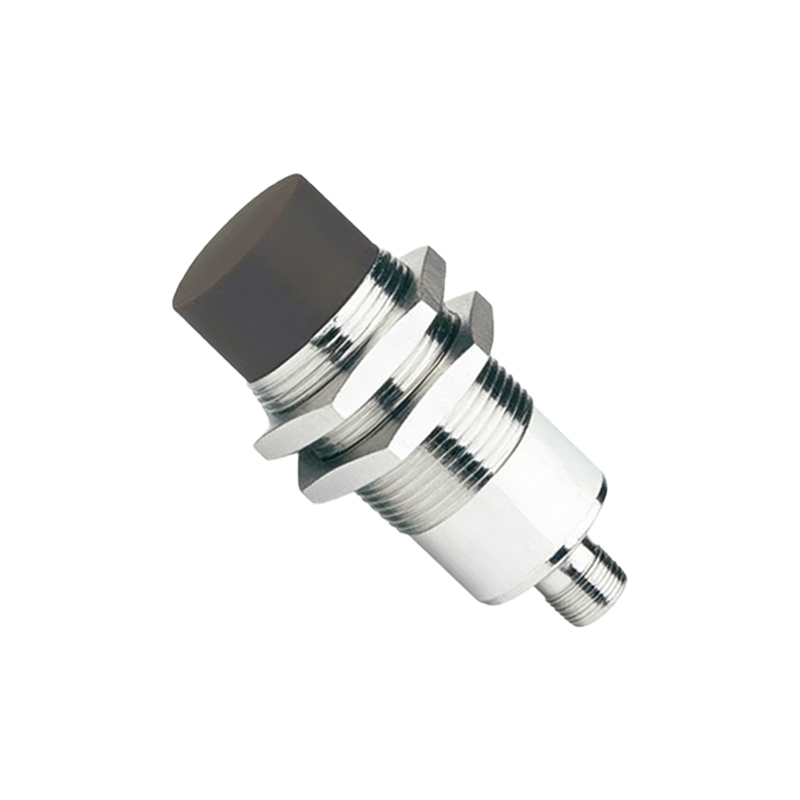
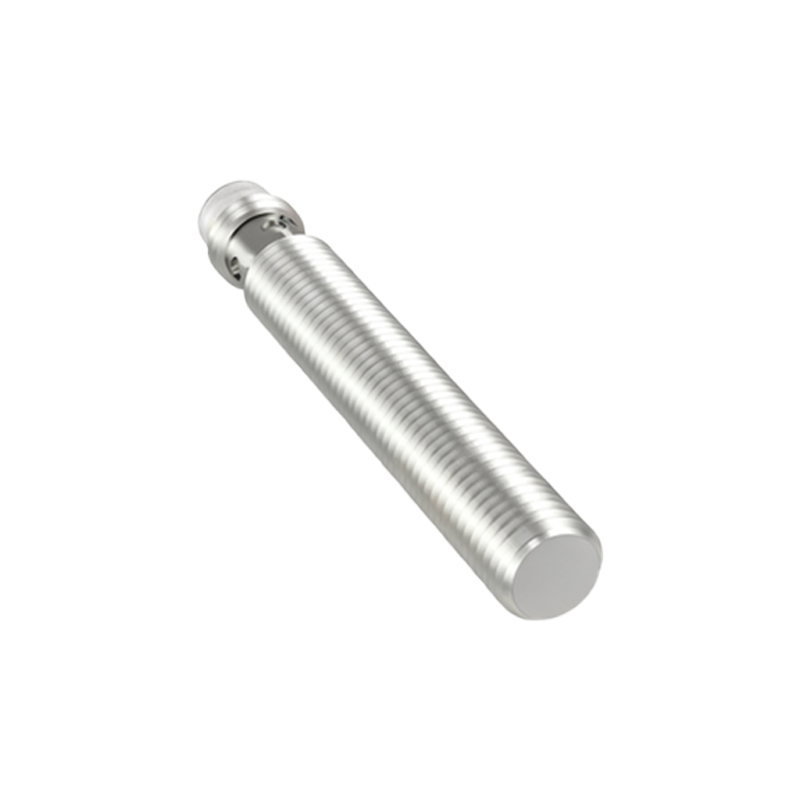
Our experimental setup involved three primary sensor types: inductive, capacitive, and photoelectric. The inductive sensor (model: E2A-M12KN08-WP-B1) was tested with various metallic targets (steel, aluminum, copper) at differing distances. Results confirmed the standard sensing distance (Sn) and showed a reduction factor for non-ferrous metals like aluminum and copper, aligning with theoretical expectations. The capacitive sensor (model: E2K-X4ME1) demonstrated sensitivity adjustment capabilities, successfully detecting materials such as plastic, glass, and liquids through a non-metallic container wall. The photoelectric diffuse sensor (model: E3Z-D61) was evaluated for its ability to detect objects regardless of material composition, though its performance was influenced by surface color and reflectivity.
Key performance parameters measured included:
1. Sensing Distance (Sn): The nominal operating distance under specified conditions. Hysteresis was observed to prevent output chatter near the detection point.
2. Repeatability: The sensor's ability to consistently detect a target at the same distance. Measurements showed high repeatability for inductive sensors on steel targets.
3. Response Frequency: The maximum number of detection operations per second. Inductive sensors exhibited higher frequencies suitable for high-speed counting applications.
4. Environmental Factors: Tests involving temperature variation, voltage fluctuation, and exposure to ambient light (for photoelectric types) were conducted to assess stability.
Practical application circuits were constructed. A basic interface circuit with a programmable logic controller (PLC) was implemented, demonstrating the sensor's role as a digital input device. Wiring configurations (2-wire, 3-wire, 4-wire) and their implications for circuit design and load compatibility were analyzed. A practical experiment involved using an inductive sensor to control a pneumatic cylinder's end-position, forming a fundamental building block in automated machinery.
The advantages of proximity sensors are numerous: long operational life due to absence of mechanical contact and moving parts, high reliability, fast response times, and suitability for harsh environments (available in sealed, washdown versions). Limitations include sensing range constraints, material-specific performance (especially for inductive types), and potential interference from adjacent sensors or strong electromagnetic fields.
In conclusion, this experimental investigation validates the theoretical principles of proximity sensing technology. The selection of an appropriate sensor type—inductive for metals, capacitive for a wider range of materials including non-metallics, and photoelectric for long-range or color-based detection—is critical for optimal system performance. Understanding parameters like sensing distance, hysteresis, and environmental ratings is essential for successful integration into industrial control systems, ranging from simple object detection to complex position feedback in robotics and automated assembly lines. Proper shielding, mounting, and electrical interfacing are paramount for reliable operation in real-world applications.