In the realm of industrial automation and precision engineering, accurate distance measurement is paramount. The Laser Sensor 51 emerges as a pivotal tool, offering high-resolution, non-contact measurement capabilities essential for modern manufacturing, robotics, and quality control systems. This article delves into the operational principles, key features, and practical applications of the Laser Sensor 51, providing insights for engineers and technicians seeking to optimize their measurement processes.
The Laser Sensor 51 operates on the time-of-flight (ToF) principle or triangulation method, depending on the specific model. In ToF-based sensors, a laser diode emits short pulses of light toward a target. The sensor's photodetector then captures the reflected light, and an internal processor calculates the distance by measuring the time delay between emission and reception. This method is highly effective for medium to long-range measurements, typically up to several meters, with sub-millimeter accuracy. Alternatively, triangulation-based Laser Sensor 51 units project a laser spot onto the target, and a CMOS or CCD array detects the spot's position at an angle. By applying geometric calculations, the sensor determines the distance with exceptional precision, often in the micrometer range, making it ideal for close-range applications.
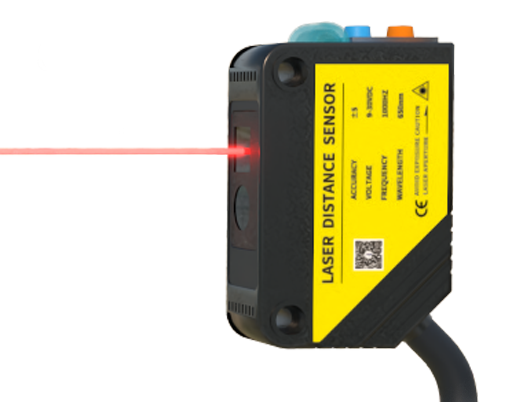
Key features of the Laser Sensor 51 include its robust construction, designed to withstand harsh industrial environments. Many models are rated IP67 or higher, ensuring resistance to dust, moisture, and mechanical vibrations. The sensor offers high sampling rates, often exceeding 10 kHz, enabling real-time monitoring of dynamic processes. Additionally, it provides analog outputs (e.g., 4-20 mA, 0-10 V) and digital interfaces (e.g., RS-232, Ethernet/IP, PROFINET) for seamless integration into control systems. Advanced versions incorporate intelligent functions such as automatic calibration, temperature compensation, and programmable logic to adapt to varying conditions without manual intervention.
In practical applications, the Laser Sensor 51 excels across diverse sectors. In automotive manufacturing, it measures component dimensions and verifies assembly gaps with repeatability down to ±0.1 mm. In logistics, it facilitates warehouse automation by detecting object heights on conveyor belts for sorting and palletizing. Robotics systems utilize these sensors for precise positioning and obstacle avoidance, enhancing operational safety. Moreover, in the semiconductor industry, the sensor monitors wafer thickness and alignment during production, ensuring micron-level tolerances. Case studies highlight its role in reducing downtime and improving product quality—for instance, a steel plant implemented Laser Sensor 51 units to monitor roll gaps in rolling mills, achieving a 15% increase in yield through consistent measurement feedback.
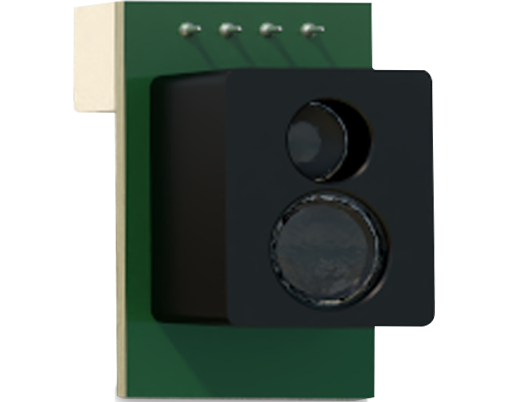
When selecting a Laser Sensor 51, engineers must consider parameters such as measurement range, resolution, response time, and environmental factors. For example, in high-temperature settings, models with built-in cooling mechanisms or thermal shielding are preferable. Regular maintenance, including lens cleaning and firmware updates, prolongs sensor lifespan. Best practices involve conducting initial calibration using certified reference targets and performing periodic checks to mitigate drift. Emerging trends, such as the integration of AI algorithms for predictive analytics and IoT connectivity for remote diagnostics, are further expanding the sensor's capabilities, paving the way for smarter, more adaptive industrial ecosystems.
In conclusion, the Laser Sensor 51 stands as a cornerstone of precision measurement technology. Its versatility, reliability, and advanced features make it indispensable for industries striving for efficiency and accuracy. By leveraging this tool, engineers can drive innovation, optimize processes, and maintain competitive edges in an increasingly automated world. Future developments may focus on miniaturization, enhanced energy efficiency, and multi-sensor fusion, but the core value of precise, non-contact distance measurement will remain central to industrial progress.