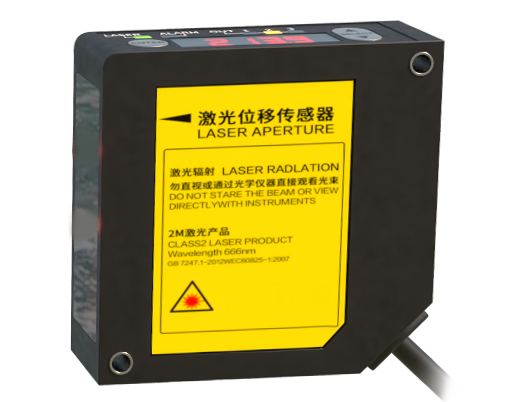
Laser sensor technology has undergone a transformative journey, evolving from rudimentary photoelectric devices to sophisticated systems integral to modern automation, robotics, and measurement. This technical roadmap outlines the key developmental trajectories, current paradigms, and future vectors for engineers navigating this dynamic field.
The foundational era was dominated by simple through-beam and retro-reflective sensors. These devices relied on the interruption of a continuous laser beam to detect object presence. While robust for basic counting and detection, they offered limited functionality in terms of precision, environmental adaptability, and data richness. The advent of time-of-flight (ToF) principles marked a significant leap. By measuring the round-trip time of a laser pulse to a target, ToF sensors enabled precise distance measurement, giving birth to the first generation of laser rangefinders and early LiDAR prototypes. This shift from binary detection to quantitative ranging opened new avenues in industrial automation and surveying.
The subsequent proliferation of triangulation-based laser sensors addressed the need for high precision at shorter ranges. By using a laser emitter, a receiving lens, and a position-sensitive detector (like a PSD or CMOS array), these sensors calculate distance based on the geometric triangle formed. This technology became the workhorse for applications requiring micron-level accuracy, such as profile measurement, thickness gauging, and surface inspection in manufacturing. Concurrently, the development of laser Doppler vibrometry allowed for non-contact measurement of velocity and vibration, becoming critical in predictive maintenance and structural analysis.
The current dominant paradigm is characterized by the integration of scanning mechanisms and advanced signal processing. 2D and 3D laser scanners, often employing rotating mirrors or MEMS-based systems, create detailed point clouds of environments or objects. This evolution is most visible in LiDAR systems for autonomous vehicles, which combine pulsed laser scanning with high-speed ToF calculation to generate real-time 3D maps. Furthermore, the rise of confocal chromatic and interferometric laser sensors has pushed the boundaries of resolution for transparent and multi-layered material analysis.

Software and data interpretation have become as crucial as the hardware. Modern laser sensors are embedded systems, featuring onboard processors for filtering, feature extraction, and direct communication via industrial protocols like IO-Link, EtherCAT, or PROFINET. This intelligence allows for functions like background suppression, teach-in programming, and condition monitoring, making sensors more adaptive and easier to integrate into smart factory frameworks.
Looking forward, several technology vectors are defining the next roadmap. Solid-state LiDAR, eliminating moving parts, promises greater reliability, compactness, and lower cost for mass-market adoption in automotive and mobile robotics. The integration of artificial intelligence and machine learning at the sensor edge will enable predictive analytics and anomaly detection directly from the raw point cloud or intensity data. Another frontier is the development of faster, more sensitive single-photon avalanche diode (SPAD) arrays, which will enhance LiDAR performance in low-light or long-range scenarios. Finally, the miniaturization of frequency-modulated continuous wave (FMCW) LiDAR technology offers the potential for coherent detection, providing instantaneous velocity data alongside range with exceptional accuracy.
For the practicing engineer, this roadmap implies a need for interdisciplinary knowledge. Success no longer hinges solely on understanding photonics but also on proficiency in embedded systems, data communication protocols, and basic data science principles. Selecting a laser sensor now involves a careful trade-off between measurement principle (ToF vs. triangulation vs. interferometry), required precision, scan speed, environmental robustness (resistance to ambient light, dust, vibration), and the ecosystem for data integration. The trajectory is clear: laser sensors are evolving from isolated measurement tools into intelligent, networked perception nodes that form the sensory nervous system of the digital-industrial age.