Proximity sensors, the silent sentinels of the modern technological landscape, have evolved from niche industrial components to ubiquitous facilitators of convenience, safety, and efficiency. These devices, capable of detecting the presence or absence of nearby objects without physical contact, leverage various principles like infrared (IR), ultrasonic, capacitive, and inductive sensing. Their applications now permeate nearly every sector, fundamentally altering how we interact with machines and how machines perceive their environment.
In the realm of consumer electronics, proximity sensors are indispensable. The most common interaction is in our smartphones. When you answer a call and bring the phone to your ear, a small IR proximity sensor detects this motion and automatically turns off the display. This prevents accidental screen touches and conserves battery life. Similarly, in laptops and tablets, these sensors help implement power-saving features by dimming or turning off the screen when a user is not in front of the device. Modern smart speakers and displays also use proximity sensing to wake up and show relevant information as a user approaches, creating a seamless, intuitive user experience.
The automotive industry is a major beneficiary of proximity sensing technology. Modern vehicles are equipped with an array of ultrasonic and electromagnetic sensors that form the backbone of Advanced Driver-Assistance Systems (ADAS). Parking assistance systems rely on ultrasonic proximity sensors to measure the distance to obstacles, providing audible or visual cues to the driver. More advanced applications include blind-spot detection, cross-traffic alert when reversing, and automatic emergency braking, where sensors detect an imminent collision and apply brakes faster than a human could react. Inside the cabin, capacitive proximity sensors are increasingly used for touchless control of infotainment systems, enhancing safety by reducing driver distraction.
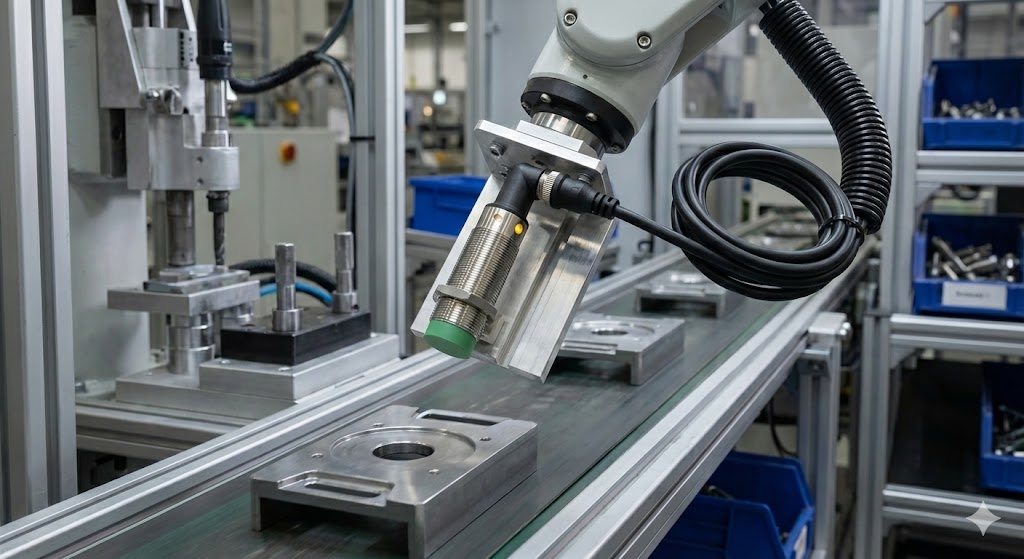
Industrial automation and robotics represent the traditional and most robust application area. Here, inductive proximity sensors are king, used for precise object detection, counting, and positioning on assembly lines. They are incredibly reliable in harsh environments, resistant to dust, oil, and vibrations. Robotic arms use arrays of proximity sensors for safe human-robot collaboration, allowing robots to slow down or stop when a human worker enters a predefined zone. In packaging, sensors ensure correct positioning of items; in material handling, they prevent jams and overflows. This not only boosts productivity but also significantly enhances workplace safety.
Beyond factories and cars, these sensors enable smart infrastructure. In public restrooms, capacitive or IR sensors automate faucets, soap dispensers, and hand dryers, promoting hygiene and reducing water waste. Automatic doors in supermarkets, airports, and hospitals use sensors for hands-free operation, aiding accessibility. In retail, proximity sensors can trigger digital signage or promotional content when a customer approaches a specific product display, enabling interactive marketing. Building management systems use them for occupancy-based lighting and climate control, leading to substantial energy savings in offices and commercial spaces.
Looking forward, the applications of proximity sensors are expanding into even more innovative domains. In healthcare, they are being integrated into equipment for touchless control, minimizing the risk of contamination in sterile environments. Agricultural robots use them for precise weed detection and selective spraying. The burgeoning Internet of Things (IoT) ecosystem relies heavily on low-power proximity sensors to detect events—like a door opening or a package being delivered—and trigger appropriate actions within a connected network.
The evolution of proximity sensing is moving towards greater miniaturization, lower power consumption, and enhanced intelligence through sensor fusion. Combining data from proximity sensors with cameras, LiDAR, and other contextual inputs allows for more sophisticated environmental understanding. As technology advances, these unassuming components will continue to be critical enablers, making our interactions with the digital and physical world more seamless, safe, and efficient. Their true power lies in their invisibility; they work best when we don't even notice they are there, quietly and reliably bridging the gap between human intent and machine action.