In the realm of industrial automation and control systems, proximity sensors are indispensable components. They provide non-contact detection of objects, offering reliability, longevity, and precision in harsh environments. A common question among engineers and technicians is: "How many types of common proximity sensors are there?" The answer isn't a single number, as categorization can vary by sensing principle, technology, and application. However, from a fundamental technological standpoint, we can identify several primary and widely adopted types that form the backbone of modern sensing solutions.
The most prevalent categories are defined by their underlying physical operating principles. The first and perhaps most common is the Inductive Proximity Sensor. This sensor generates an electromagnetic field. When a metallic object (the target) enters this field, it induces eddy currents within the object, causing a change in the sensor's oscillation amplitude. This change is detected and triggers an output switch. Inductive sensors are robust, ideal for detecting ferrous and non-ferrous metals, and are extensively used in machine tools, automotive assembly, and material handling. They are not capable of detecting non-metallic materials.
The second major type is the Capacitive Proximity Sensor. These sensors can detect both metallic and non-metallic objects, including liquids, powders, plastics, and wood. They operate by generating an electrostatic field. The presence of any object with a dielectric constant different from air alters the capacitance of the sensor's circuit, leading to a state change. This makes them versatile for applications like level detection in tanks, material presence sensing on conveyor belts (even through glass or thin walls), and touch-sensitive interfaces.
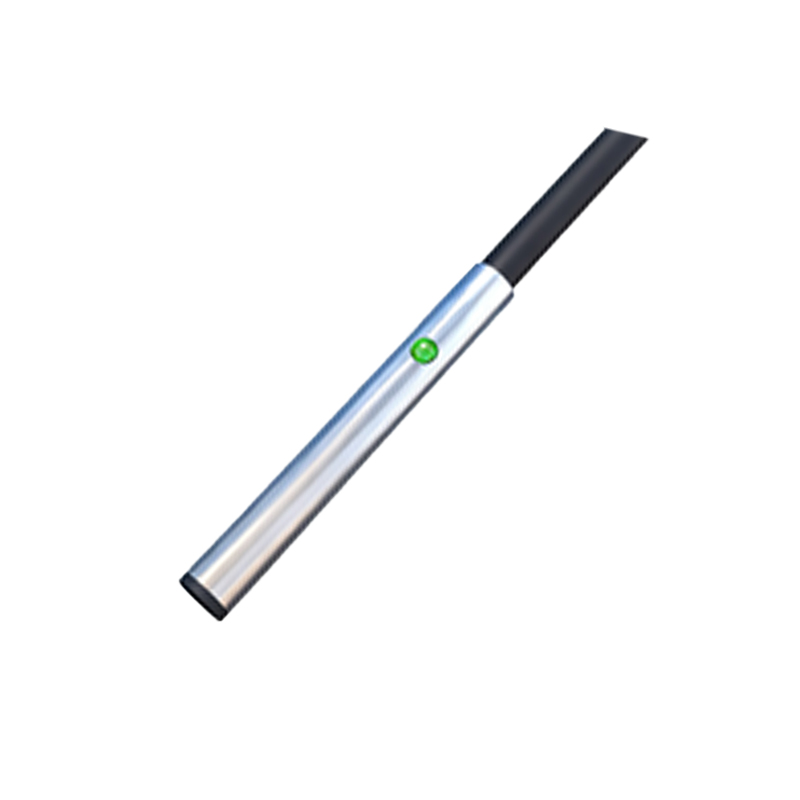
Third, we have Ultrasonic Proximity Sensors. These devices work on the principle of echolocation. They emit high-frequency sound waves and evaluate the echo reflected back from a target. The time delay between the emitted and received signal is used to calculate the distance to the object. Ultrasonic sensors are excellent for detecting objects of virtually any material, shape, or color, and are particularly effective in challenging environments with dust, smoke, or moisture. They are commonly used for distance measurement, level sensing of bulk materials, and object profiling.
Fourth is the Photoelectric Sensor, often considered a proximity sensor in its diffuse (reflective) mode. It consists of a light emitter (usually LED or laser) and a receiver. In the diffuse mode, the sensor detects light reflected directly from the target itself. When the target enters the sensing range and reflects sufficient light back to the receiver, the output switches. Photoelectric sensors offer long sensing ranges and can detect small objects. They are sensitive to color, transparency, and surface finish, making them suitable for packaging, bottling, and assembly line counting.
A fifth, highly specialized but crucial type is the Magnetic Proximity Sensor (often using Reed Switches or Hall Effect technology). These sensors detect the presence of a permanent magnet. When a magnet approaches, it either closes a reed switch (a pair of ferromagnetic contacts sealed in glass) or triggers a voltage change in a Hall Effect chip. They are completely sealed, making them perfect for applications requiring extreme hygiene, high pressure, or submerged conditions, such as in hydraulic cylinders, door/window position sensing, and automotive systems.
Beyond these core five, other technologies exist, such as Eddy-Current sensors for precise displacement measurement of conductive materials, and Radar sensors for long-range detection. However, the inductive, capacitive, ultrasonic, photoelectric (diffuse mode), and magnetic sensors represent the vast majority of "common" proximity sensors encountered in standard industrial practice.
Selecting the right type depends on a detailed analysis of the application requirements: target material, required sensing distance (range), environmental conditions (temperature, contaminants), switching frequency, output type (PNP/NPN, analog, IO-Link), and mounting constraints. An inductive sensor is useless for detecting a plastic bottle, just as a capacitive sensor may be overly sensitive for a dedicated metal-detection task in a metal-rich environment.
In summary, while the exact count can be debated, there are five principal and commonly deployed types of proximity sensors based on distinct technologies: Inductive, Capacitive, Ultrasonic, Photoelectric (in a proximity role), and Magnetic. Each type occupies a specific niche in the sensing ecosystem, and a deep understanding of their operating principles is fundamental for any electrical or automation engineer tasked with designing, maintaining, or troubleshooting modern industrial systems. The evolution of sensor technology continues, with increasing integration of smart features like diagnostics and networking (IO-Link), but these core principles remain the foundation of reliable object detection.