The industrialization of conventional proximity sensors represents a cornerstone in the evolution of modern automation and control systems. These devices, which detect the presence or absence of an object without physical contact, have transitioned from niche laboratory components to ubiquitous industrial workhorses. Their journey into mass production and widespread application is a study in technological refinement, market adaptation, and relentless pursuit of reliability.
The core technology behind conventional proximity sensors—primarily inductive, capacitive, and photoelectric types—was established decades ago. Inductive sensors, detecting metallic objects, and capacitive sensors, responding to both metallic and non-metallic materials, rely on changes in an electromagnetic field. Photoelectric sensors use a light beam, typically infrared or laser. The industrialization process hinged on standardizing these technologies for harsh environments. Early challenges included ensuring consistent performance across temperature fluctuations, resistance to vibration, electrical noise immunity, and protection against contaminants like oil, dust, and coolants. Manufacturers achieved this through robust housing designs (often in stainless steel or PBT plastics), integrated protection circuits, and advanced sealing techniques (e.g., IP67, IP69K ratings). This ruggedization was the first critical step from a prototype to an industrial-grade product.
Standardization has been the silent engine of产业化. The proliferation of standard form factors (e.g., cylindrical M8, M12, M18, M30 barrels and rectangular blocks), output configurations (PNP/NPN, analog, IO-Link), and mounting hardware allowed for interchangeable use across machine platforms. This modularity drastically reduced integration time and cost for original equipment manufacturers (OEMs) and end-users. Supply chains matured around these standards, enabling high-volume manufacturing of housings, coils, oscillators, and amplifier circuits. Economies of scale subsequently drove unit costs down, making proximity sensors affordable for even simple machinery, thereby accelerating their adoption.
The application landscape is vast. On automotive assembly lines, inductive sensors count gears, verify piston presence, and ensure robotic weld guns are in position. In packaging machinery, photoelectric sensors register labels, count products on high-speed conveyors, and control fill levels. Capacitive sensors in food and beverage plants detect liquid through glass or plastic walls or monitor powder levels in silos. The reliability demanded in these 24/7 operations is extreme, with mean time between failure (MTBF) ratings often exceeding several hundred thousand hours. This reliability is not accidental but is baked into the industrialization process through rigorous quality control, automated testing, and burn-in procedures.
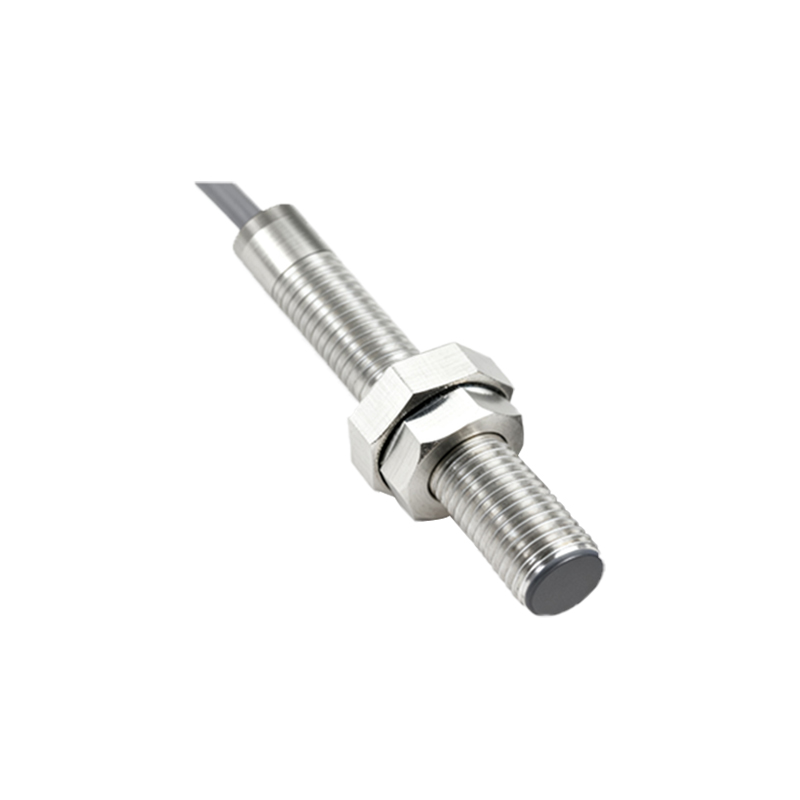
However, the industry faces significant challenges. Market saturation in standard sensing roles has intensified price competition, particularly from manufacturers in global cost-competitive regions. The rise of smart sensors and Industrial Internet of Things (IIoT) paradigms presents both a disruption and an opportunity. Conventional sensors are sometimes labeled "dumb" for providing only a basic on/off signal. The response has been the integration of digital communication interfaces, most notably IO-Link. This simple point-to-point serial communication allows conventional sensors to transmit detailed diagnostic data (e.g., operating temperature, signal strength, contamination warnings) and receive parameter adjustments remotely. This retrofits intelligence onto conventional platforms, extending their lifecycle and relevance in connected factories.
Material science and miniaturization are other frontiers. The development of more sensitive and stable ferrite cores and oscillator components has pushed detection ranges and stability for inductive sensors. Miniaturization, exemplified by tiny M5 and M3 sensors, addresses space constraints in compact robotics and semiconductor manufacturing equipment. Furthermore, enhanced sensing capabilities, such as analog output for distance measurement or specialized models for sensing small or difficult-to-detect metals (e.g., aluminum, copper), have created premium niches within the conventional market.
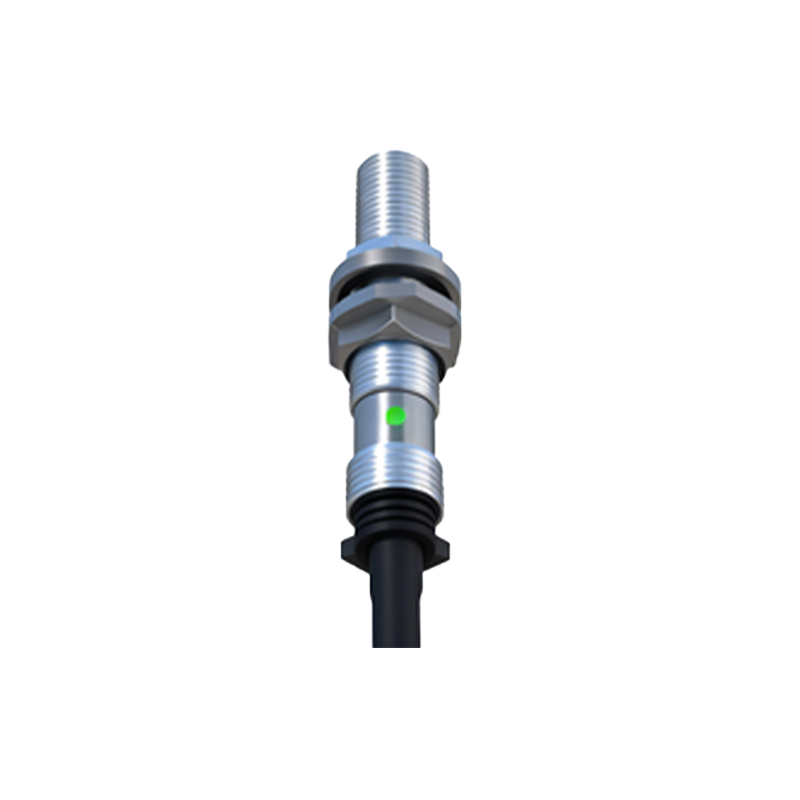
Looking forward, the future of conventional proximity sensor industrialization is not about obsolescence but about convergence and specialization. They will increasingly serve as highly reliable, cost-effective data points within larger IIoT ecosystems. Their design will continue to incorporate more on-board diagnostics and connectivity as standard features. Sustainability concerns will influence manufacturing, leading to greater use of recyclable materials and energy-efficient production methods. Furthermore, demand for application-specific sensors—for extreme temperatures, ultra-high hygiene, or exceptionally high-speed detection—will drive specialized产业化 lines.
In conclusion, the industrialization of conventional proximity sensors is a mature yet dynamically evolving sector. Its success is built on a foundation of ruggedness, standardization, and relentless focus on cost-effective reliability. While challenged by commoditization and digital transformation, the industry is adapting by embedding intelligence and pursuing innovation in materials and design. As a fundamental component of industrial automation, the conventional proximity sensor, in its industrialized form, will remain an indispensable element in the smart factories of the future, proving that even the most established technologies can find new paths to growth and integration.
SEO描述