Proximity sensors are fundamental components in modern industrial automation, robotics, and countless electronic devices. Their primary function is to detect the presence or absence of an object within a specified range without any physical contact. This non-contact detection capability is crucial for applications requiring high reliability, speed, and where wear and tear from mechanical contact must be avoided. The principle of operation varies significantly depending on the sensor technology employed, each with distinct advantages and ideal use cases.
The most common types include inductive, capacitive, ultrasonic, and photoelectric sensors. Inductive proximity sensors are workhorses in industrial settings, particularly for detecting metallic objects. They operate on the principle of electromagnetic induction. The sensor contains a coil that is part of an oscillator circuit. When an electrically conductive metal object enters the oscillating electromagnetic field generated by the coil, eddy currents are induced in the object. This causes a change in the oscillation amplitude or frequency within the sensor. An evaluation circuit monitors this change and triggers a switching signal when a predetermined threshold is reached. The sensing distance depends on the material's conductivity and permeability, with ferrous metals like iron and steel typically offering the longest range. These sensors are robust, resistant to environmental contaminants like dust and oil, and are ideal for position sensing of machine parts, counting metallic objects, or as end-of-travel limit switches.
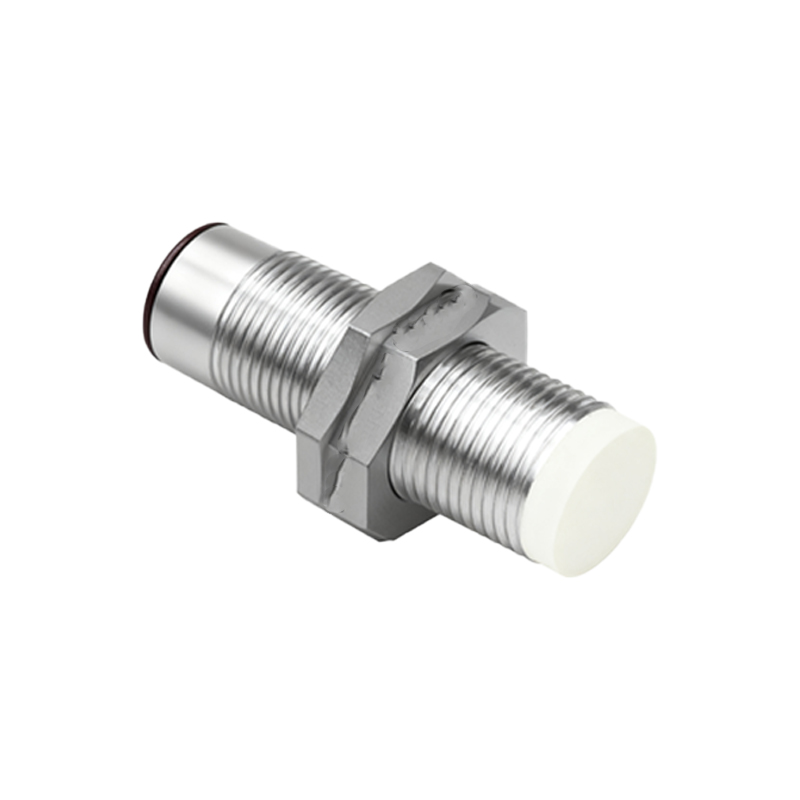
In contrast, capacitive proximity sensors can detect both metallic and non-metallic materials, including liquids, plastics, wood, and granular substances. Their operation is based on changes in capacitance. The sensor face acts as one plate of a capacitor, with the target object acting as the other plate, and the air gap as the dielectric. As an object approaches the sensor, the capacitance of the system increases. An internal circuit converts this capacitance change into a voltage change, which is then used to trigger an output. The sensing distance is influenced by the target object's dielectric constant; materials with high constants (like water) can be detected from a greater distance. This makes capacitive sensors perfect for level detection in tanks, material handling of non-metals, and touch-sensitive interfaces.
For longer-range detection and precise distance measurement, ultrasonic sensors are often the preferred choice. They operate on the principle of echolocation, similar to sonar. The sensor emits high-frequency sound waves (typically beyond human hearing, around 40 kHz) in pulses. These waves travel through the air, hit a target object, and are reflected back to the sensor's receiver. A timing circuit measures the time interval between the emission and reception of the echo. Since the speed of sound in air is known (approximately 343 m/s at room temperature), the distance to the object can be calculated precisely using the formula: Distance = (Speed of Sound × Time of Flight) / 2. Ultrasonic sensors are excellent for detecting objects regardless of color, transparency, or material, and are widely used in parking assist systems, liquid level sensing, and robotic navigation.
Photoelectric sensors use light to detect objects. They consist of a light emitter (usually an LED or laser diode) and a receiver. There are three main configurations: through-beam, retro-reflective, and diffuse (proximity) mode. For distance measurement in a proximity-style setup, the diffuse reflective sensor is common. It emits a light beam, and the receiver detects the light scattered or reflected off the target object. The intensity of the reflected light diminishes with the square of the distance. Advanced versions, like background suppression sensors or true distance-measuring sensors using triangulation or time-of-flight principles, can provide precise distance data independent of the object's color or reflectivity. Laser distance sensors are a high-precision subset of this category. Photoelectric sensors are versatile and fast, used in packaging, material handling, and assembly line automation.
Key performance parameters for all proximity sensors include sensing range, repeatability, hysteresis, and response time. The nominal sensing range is specified for a standard target. Repeatability defines how consistently the sensor detects an object at the same point. Hysteresis is the difference between the switch-on and switch-off points, which prevents output chatter when an object is at the exact threshold. A fast response time is critical for high-speed applications.
Selecting the right sensor requires careful analysis of the application: target material, required sensing distance, environmental conditions (temperature, humidity, contaminants), needed output type (digital switch, analog signal, IO-Link), and installation constraints. Understanding the underlying principles of inductive, capacitive, ultrasonic, and photoelectric technologies empowers engineers to design more efficient, reliable, and intelligent automated systems. As Industry 4.0 advances, these sensors continue to evolve with integrated intelligence, providing not just detection but also diagnostic data and seamless communication within networked industrial ecosystems.