In the rapidly evolving landscape of industrial automation, precision measurement and guidance are paramount. Among the array of sophisticated sensing technologies, the laser line sensor has emerged as a critical tool for non-contact inspection, profiling, and guidance tasks. This article delves into the operational principles, key applications, and essential selection criteria for laser line sensors, providing a comprehensive overview for engineers and system integrators.
At its core, a laser line sensor operates on the principle of optical triangulation. The sensor projects a highly focused, fan-shaped laser line onto the target object's surface. A high-resolution camera, positioned at a known angle relative to the laser emitter, captures the image of this line. When the target surface is not perfectly flat or is at a varying distance, the projected laser line appears deformed or displaced in the camera's field of view. Sophisticated onboard processors analyze this deformation. By calculating the disparity between the projected line's expected position and its actual captured position for thousands of points along the line, the sensor generates a highly accurate 2D or 3D profile of the object's surface. This profile data includes precise X, Y, and Z coordinate information, enabling detailed dimensional analysis.
The advantages of laser line sensors are numerous. They offer exceptional speed, capable of capturing thousands of profiles per second, making them ideal for high-speed production lines. Their non-contact nature eliminates mechanical wear and prevents damage to delicate surfaces. Furthermore, they provide high resolution and accuracy, often down to the micron level, which is crucial for quality control. Modern sensors are also robust, designed to withstand typical industrial environments involving vibration, ambient light variations, and temperature fluctuations.

The applications for laser line sensors span a wide range of industries. In automotive manufacturing, they are indispensable for inspecting weld seams, measuring gap and flush between body panels, and verifying the dimensional accuracy of critical components like engine blocks. In electronics, they profile solder paste deposits on PCBs and inspect component coplanarity. The logistics and packaging sector utilizes them for measuring box dimensions, checking parcel volume for automated sorting, and ensuring pallet stability. In robotics, they serve as the "eyes" for bin-picking systems, allowing robots to identify and locate randomly oriented parts by creating a 3D point cloud of the bin's contents. Additional applications include road surface profiling, tire tread inspection, and wood processing for sawmill optimization.
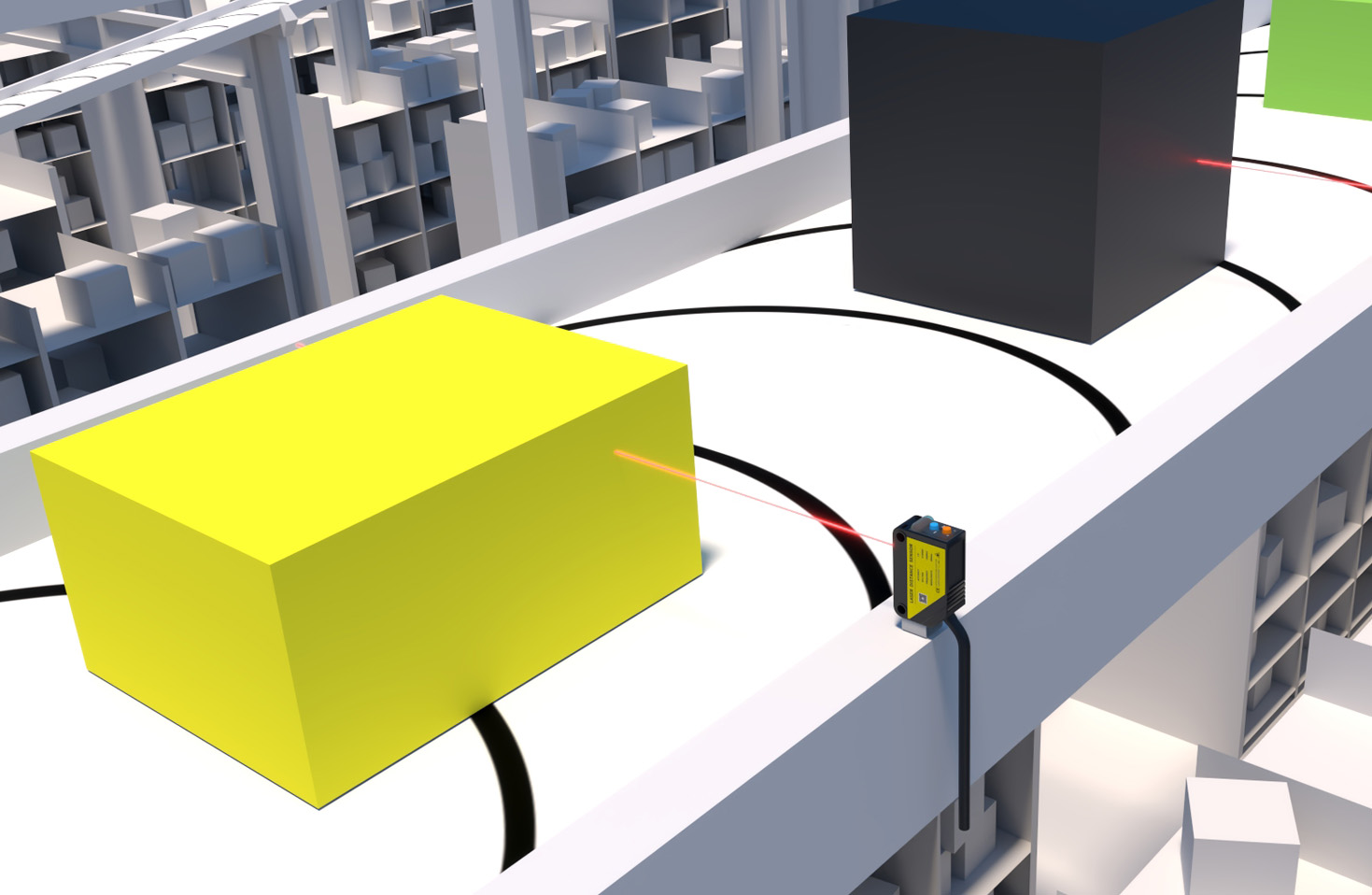
Selecting the appropriate laser line sensor requires careful consideration of several technical parameters. First, the measurement range and stand-off distance must match the physical constraints of the application. The Z-axis resolution defines the smallest height difference the sensor can detect, while the X-axis resolution determines the detail level along the laser line. Profile frequency, measured in Hertz (Hz), must be high enough to accurately capture objects moving on a conveyor belt; a higher frequency prevents motion blur. The laser's wavelength (typically red or blue) is another factor; blue lasers often perform better on shiny or reflective surfaces by reducing specular reflection interference. Environmental ratings, such as IP67 for dust and water ingress protection, are vital for harsh conditions. Finally, the interface (e.g., Ethernet/IP, PROFINET, EtherCAT) must be compatible with the existing factory network and control system.
Integration and calibration are critical steps for optimal performance. Proper mounting ensures a stable and vibration-free setup. Ambient light from factory windows or other machinery must be shielded, as it can saturate the sensor's camera. For highly reflective or dark, absorbent surfaces, sensor settings may need adjustment, or the use of supplemental lighting or surface treatment might be necessary. The sensor's software plays a crucial role, offering tools for setting measurement regions, applying filters to noisy data, and outputting pass/fail signals or detailed profile data to a PLC or industrial PC.
In conclusion, laser line sensors represent a powerful and versatile technology driving efficiency and quality in modern manufacturing and logistics. By converting a simple laser line into rich, three-dimensional data, they enable automated systems to "see" and understand their environment with remarkable precision. As machine vision and Industry 4.0 initiatives continue to advance, the role of these sensors will only expand, fostering smarter, more adaptive, and more reliable automated processes. For any engineer tasked with implementing precision measurement, guidance, or inspection, a thorough understanding of laser line sensor technology is an invaluable asset.