In the realm of industrial automation and control systems, proximity sensors stand as fundamental components for non-contact object detection. Among the various configurations available, the 2-wire proximity sensor offers a unique blend of simplicity and reliability, making it a prevalent choice across numerous sectors including manufacturing, packaging, and material handling. This article delves into the operational principles, key characteristics, installation considerations, and comparative advantages of 2-wire AC/DC proximity sensors, providing a detailed technical overview for engineers and maintenance professionals.
A 2-wire proximity sensor, as the name implies, requires only two wires for its complete operation: one for power supply and the other as the load connection. This design integrates the sensor and the switching element directly into the power circuit. Unlike their 3-wire or 4-wire counterparts, which have separate wires for power supply, ground, and output signal, the 2-wire version simplifies wiring significantly. It functions essentially as a switch in series with the load. When no target is present, a small leakage current (often called residual current) flows through the sensor. Upon detecting a valid target within its sensing range, the internal solid-state switch (like a TRIAC for AC or a transistor for DC types) closes, allowing the main load current to flow and activate the connected device, such as a PLC input, relay, or indicator lamp.
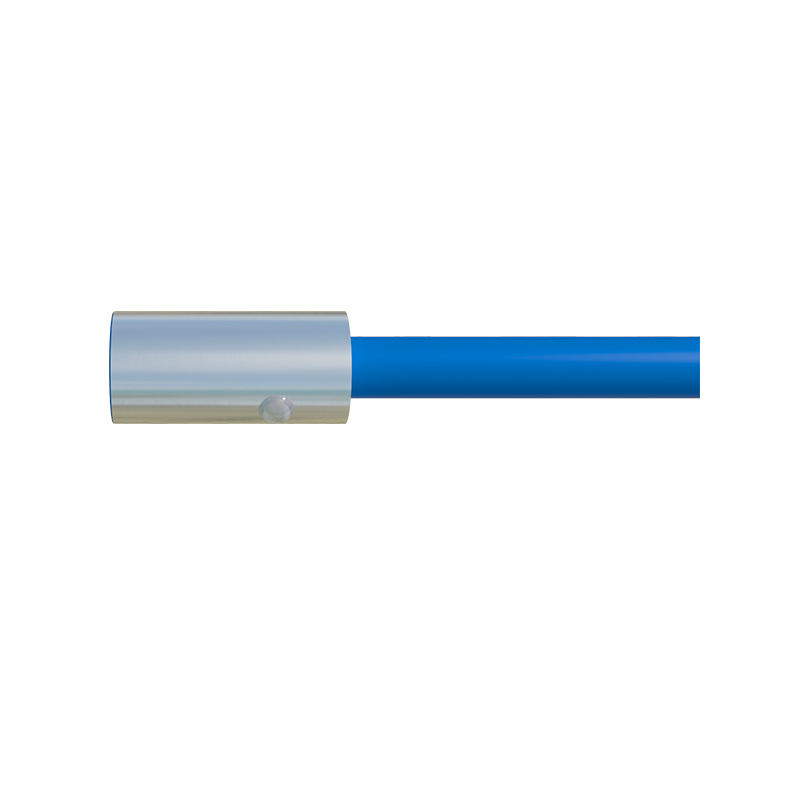
The core sensing technology can be based on inductive, capacitive, or ultrasonic principles, with inductive types being the most common for metal detection. An inductive 2-wire sensor generates an electromagnetic field from its active face. When a metallic target enters this field, it causes eddy currents, which in turn alter the oscillation amplitude of an internal LC circuit. This change is detected and triggers the switching action. A critical parameter to understand is the voltage drop across the sensor when in the "ON" state. This drop, typically between 1.5 to 4 volts for DC sensors and higher for AC, must be accounted for in system design to ensure the load receives sufficient voltage to operate correctly.
Key advantages of 2-wire sensors are their straightforward installation and reduced wiring costs. The absence of a separate signal wire minimizes connection points, lowers the risk of wiring errors, and decreases cabinet space requirements for terminals. They are often directly compatible with standard AC line voltages (e.g., 90-250V AC) or DC supplies (10-55V DC), facilitating easy replacement of mechanical limit switches. Furthermore, their inherent design often provides good resistance to electrical noise and short-circuit protection.
However, certain operational considerations are paramount. The residual current in the "OFF" state, though small (usually 1-3 mA), can be enough to weakly energize a highly sensitive load, potentially causing "phantom" signals. Therefore, it is crucial to verify the minimum operating current (the current needed to keep the sensor switch closed) and the maximum load current specifications. A load with a current draw below the sensor's minimum requirement may not function reliably. Conversely, exceeding the maximum current will damage the sensor. Another consideration is the voltage drop mentioned earlier; for instance, in a 24V DC system, if the sensor drops 3V, the load effectively sees only 21V. Designers must ensure the connected device (e.g., a PLC digital input) has a sufficient "ON" voltage threshold to register the signal reliably at this lower voltage.
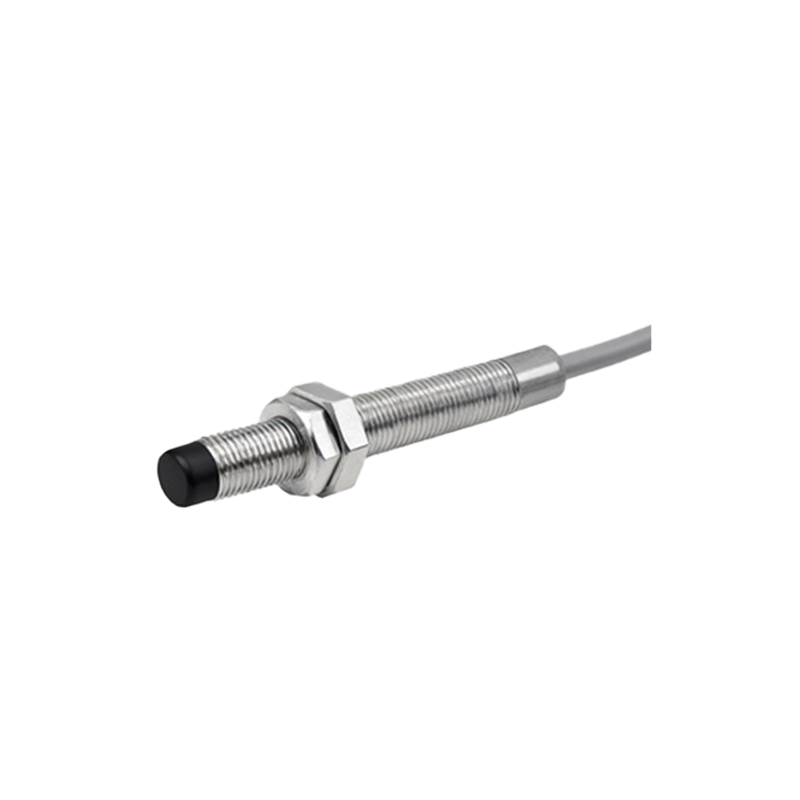
Installation and environmental factors also play a significant role. Maintaining the proper sensing distance, accounting for the sensor's hysteresis (the difference between the switch-on and switch-off points), and ensuring the target material and size are appropriate are essential for consistent performance. For inductive sensors, different metals (steel, aluminum, copper) have different correction factors that reduce the nominal sensing range. Mounting in metal should follow the manufacturer's guidelines on flush or non-flush mounting to prevent side-interference. Environmental contaminants like dust, coolant, or metal chips can affect performance, so selecting a model with an appropriate Ingress Protection (IP) rating is necessary.
When compared to 3-wire DC sensors, the 2-wire type trades some performance for simplicity. Three-wire sensors generally offer faster switching speeds, lower voltage drops, and virtually zero residual current, making them suitable for high-speed or low-current applications. The choice between 2-wire and 3-wire often boils down to a balance between cost, wiring convenience, and the specific electrical requirements of the load. For many standard machine control applications where moderate switching frequency and current are involved, the 2-wire sensor provides a robust and cost-effective solution.
In conclusion, the 2-wire proximity sensor is a versatile and economical workhorse in industrial sensing. Its straightforward two-wire connection scheme reduces complexity