In industrial automation, particularly within sectors such as cryogenics, aerospace, and polar logistics, the demand for reliable sensing solutions under extreme cold conditions is paramount. Proximity sensors, essential for detecting the presence or absence of objects without physical contact, face significant challenges when operating at temperatures below -40°C. Standard sensors often suffer from material brittleness, electronic component failure, and signal drift in such environments. This necessitates the development and bulk customization of cryogenic proximity sensors tailored to withstand these harsh conditions while maintaining precision and durability.
The core of cryogenic proximity sensor customization lies in material selection and electronic design. Housing materials must exhibit low thermal contraction coefficients to prevent cracking; stainless steel grades like 316L or specialized alloys are commonly employed. Internally, components such as oscillators and amplifiers are sourced from manufacturers guaranteeing performance down to -196°C (liquid nitrogen temperatures). Semiconductor elements are replaced with cryo-rated alternatives to avoid latch-up or leakage current issues. Furthermore, sealing techniques using epoxy resins or welded seams ensure protection against moisture ingress, which can lead to ice formation and sensor failure.
Bulk customization offers distinct advantages over off-the-shelf solutions. Firstly, it allows for scalability—producing hundreds or thousands of units with consistent specifications reduces per-unit costs and streamlines supply chains. Secondly, customization enables integration with specific machinery; for instance, sensors can be designed with unique form factors, output signals (e.g., NPN/PNP, analog, or IO-Link), and sensing ranges optimized for particular applications like monitoring liquid nitrogen valves or robotic arms in freezer warehouses. Thirdly, rigorous testing protocols, including thermal cycling and long-term stability checks, are implemented during bulk production to ensure each unit meets industry standards such as IEC 60947-5-2.
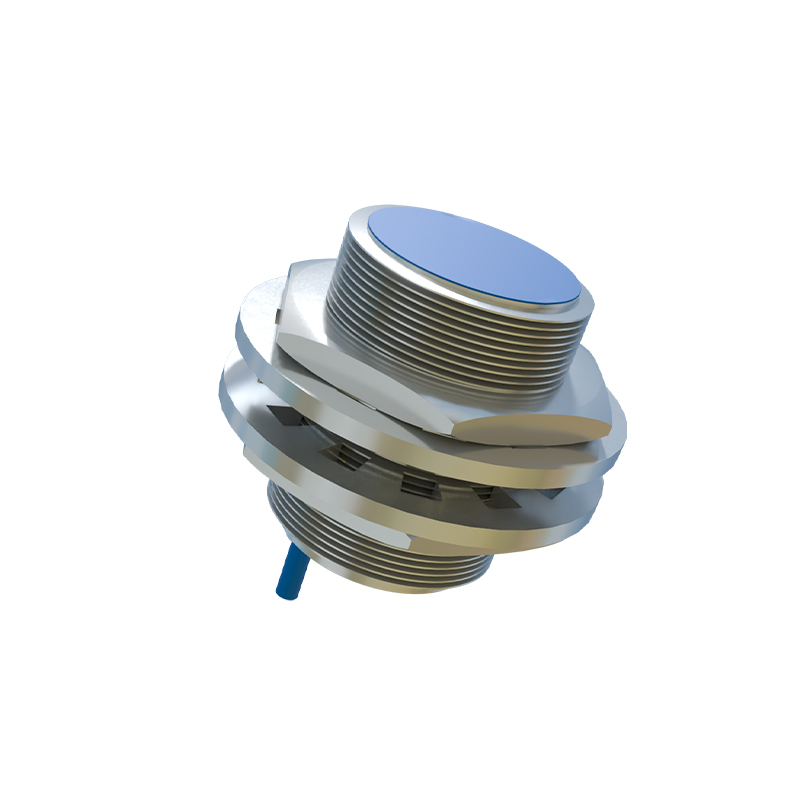
From a technical perspective, inductive proximity sensors are often preferred in cryogenic settings due to their robustness against contaminants like frost. However, capacitive variants may be customized for non-metallic target detection. Key performance parameters include switching frequency, repeat accuracy, and hysteresis—all of which must be calibrated for low-temperature operation. For example, sensor coils are wound with fine-gauge wire to minimize resistance changes, while embedded microcontrollers are programmed with temperature compensation algorithms to counteract signal drift.
The process of bulk ordering typically involves close collaboration between clients and engineering teams. Initial consultations define environmental specs (e.g., temperature range, exposure to chemicals), mechanical constraints, and electrical requirements. Prototypes are then developed and subjected to validation tests before full-scale manufacturing. Lead times for customized batches vary but can be optimized through modular design approaches, where core sensor platforms are adapted with interchangeable components.
In conclusion, the bulk customization of cryogenic proximity sensors is not merely a logistical exercise but a technical imperative for industries operating in extreme cold. By leveraging advanced materials, precision engineering, and scalable production, these sensors deliver reliability where standard units fail. As automation expands into colder frontiers—from Arctic mining to space exploration—tailored sensing solutions will continue to play a critical role in ensuring operational safety and efficiency.