In the realm of industrial automation and precision measurement, laser sensors have become indispensable tools. Among their critical parameters, spot size plays a pivotal role in determining the sensor's performance, accuracy, and suitability for specific tasks. This article delves into the technical aspects of laser sensor spot size, its influencing factors, and its practical implications in various industrial settings.
Fundamentally, the spot size refers to the diameter of the laser beam at the point where it intersects the target surface. It is not a fixed value but varies with distance, dictated by the principles of Gaussian beam optics. A smaller spot size allows for higher spatial resolution, enabling the detection of minute features or precise edge detection. Conversely, a larger spot size can average surface irregularities, which is beneficial for measuring rough or textured materials where a consistent signal is paramount.
Several key factors govern the spot size of a laser sensor. The primary factor is the wavelength of the laser light itself. Generally, shorter wavelengths (e.g., blue or violet lasers) can be focused to a smaller theoretical minimum spot size compared to longer wavelengths (e.g., infrared lasers). However, the most significant practical factor is the optical design of the sensor's transmitter. The lens system, specifically its focal length and aperture, determines the beam's divergence and the minimum achievable spot size at the focal point. The relationship is often described by the beam divergence angle; a low-divergence laser diode combined with a well-corrected lens produces a tighter, more consistent spot over a longer working range.
Another crucial element is the working distance—the gap between the sensor and the target. As per Gaussian beam propagation, the beam waist (the point of minimum spot size) is located at a specific distance. Moving the target closer or farther from this waist causes the spot to enlarge. High-quality laser sensors are designed to provide a specified spot size over a defined measurement range or "depth of field," within which the spot size variation remains within acceptable tolerances for the application.
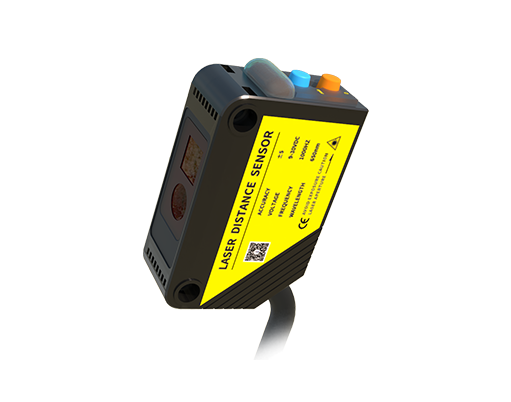
The choice of spot size has direct consequences on measurement accuracy and application feasibility. For high-precision tasks such as inspecting semiconductor wafers, measuring thin wire diameters, or profiling micro-mechanical parts, a sensor with a very small spot size (often in the micrometer range) is essential. It ensures that the sensor responds only to the specific feature of interest without being influenced by surrounding areas. In contrast, applications like presence detection on conveyor belts, monitoring fill levels in containers with turbulent surfaces, or measuring the thickness of hot rolled steel often employ sensors with larger spot sizes. The larger spot integrates light over a broader area, providing a stable signal that is less susceptible to noise from surface gloss, grain, or vibration.

Furthermore, the interaction between spot size and the target material's properties cannot be overlooked. On highly reflective or specular surfaces, a small spot can lead to saturation of the receiver or create speckle patterns that degrade signal quality. A slightly larger spot or using a diffuse laser line instead of a point can mitigate this. On dark, absorptive materials, a smaller, more intense spot might be necessary to achieve a sufficient signal-to-noise ratio for the receiver.
When selecting a laser sensor, engineers must carefully balance the spot size requirement with other parameters such as measurement range, response speed, and environmental robustness. Data sheets typically provide a graph showing spot size as a function of distance. It is critical to consult this graph to ensure the spot size at the intended working distance is appropriate for the target feature size. A common rule of thumb is that the spot diameter should be no larger than one-third to one-half the size of the smallest feature to be resolved.
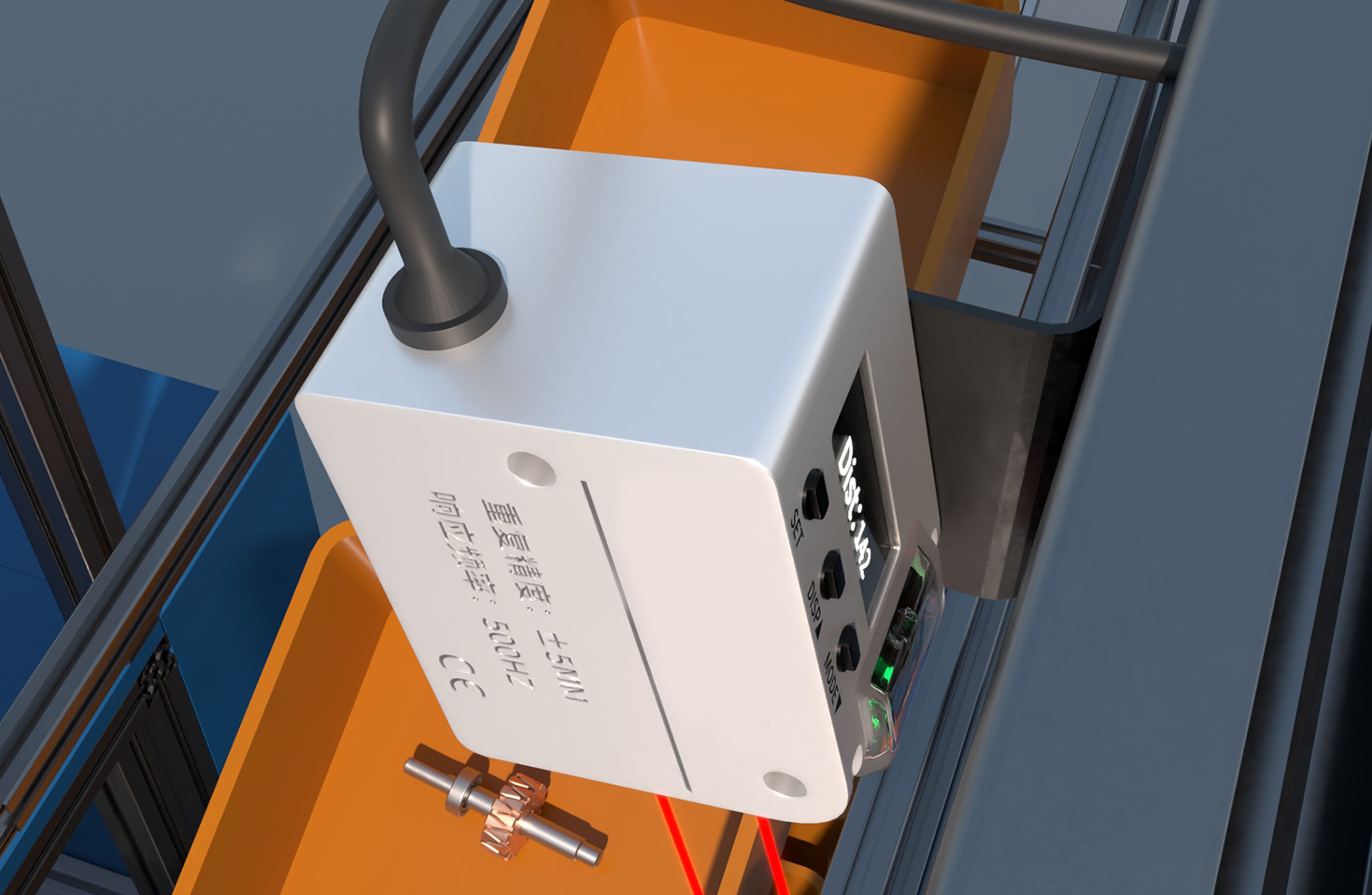
In conclusion, laser sensor spot size is a fundamental characteristic that bridges optical physics and practical engineering. Its optimization is not about seeking the absolute minimum size, but about matching the beam geometry to the application's demands for resolution, target material, and environmental conditions. A deep understanding of this parameter empowers engineers to deploy laser sensors more effectively, enhancing system reliability and measurement precision across diverse industries from electronics manufacturing to heavy machinery.