Proximity sensors represent a cornerstone technology in modern industrial automation, enabling non-contact detection of objects with high precision and reliability. Among the various sensing paradigms, the principles of 3D sensing in proximity switches have garnered significant attention for their ability to provide richer spatial information beyond simple presence detection. This article delves into the core 3D sensing mechanisms, their operational principles, and practical industrial implications.
Fundamentally, a proximity sensor detects the presence or absence of an object within its sensing field without physical contact. Traditional models often rely on 1D or 2D sensing, measuring distance along a single axis or within a planar field. 3D sensing elevates this capability by incorporating multiple data points or advanced field shaping to perceive an object's position in three-dimensional space—typically defined by X, Y, and Z coordinates. This is achieved through several key technological approaches.
One prominent method is based on multi-coil inductive sensing. Standard inductive proximity sensors generate an electromagnetic field using a single coil; detection occurs when a metallic object enters this field, causing a change in oscillation amplitude or frequency. In a 3D inductive system, an array of multiple coils or a specially designed coil configuration is employed. By analyzing the differential disturbance in the electromagnetic field across these coils, the sensor's integrated processing unit can triangulate not just the presence, but also the approximate lateral position (X, Y) and distance (Z) of the target. This allows for tasks like detecting small positional misalignments of metal parts on a conveyor or verifying the correct seating of a component in a fixture.
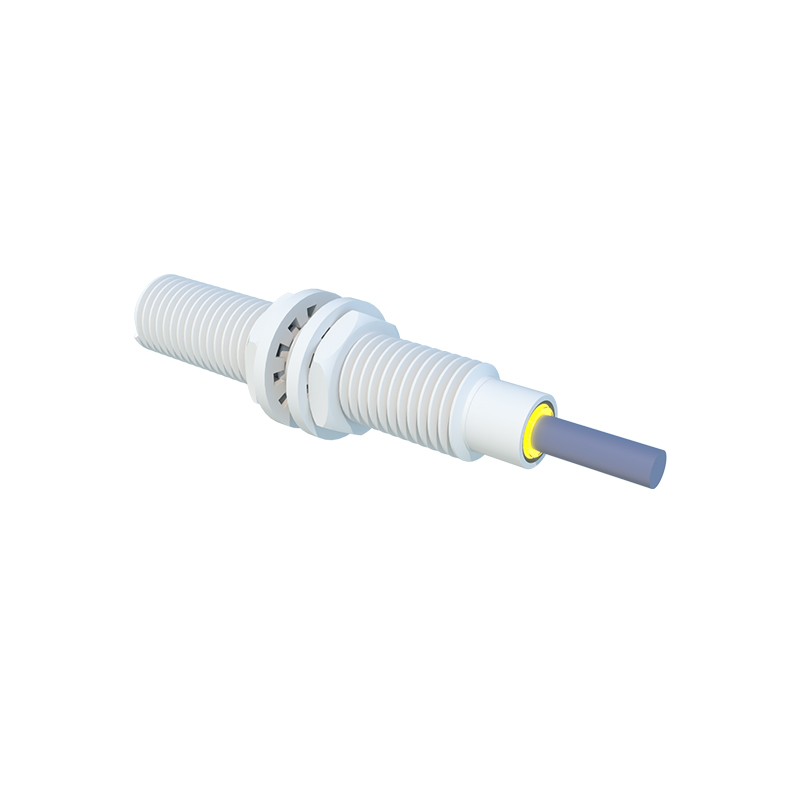
Another approach utilizes capacitive sensing principles extended into three dimensions. Capacitive proximity sensors detect objects by measuring changes in capacitance caused by the intrusion of any material (metal or non-metal) into an electrostatic field. For 3D capacitive sensing, multiple sensing electrodes are arranged in a specific pattern. The system measures the capacitance variation at each electrode. By processing this matrix of data, it can construct a rudimentary 3D profile of the target object, distinguishing, for example, between a full bottle and an empty one on a filling line, or detecting the level and profile of bulk material in a silo.
Time-of-Flight (ToF) technology is a highly effective method for true 3D distance measurement. A ToF-based proximity sensor emits a modulated light signal (often infrared) and measures the time delay for the reflection to return. Using an array of photodiodes or a single pixel sensor with advanced optics and signal processing, the device can calculate the distance (Z) to multiple points on the target's surface. By scanning or using a wide field-of-view, it builds a depth map, providing precise 3D contour information. This is invaluable in robotics for bin-picking applications, where the robot needs to understand the orientation and position of randomly placed parts.
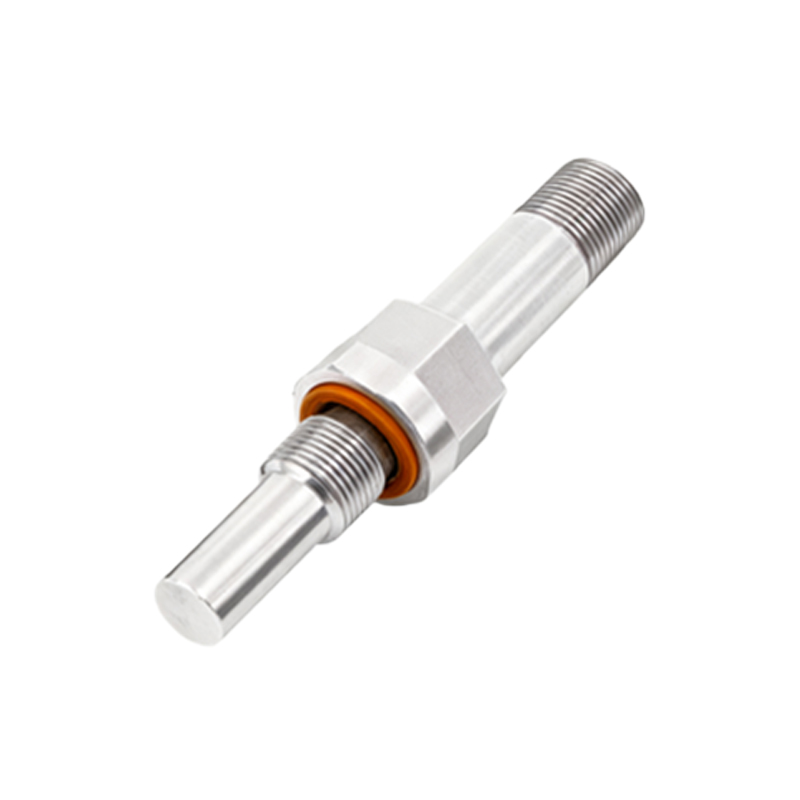
Ultrasonic sensors also achieve 3D profiling through array technology. By employing multiple ultrasonic transducers, the system can beamform and steer sound waves. Analyzing the echo patterns from different angles enables the creation of a 3D point cloud of the environment. This is particularly useful in harsh environments where optical sensors might fail, such as in dusty atmospheres or for detecting transparent objects.
The implementation of 3D sensing in proximity switches hinges on sophisticated embedded electronics. Microcontrollers or dedicated Application-Specific Integrated Circuits (ASICs) perform complex algorithms like triangulation, signal correlation, and noise filtering. The output is no longer a simple ON/OFF switch signal but can be a digital data stream (via IO-Link, for instance) containing coordinate information, or multiple discrete outputs corresponding to different 3D zones.
The industrial applications are vast and transformative. In automated assembly, 3D proximity sensors can verify the complex orientation of components before a robotic arm engages, preventing misassembly. In logistics, they enable dimensioning of packages on conveyors for optimal sorting and storage. Machine safety systems use them to create dynamic 3D protection zones around hazardous machinery, where the safe distance adjusts based on the speed of an approaching person. Furthermore, in quality control, these sensors can detect surface defects, warping, or missing features on products by comparing a captured 3D profile against a master template.
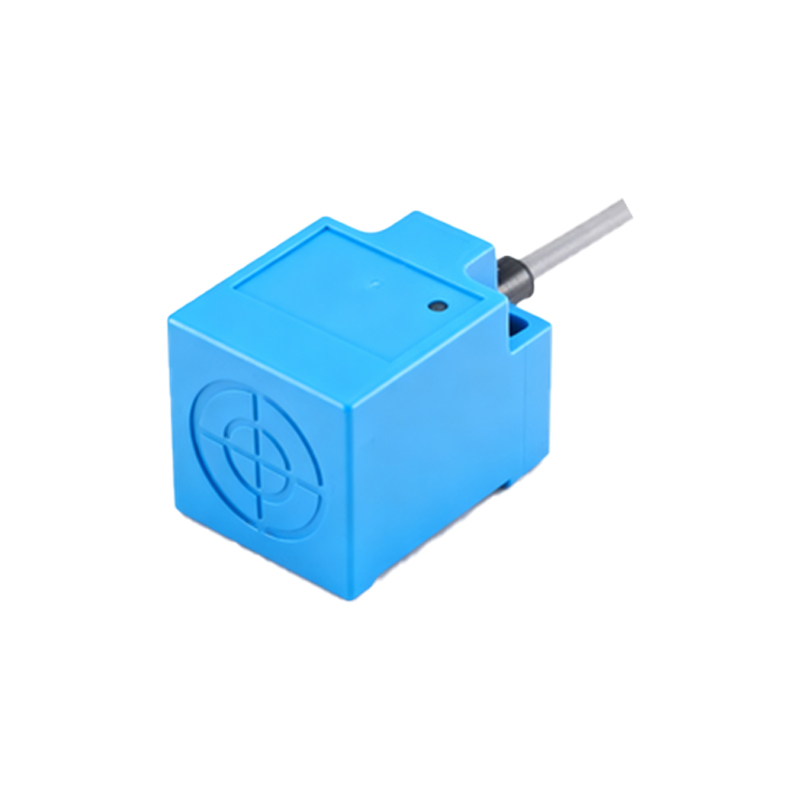
However, challenges remain. 3D sensing systems are generally more complex and costly than their 1D counterparts. They require careful calibration and can be susceptible to environmental interference like strong electromagnetic noise (for inductive types) or ambient light (for optical ToF types). The selection of the appropriate 3D technology—inductive, capacitive, ToF, or ultrasonic—depends critically on the target material, required resolution, sensing range, and the operational environment.
In conclusion, the evolution from simple detection to 3D spatial awareness marks a significant leap for proximity sensor technology. By harnessing multi-coil designs, electrode arrays