In the rapidly evolving landscape of industrial automation and precision measurement, laser sensors have become indispensable tools. Their applications span from manufacturing and robotics to quality control and R&D. However, not all laser sensors are created equal. The market is flooded with options, ranging from high-performance units to subpar imitations. For engineers and procurement specialists, the ability to accurately distinguish between a good and a bad laser sensor is critical for system reliability, safety, and overall project success. This guide delves into the key technical parameters and practical methods for evaluating laser sensor quality.
The foundation of any assessment lies in understanding core specifications. A high-quality laser sensor will have clearly documented and verifiable performance data. First, examine the accuracy and resolution. A good sensor provides precise, repeatable measurements with minimal deviation. Request datasheets and look for metrics like linearity error (often expressed as a percentage of full scale, e.g., ±0.1% F.S.) and repeatability. Be wary of vague claims like "high accuracy" without concrete figures. Second, assess the measuring range and spot size. The specifications should clearly state the minimum and maximum working distances and the corresponding laser spot diameter. A quality sensor maintains a small, consistent spot size across its range, enabling precise targeting. A bad sensor may have a spot that diverges significantly, leading to measurement errors on edges or small features.
Environmental robustness is a major differentiator. Industrial environments are harsh. A reliable laser sensor must exhibit excellent resistance to ambient light. High-quality models use sophisticated optical filters and modulation techniques to reject interference from workshop lighting, sunlight, or other lasers. Test this by exposing the sensor to varying light conditions and observing signal stability. Similarly, evaluate performance against target surface characteristics. A superior sensor can reliably measure on a variety of materials—shiny, dark, matte, or transparent—with minimal configuration changes. Poor sensors often fail on non-ideal surfaces, requiring constant recalibration. Look for features like automatic exposure control or background suppression.

The response time and output stability are crucial for dynamic applications. A good sensor offers fast response times (in microseconds or milliseconds) and stable analog or digital output with low noise. Observe the output signal on an oscilloscope under real operating conditions. Jitter, drift, or delayed responses are red flags indicating inferior electronic design or component quality. Furthermore, consider the mechanical and electrical design. Housing should be robust, typically IP67 or higher for dust and water ingress protection. Connectors should be secure, and cabling should be strain-relieved. Loose components, flimsy casings, or poorly soldered connections are immediate indicators of low manufacturing standards.
Long-term reliability is paramount. Investigate the quality of core components, particularly the laser diode and the receiver (PSD or CMOS). Renowned manufacturers use graded, temperature-stable components. Inquire about the Mean Time Between Failures (MTBF) data. While not always published, reputable brands often provide it. A lack of long-term reliability data is a concern. Additionally, examine the software and calibration. Good sensors come with user-friendly, feature-rich software for configuration and diagnostics. They hold their calibration over time and temperature swings. Cheap sensors may drift significantly, requiring frequent recalibration.
Practical evaluation steps are essential. Always conduct a bench test before integration. Compare the sensor's readings against a known standard (e.g., gauge blocks, a high-precision translation stage). Perform repeatability tests by taking multiple measurements of the same target. Execute a environmental stress test by varying temperature (within the sensor's specified range) and observing output drift. Finally, perform a real-world simulation in conditions as close as possible to the final application, noting any inconsistencies or failures.
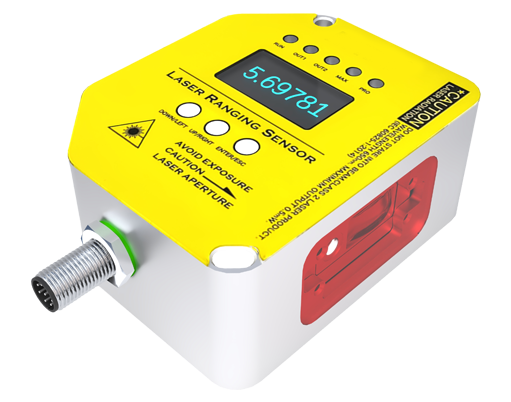
In conclusion,鉴别激光传感器的优劣 requires a multi-faceted approach that goes beyond price and brand name. By rigorously examining technical specifications for accuracy, range, and environmental resistance, physically testing for stability and robustness, and vetting the manufacturer's reputation for component quality and reliability data, engineers can make informed decisions. Investing time in thorough evaluation prevents costly downtime, ensures measurement integrity, and safeguards the performance of the larger automated system. Remember, the true cost of a sensor is not just its purchase price, but the total cost of ownership, which is invariably lower for a high-quality, reliable device.