High precision proximity sensors are essential components in modern industrial automation, enabling accurate, non-contact detection of objects with minimal error margins. These sensors are designed to operate reliably in harsh environments, providing consistent performance in applications ranging from manufacturing and robotics to automotive and aerospace industries. The following sections detail the primary types of high precision proximity sensors, their working principles, and key use cases.
Inductive proximity sensors are among the most common types, utilizing electromagnetic fields to detect metallic objects. They generate an oscillating magnetic field, and when a metal target enters this field, it induces eddy currents that alter the sensor's oscillation amplitude. This change triggers an output signal, allowing for precise detection without physical contact. Inductive sensors excel in environments with dust, oil, or moisture, making them ideal for machinery monitoring, position sensing in conveyor systems, and metal part counting in assembly lines. Their high repeatability and fast response times (often in microseconds) ensure minimal downtime in high-speed operations.
Capacitive proximity sensors function by detecting changes in capacitance caused by the presence of any material, including metals, plastics, liquids, or granular substances. These sensors consist of two conductive plates separated by an insulator, forming an electrostatic field. When an object enters this field, it alters the capacitance, triggering the sensor. Capacitive sensors are versatile and can handle non-metallic targets, such as glass bottles or wood panels, in packaging, food processing, and pharmaceutical industries. They offer adjustable sensitivity, allowing fine-tuning for specific materials, and are commonly used for level detection in tanks or presence sensing in material handling.
Ultrasonic proximity sensors employ sound waves beyond human hearing (typically 20 kHz to 200 kHz) to measure distance or detect objects. They emit ultrasonic pulses and calculate the time taken for echoes to return, determining the target's position with high accuracy. These sensors are effective for detecting transparent, shiny, or irregularly shaped objects that may challenge optical sensors. Applications include liquid level control, robotic navigation, and obstacle detection in automated guided vehicles (AGVs). With a range extending up to several meters and immunity to color or light interference, ultrasonic sensors provide reliable performance in complex settings like warehouses or outdoor installations.
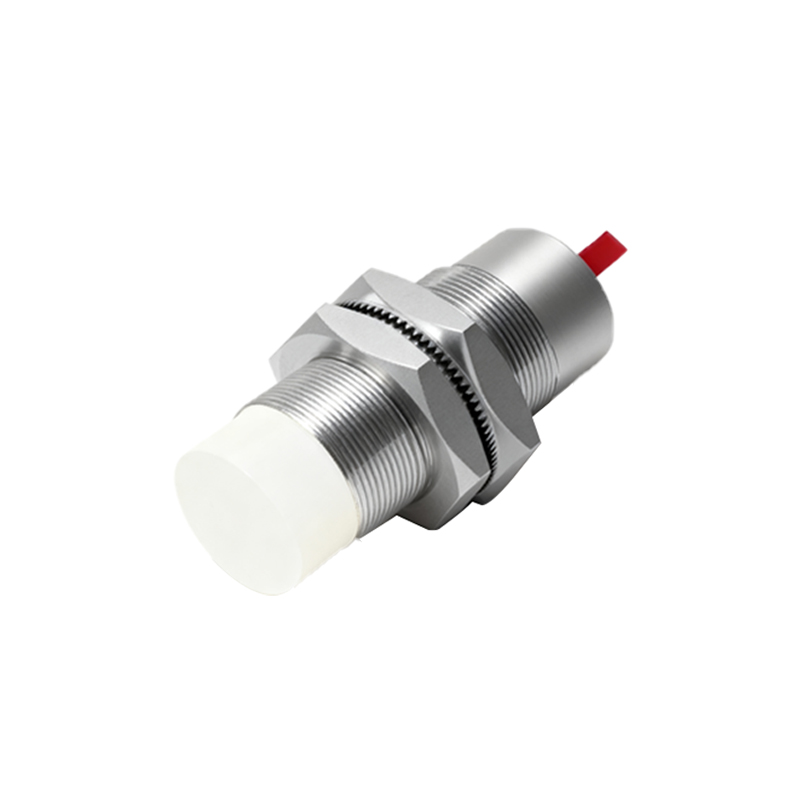
Magnetic proximity sensors use magnetic fields, often from permanent magnets or electromagnets, to detect ferromagnetic materials. They consist of a reed switch or Hall effect sensor that activates when a magnetic field is present. Magnetic sensors are highly durable, with no moving parts, and can operate in extreme temperatures or pressurized conditions. They are frequently applied in safety systems, such as door position monitoring in elevators or valve position sensing in hydraulic systems, where precision and longevity are critical. Their low power consumption and compact size make them suitable for embedded applications in automotive or aerospace controls.
Optical proximity sensors, including photoelectric and laser types, rely on light beams to detect objects. Photoelectric sensors use infrared, visible, or laser light to sense interruptions in the beam, while laser sensors offer finer resolution for minute measurements. Optical sensors provide exceptional accuracy, with detection ranges from millimeters to hundreds of meters, and are used in quality inspection, alignment tasks, and high-speed counting. In electronics manufacturing, for instance, they ensure precise component placement on circuit boards. However, they may require protection from ambient light or contaminants, often incorporating housings for industrial robustness.

Each type of high precision proximity sensor offers distinct advantages tailored to specific industrial needs. Factors like target material, environmental conditions, required accuracy, and response speed influence selection. For example, inductive sensors are preferred for metal detection in dirty settings, while capacitive sensors handle diverse materials in clean rooms. Ultrasonic and optical sensors suit long-range or non-contact measurements, whereas magnetic sensors excel in hazardous areas. Regular calibration and maintenance, such as cleaning lenses or checking output signals, are vital to sustain performance. As Industry 4.0 advances, these sensors integrate with IoT platforms, enabling real-time data analytics for predictive maintenance and enhanced efficiency. In summary, high precision proximity sensors are indispensable tools driving automation, with ongoing innovations improving their sensitivity, durability, and connectivity for smarter industrial ecosystems.