In the realm of industrial automation, process control, and scientific measurement, the precise and non-contact determination of an object's velocity is a critical parameter. Among the various technologies available, laser speed sensors have emerged as a premier solution, offering unparalleled accuracy, reliability, and versatility. This article delves into the operational principles, core technologies, diverse applications, and key selection criteria for these sophisticated instruments, providing a comprehensive guide for engineers and technical professionals.
The fundamental principle behind laser speed measurement is the Doppler effect. When a laser beam is directed at a moving surface, the frequency of the light reflected back is shifted. This shift, known as the Doppler frequency shift, is directly proportional to the velocity of the target object. Laser speed sensors exploit this physical phenomenon. Typically, they employ a solid-state laser diode to emit a coherent, monochromatic beam of light. This beam is split into a reference beam and a measurement beam. The measurement beam is focused onto the target surface—be it metal, paper, plastic, or even a liquid flow. The scattered light from the moving surface, now carrying the frequency shift, is collected by the sensor's optics and combined with the reference beam. This combination creates an interference pattern, which is detected by a high-speed photodetector. Sophisticated signal processing electronics then analyze the beat frequency of this interference, precisely calculating the velocity based on the known wavelength of the laser light and the geometry of the optical system. This method is known as Laser Doppler Velocimetry (LDV) or Laser Doppler Anemometry (LDA).
Two primary configurations dominate industrial applications: single-point sensors and line sensors. Single-point laser sensors measure velocity at a very specific, focused spot. They are ideal for applications requiring extreme precision on well-defined targets, such as measuring the speed of rotating shafts, rollers in printing presses, or thin wires during manufacturing. In contrast, laser line sensors project a line of laser light onto a surface. By analyzing the movement of surface texture or features across this line using advanced correlation algorithms, they can measure speed on surfaces without distinct markings and are less sensitive to minor alignment issues. This makes them perfect for measuring the velocity of continuous strips in steel mills, paper webs, or conveyor belts carrying bulk materials.
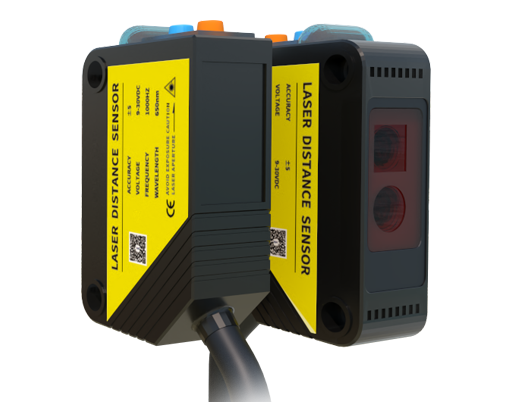
The advantages of laser speed sensors over traditional contact methods (like tachometers) or other non-contact methods (like encoder wheels or magnetic sensors) are substantial. Firstly, they are truly non-contact, eliminating wear and tear, slippage errors, and the risk of damaging delicate products. They impose no load on the measured object. Secondly, they offer exceptional accuracy and resolution, often down to 0.1% of reading or better, with a high frequency response capable of tracking rapid speed fluctuations. Thirdly, their measurement is independent of the material's electrical or magnetic properties, allowing them to work on non-conductive and non-ferrous materials. Finally, modern laser sensors are robust, designed with IP67-rated housings to withstand harsh industrial environments involving dust, vibration, and variable temperatures.
The application spectrum for laser speed sensors is remarkably broad. In the metals industry, they are indispensable for controlling rolling mills, measuring strip speed for precise tension control, and in draw lines for wires and cables. In paper manufacturing, they monitor web speed to ensure consistent quality and optimize production efficiency. The printing and packaging sectors rely on them for register control and synchronization of multiple moving parts. In the automotive industry, they are used for testing tire traction, brake performance, and on engine test benches. Furthermore, they play a crucial role in scientific research for fluid dynamics studies (measuring air or water flow velocity) and in the development of new materials.
Selecting the appropriate laser speed sensor requires careful consideration of several parameters. The primary specification is the required measurement range (minimum and maximum speed) and the desired accuracy. The target surface characteristics are equally critical: rough, dark surfaces scatter light well but provide a weaker signal, while smooth, shiny surfaces can create specular reflections that may challenge some sensors. Many modern units automatically adjust their gain to handle varying surface conditions. The stand-off distance (working distance) and the size of the measurement spot or line must suit the physical setup. Environmental factors like ambient light, temperature extremes, and the presence of dust or steam must be matched with the sensor's ingress protection and operational ratings. Finally, the output interface (analog voltage/current, digital protocols like RS-485, Ethernet/IP, or PROFIBUS) must integrate seamlessly with the existing control system, such as a PLC or data logger.

In conclusion, laser speed sensors represent a mature yet continuously advancing technology that provides a critical link in modern automated and quality-controlled processes. By offering precise, non-intrusive, and reliable velocity data, they empower engineers to enhance product quality, optimize production throughput, and implement sophisticated control strategies. A thorough understanding of their operating principles and a methodical approach to selection, as outlined above, will ensure the successful deployment of these powerful tools in demanding industrial applications, driving efficiency and innovation across numerous sectors.
