In the rapidly evolving landscape of industrial automation and smart electronics, the demand for components that offer high performance within minimal spatial constraints has never been greater. Among these critical components, the ultra-thin inductive proximity sensor stands out as a pivotal innovation, enabling new levels of design flexibility and detection accuracy in applications where space is at a premium.
Traditional inductive proximity sensors, while reliable for detecting metallic objects without physical contact, often posed challenges due to their size and mounting requirements. The advent of ultra-thin variants, some as slim as a few millimeters, has fundamentally altered this paradigm. These sensors operate on the same core electromagnetic principle: generating an oscillating electromagnetic field from a coil. When a metallic target enters this field, eddy currents are induced within the target, causing a change in the oscillation amplitude or frequency within the sensor's circuit. This change is detected and converted into a switch signal. The engineering breakthrough lies in miniaturizing this entire system—coil, oscillator, detector, and output circuit—into an exceptionally flat package without sacrificing sensing range or robustness.
The applications for these slim-line sensors are vast and transformative. In the robotics and collaborative robot (cobot) sector, they are integrated into grippers and arms for precise end-effector positioning and part presence verification, where every millimeter of space is valuable. The consumer electronics industry leverages them for lid-open/close detection in ultra-slim laptops and tablets, as well as for position sensing in compact camera modules. Within automated machinery, they monitor the position of thin metal sheets, cams, or actuator parts in tightly packed control cabinets and linear motion systems. The automotive industry, particularly in electric vehicle powertrains and advanced driver-assistance systems (ADAS), utilizes them for detecting gear positions or brake pad wear in confined spaces.
Key advantages drive their adoption. The most obvious is their minimal installation depth, allowing integration into designs previously deemed impossible. This often eliminates the need for complex mounting brackets or machine modifications. Despite their thin profile, many models offer respectable sensing ranges, typically from 1 to 5 mm for steel targets, and are characterized by high switching frequencies, enabling detection of fast-moving objects. They maintain the inherent benefits of inductive sensing: insensitivity to dust, dirt, and moisture (often featuring IP67 ratings), non-contact operation ensuring no wear, and exclusive response to metallic objects, which provides immunity to ambient light or transparent materials.
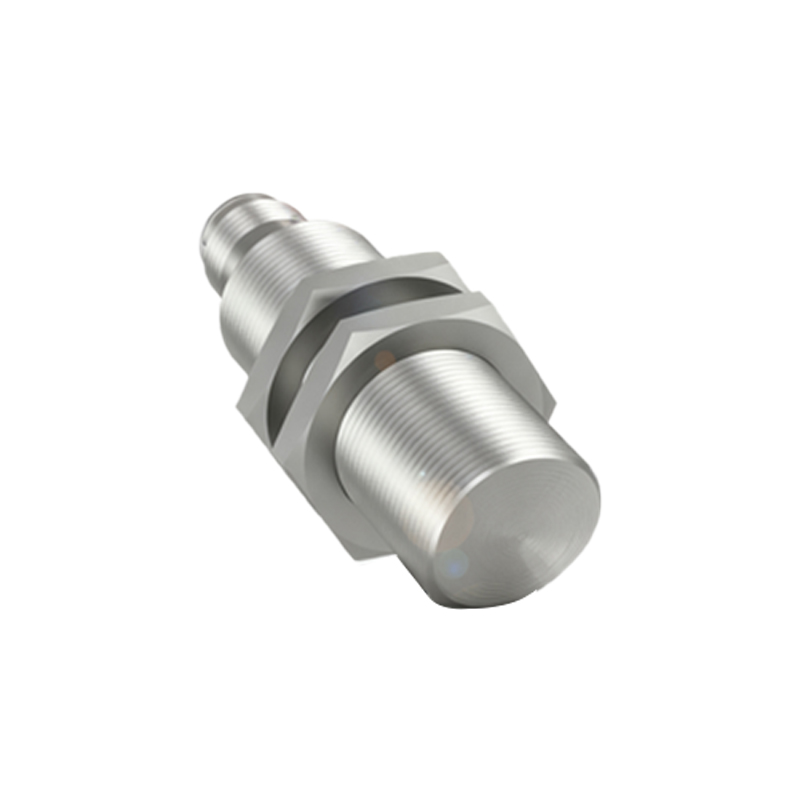
Selecting the right ultra-thin inductive sensor requires careful consideration of several parameters. The housing material, often stainless steel or ruggedized polymer, must suit the environmental conditions. The sensing face design—shielded (flush-mountable) or unshielded—affects the installation and sensing range. Output types (PNP/NPN, NO/NC) must match the control system's logic. Crucially, the target material (steel, aluminum, copper) and its required detection distance directly influence the sensor's effective range, as different metals affect the electromagnetic field differently.
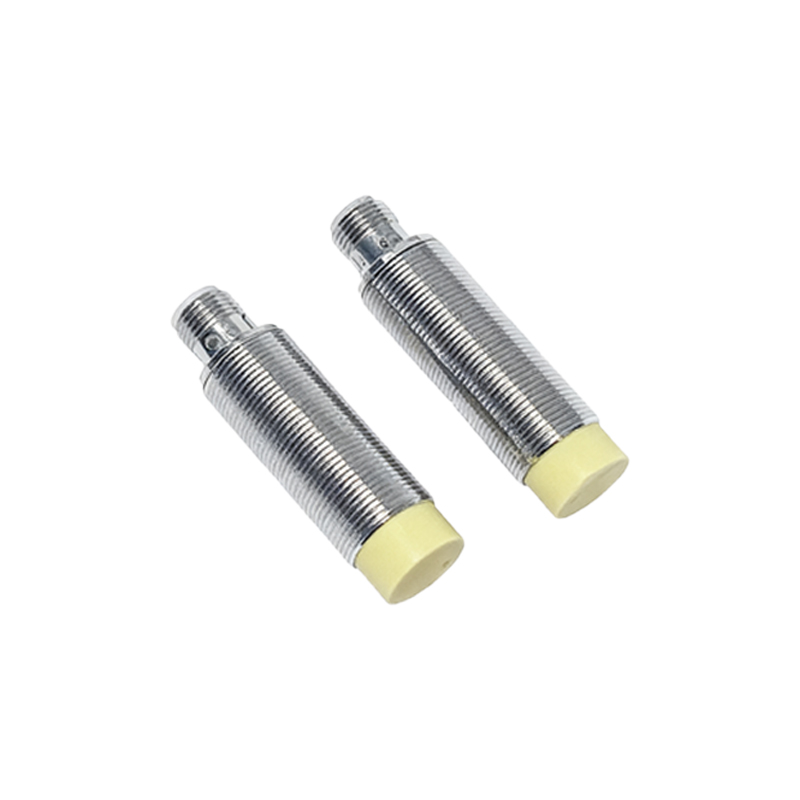
Looking forward, the trajectory for these components points toward even greater integration and intelligence. We are seeing the emergence of sensors with integrated IO-Link communication, providing not just a binary signal but detailed diagnostic data like temperature, operating hours, and signal strength for predictive maintenance. Advances in materials science and micro-electronics will likely yield sensors that are thinner, more energy-efficient, and capable of distinguishing between different metal types or grades.
In conclusion, ultra-thin inductive proximity sensors are not merely smaller versions of their predecessors; they are enablers of next-generation compact and intelligent systems. By solving the critical challenge of space without compromising on the reliability and robustness expected in industrial and consumer applications, they have cemented their role as essential components in the ongoing march toward miniaturization and enhanced automation. Their continued development will be instrumental in shaping more agile, efficient, and sophisticated automated solutions across all sectors of manufacturing and technology.