In the realm of industrial automation, process control, and scientific measurement, the precise detection and quantification of light is paramount. Among the various technologies available, light intensity laser sensors have emerged as a critical tool for engineers across numerous disciplines. These sensors operate on the fundamental principle of measuring the intensity of a laser beam after it interacts with a target or medium. Unlike simple photodetectors, these systems typically incorporate a coherent laser light source, optics for beam shaping and focusing, and sophisticated electronics for signal processing. The core measurement is often based on detecting changes in the received light intensity due to reflection, absorption, scattering, or obstruction by the target object.
The operational principle is elegantly straightforward yet powerful. A laser diode emits a focused, monochromatic beam of light directed towards the target. A photodetector, such as a photodiode or phototransistor, positioned either in a retro-reflective, through-beam, or diffuse reflection configuration, receives the light. In a through-beam setup, the sensor and receiver are separate units; breaking the beam indicates presence. Retro-reflective models use a reflector, with detection triggered when the beam is blocked. The most common, diffuse reflection sensors, have the emitter and receiver in one housing, detecting light reflected directly off the target. The sensor's electronics convert the photodetector's current, which is proportional to the received light intensity, into a stable, usable output signal (e.g., analog voltage/current or a digital switch signal). Advanced models integrate background suppression techniques or use triangulation principles to ensure reliability regardless of the target's color, material, or surface finish.
The applications for light intensity laser sensors are vast and integral to modern engineering. In manufacturing and packaging, they are ubiquitous for precise object detection, counting, and fill-level control. Their small spot size and high resolution make them ideal for detecting minute parts, verifying the presence of labels on bottles, or ensuring correct component placement on printed circuit boards. In the automotive industry, they are used for robot guidance, weld seam tracking, and gap measurement. Furthermore, they play a vital role in safety systems, such as light curtains for machine guarding, where an array of laser beams creates an invisible safety barrier. Beyond industrial automation, these sensors are employed in environmental monitoring for measuring turbidity in liquids, in biomedical devices for diagnostic equipment, and in consumer electronics for features like proximity sensing.
Selecting the appropriate light intensity laser sensor requires careful consideration of several key parameters. First, the sensing range must be matched to the application, considering both the nominal range and any necessary safety margin. The spot size is crucial; a smaller spot allows for higher precision and detection of smaller features. Response time, often in the microsecond range, determines how fast a process can be monitored. The type of output required—discrete (PNP/NPN) or analog—depends on whether the need is for simple presence detection or precise distance/contrast measurement. Environmental factors are critical: the sensor's housing must provide an adequate Ingress Protection (IP) rating for dust and water resistance, and it must withstand ambient temperature variations, vibration, and potential exposure to chemicals. For challenging surfaces, sensors with background suppression or true background suppression (using triangulation) are necessary to ignore distant objects or varying reflectivity. Finally, compliance with laser safety classes (Class 1, 2, or 3R) is non-negotiable for operator safety, with Class 1 lasers being inherently safe under all conditions of normal use.
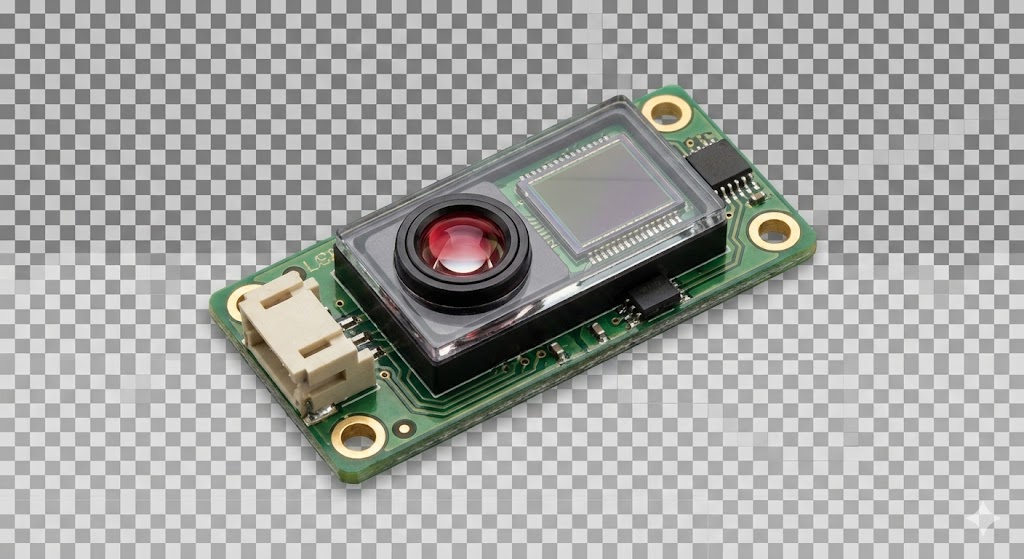
Installation and alignment are practical steps that significantly impact performance. Ensuring a stable mounting, free from vibration, is essential. The sensor must be aligned correctly to the target path; many models feature built-in LED indicators for alignment status. It is vital to consider potential optical interference from ambient light sources, such as direct sunlight or high-intensity factory lighting. Using sensors with modulated laser light and corresponding synchronous detection circuits can effectively mitigate this interference. Regular maintenance, primarily keeping the lens clean from dust, oil, or debris, ensures long-term reliability and accuracy.
In conclusion, light intensity laser sensors are indispensable components in the engineer's toolkit, offering unmatched precision, speed, and versatility for detection and measurement tasks. Their evolution continues with trends towards miniaturization, integrated intelligence (IO-Link for parameterization and diagnostics), and enhanced resistance to harsh environments. By understanding their operating principles, meticulously evaluating application requirements against sensor specifications, and following best practices for installation, engineers can leverage these powerful devices to enhance system reliability, improve product quality, and drive innovation in automation and control systems. The future will likely see their integration into more complex systems for 3D profiling and spectral analysis, further expanding their utility across engineering fields.