In the realm of precision measurement and sensing technology, two prominent solutions often come to the forefront: fiber optic sensors and laser sensors. While both are celebrated for their high accuracy and ability to operate in challenging environments, their underlying principles, architectures, and ideal use cases differ substantially. Understanding these distinctions is crucial for engineers and system designers to select the optimal technology for their specific application.
Fiber optic sensors utilize optical fibers as the sensing element. Light is transmitted through a glass or plastic fiber, and the sensor detects changes in the properties of this light—such as its intensity, phase, wavelength, or polarization—caused by external parameters like temperature, strain, pressure, or vibration. The fiber itself can be the sensor (intrinsic type) or simply act as a conduit to a remote sensing region (extrinsic type). A core strength of this technology is its immunity to electromagnetic interference (EMI), making it indispensable in environments with high electrical noise, such as near power generation equipment or in medical MRI suites. Furthermore, their small size, lightweight nature, and ability to be multiplexed—where multiple sensing points exist along a single fiber—allow for distributed sensing over long distances, which is ideal for monitoring pipelines, bridges, or large structural health.
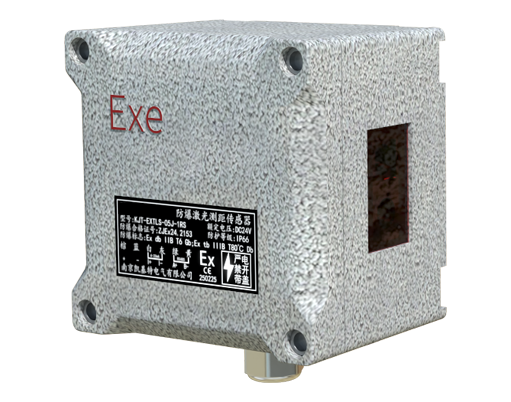
Laser sensors, in contrast, typically refer to devices that use a focused, coherent laser beam as a probing tool. They often operate on principles like triangulation, time-of-flight, or interferometry to measure parameters such as distance, displacement, thickness, or vibration of a target object. The laser is emitted from a source, reflects off the target, and is detected by a receiver. Changes in the reflected beam's position or return time are calculated to determine the measurement. These sensors excel in applications requiring non-contact, high-speed, and high-resolution measurements of well-defined surfaces. Common examples include precise alignment in manufacturing, profile scanning, and vibration analysis in industrial automation. Their performance can be influenced by the target's surface properties (color, reflectivity) and environmental factors like dust or ambient light, though many models incorporate filters and algorithms to compensate.
The divergence in their fundamental operation leads to clear practical differences. Fiber optic sensors are inherently passive and often chemically inert, allowing them to function in explosive or corrosive atmospheres where electrical sparks pose a risk. Their installation can be more complex, involving careful handling and splicing of fibers, but they offer unparalleled versatility in embedding into composite materials or wrapping around structures. Laser sensors, being active probing systems, generally offer a longer stand-off distance—the ability to measure from a greater range to the target. They provide exceptional point-based accuracy and are often easier to set up for specific, localized measurement tasks. However, they typically measure one point at a time unless integrated into a scanning system.
When considering applications, the choice becomes clearer. Fiber optic sensors are the go-to for distributed sensing and monitoring in harsh EMI/RFI environments, geotechnical engineering, oil and gas downhole monitoring, and smart structure applications. Laser sensors dominate in industrial metrology, robotics for object detection and positioning, lidar systems for autonomous vehicles, and quality control inspections where rapid, non-contact profiling is needed.
In summary, the core distinction lies in the method of interaction: fiber optic sensors transform the fiber itself into a sensitive transducer affected by its surroundings, while laser sensors project a coherent light beam onto a target to analyze its reflection. The former shines in multi-point, distributed, and EMI-immune scenarios, whereas the latter provides superior precision for discrete, non-contact measurements of surface properties. Selecting between them hinges on a detailed analysis of the measurement environment, required precision, target nature, and system integration constraints.
