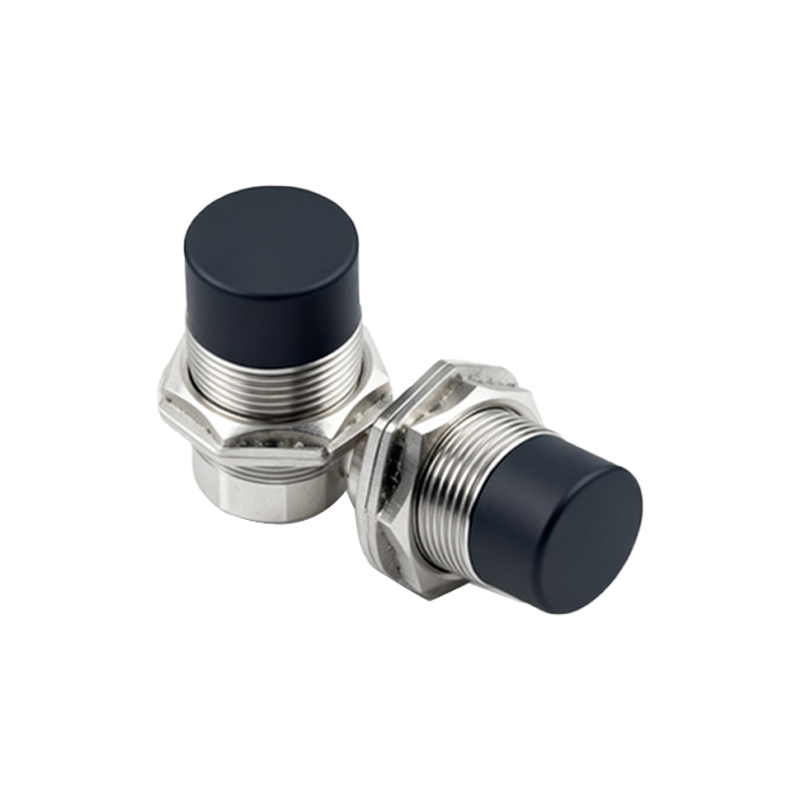
In the realm of industrial automation, proximity sensors are the silent sentinels, enabling machines to "see" and interact with their environment without physical contact. These non-contact detection devices are fundamental to modern manufacturing, robotics, and process control, providing critical data for positioning, counting, inspection, and safety. Their ability to operate reliably in harsh industrial conditions—amidst dust, vibration, and temperature extremes—makes them indispensable for achieving high efficiency, precision, and uptime.
Proximity sensors function by emitting a field or beam and detecting changes in that field caused by the presence of a target object. The core principle is the absence of mechanical wear, leading to exceptional longevity and reliability compared to mechanical limit switches. The primary technologies dominating the industrial landscape are inductive, capacitive, ultrasonic, and photoelectric sensors, each with distinct operating principles and ideal applications.
Inductive proximity sensors are the workhorses for metal detection. They generate an electromagnetic oscillating field. When a metallic object enters this field, it induces eddy currents, causing a change in the oscillation amplitude. This change is detected by the sensor's circuitry, triggering an output signal. Inductive sensors are renowned for their robustness, high switching frequency, and immunity to environmental factors like dirt, oil, and moisture. They are predominantly used for detecting ferrous and non-ferrous metals in applications such as part presence verification on conveyor lines, end-of-travel detection in cylinders, and metal counting.
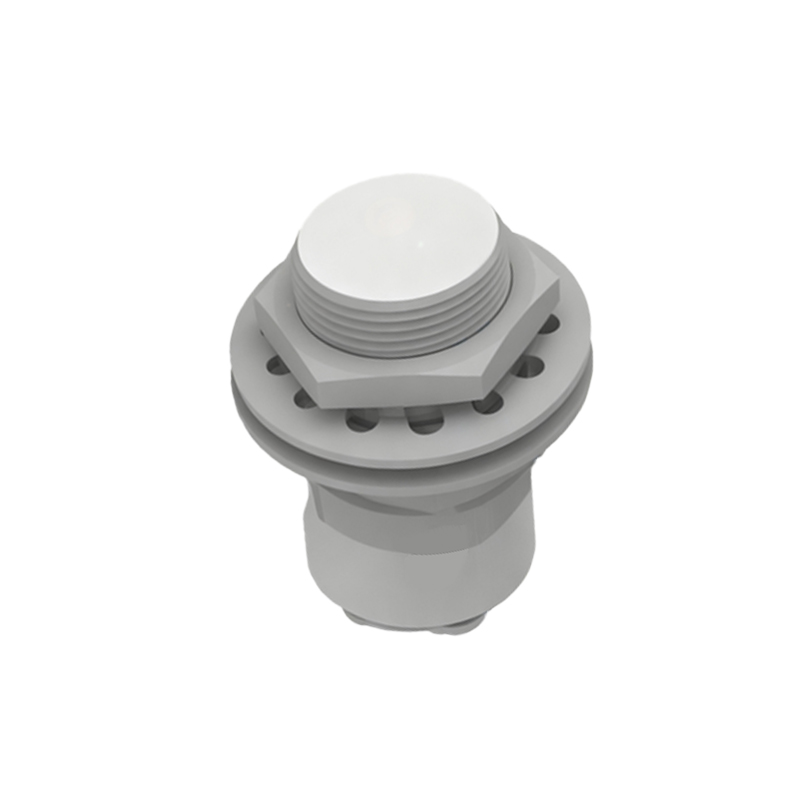
Capacitive proximity sensors, in contrast, can detect both metallic and non-metallic materials, including liquids, plastics, wood, and granular substances. They operate by generating an electrostatic field. Any object with a dielectric constant different from air entering this field alters the sensor's capacitance, triggering detection. This makes them versatile for tasks like liquid level sensing in tanks, detecting filled vs. empty bottles on a line, or monitoring the presence of paper or plastic films. However, they can be more susceptible to environmental factors like humidity.
Photoelectric sensors utilize light beams for detection. An emitter sends out a beam of light (often infrared, visible red, or laser), and a receiver detects it. The presence of an object is sensed by either interrupting the beam (through-beam), reflecting it back to a receiver housed in the same unit (retro-reflective), or diffusing it (diffuse reflective). Photoelectric sensors offer the longest sensing ranges and are excellent for detecting small objects, transparent materials, and for applications requiring precise positioning. They are common in packaging, material handling, and assembly automation.
Ultrasonic sensors work on a sonar principle, emitting high-frequency sound waves and evaluating the echo reflected from a target. They measure the time interval between sending the signal and receiving the echo to calculate distance. This technology excels at precise distance measurement and level sensing, regardless of the target's material, color, or transparency. They are ideal for applications like bulk material level control, loop control in web processes, and robot palletizing.
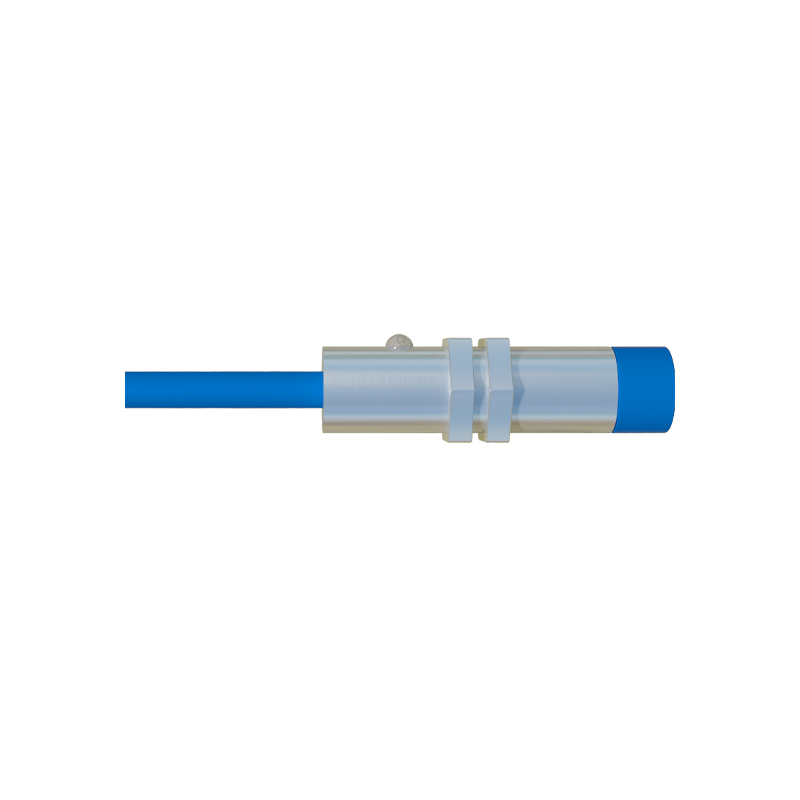
Selecting the right proximity sensor requires a careful analysis of several key parameters. First, identify the target material: metal, plastic, liquid, etc. This immediately narrows the choice to inductive or capacitive for most solid objects. Second, consider the required sensing distance, noting that the rated operating distance is typically defined under ideal laboratory conditions; a derating factor for real-world applications is essential. Third, the environmental conditions are critical: temperature range, potential for washdowns (requiring high IP ratings like IP67 or IP69K), exposure to chemicals, or heavy airborne particulates. Fourth, the electrical output type must match the control system: traditional DC 3-wire PNP/NPN outputs, analog current/voltage outputs for proportional measurement, or IO-Link for smart sensor capabilities providing detailed diagnostics and parameterization. Finally, physical characteristics like housing style (barrel, rectangular), size, and connection type (connector, cable outlet) must suit the mechanical installation constraints.
The evolution of Industry 4.0 and the Industrial Internet of Things (IIoT) is pushing proximity sensors beyond simple binary switching. Smart sensors with IO-Link communication are becoming standard. They provide not just a switch signal but also detailed process data (e.g., exact distance, signal strength), health status information, and allow for remote configuration and diagnostics. This enables predictive maintenance, where a controller can monitor a sensor's internal parameters and alert operators to potential failures before they cause downtime, transforming sensors from simple components into data points in a connected, intelligent factory.
In conclusion, proximity sensors are a cornerstone of automated systems. Understanding the strengths and limitations of inductive, capacitive, photoelectric, and ultrasonic technologies is the first step toward optimal selection. By meticulously evaluating the target, environment, range, and required functionality—and increasingly considering smart features for data integration—engineers can deploy these reliable devices to build