In the realm of industrial automation and control systems, proximity sensors are indispensable components, providing non-contact detection of objects. A fundamental and often critical parameter in their specification and application is the sensing distance. This distance, also known as the nominal sensing range or Sn, is not a simple, fixed value but a complex characteristic influenced by numerous factors. A deep understanding of this parameter is essential for engineers to ensure reliable system performance, prevent malfunctions, and optimize machine design.
The rated sensing distance, as specified by the manufacturer, is defined under standardized conditions: a standard target, a specific ambient temperature (typically 23°C), and a defined supply voltage. For inductive sensors, this standard target is usually a square of mild steel (like Fe360) with a side length equal to the sensor's face diameter or the rated sensing distance, whichever is greater. For capacitive sensors, it's often a grounded metal plate. It is crucial to recognize that this nominal value is a reference point, not an absolute guarantee in all operating environments.
Several key factors can cause significant deviation from the nominal sensing distance. First and foremost is the target material. Inductive sensors are primarily sensitive to metals. The sensing distance reduces dramatically for non-ferrous metals like aluminum, brass, or copper compared to mild steel. A reduction factor, often provided in datasheets, must be applied. For instance, an inductive sensor rated for 10mm on steel might only sense an aluminum object at 4-5mm. Capacitive sensors, detecting a change in dielectric constant, are affected by the material's density and composition, with sensing distance varying for different liquids, plastics, or granular materials.
Target size and shape are equally important. A target smaller than the sensor's active face or the standard target will reduce the effective sensing distance. For reliable operation, the target should generally be at least as large as the sensor's sensing face. The shape also matters; rounded or irregular edges can diminish the effective range compared to a flat, square surface.
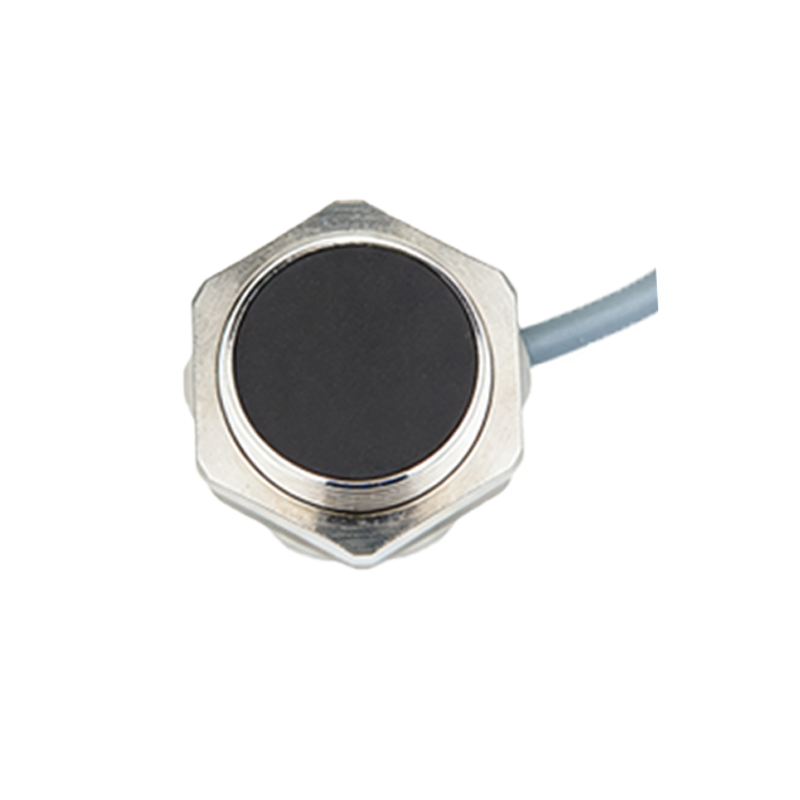
Environmental conditions pose another major influence. Temperature fluctuations affect the electrical properties of the sensor's internal coils and electronics. Most sensors specify a temperature drift coefficient, indicating how much the sensing distance might change per degree Celsius. High temperatures can decrease sensitivity, while extreme cold might increase it slightly. The presence of strong electromagnetic fields near inductive sensors or other capacitive bodies near capacitive sensors can cause interference, leading to false triggering or reduced range.
Installation considerations are practical engineering concerns. Embedding a sensor flush in a metal mounting bracket (flush-mounted) allows it to achieve its full rated sensing distance. However, if the sensor must be installed non-flush (with its sensing face exposed), side-by-side with other sensors, or surrounded by different metals, the effective sensing distance can be reduced due to magnetic or capacitive interference from the surrounding material. Manufacturers provide correction factors for such mounting conditions.
Furthermore, the concept of "assured operating distance" (Sa) or "reliable sensing distance" is vital for system design. This is a derated distance, typically 70-80% of the nominal Sn, within which detection is guaranteed under all specified conditions, including supply voltage tolerances, temperature ranges, and manufacturing variances. Designing with the assured operating distance, not the nominal distance, is a best practice that builds in a safety margin and ensures long-term reliability, preventing intermittent failures.
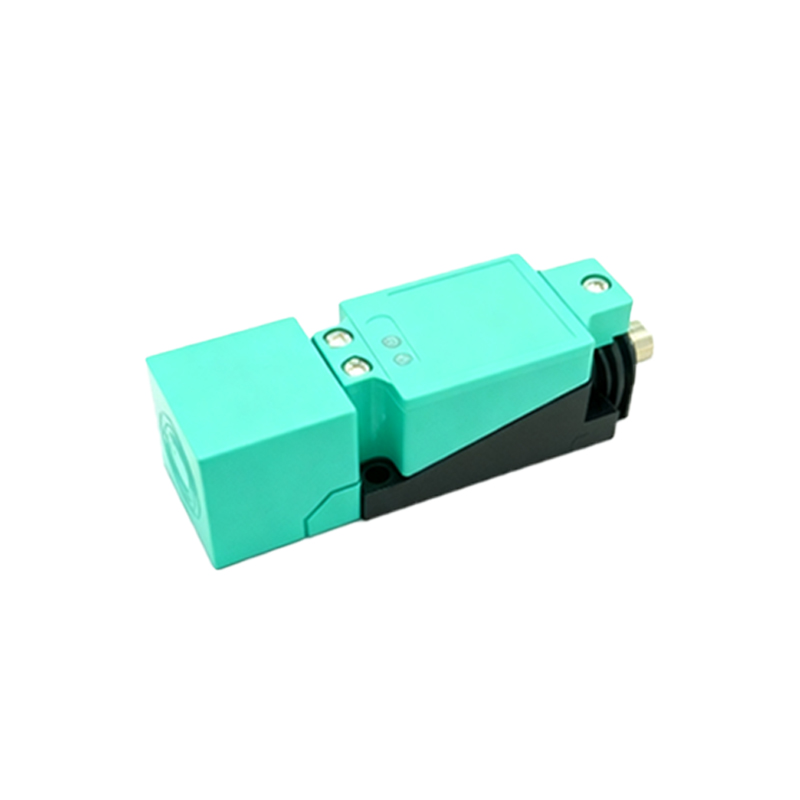
For tuning and setup in the field, many modern proximity sensors feature potentiometers or teach-in functions to adjust sensitivity. This allows engineers to fine-tune the sensing window to ignore background objects or to compensate for specific target materials. Understanding hysteresis—the difference between the switch-on point as the target approaches and the switch-off point as it recedes—is also important to prevent chattering of the output signal when a target is at the threshold.
In conclusion, the detection capability of a proximity sensor is defined by much more than a single number on a datasheet. It is a system characteristic. Successful implementation requires the engineer to holistically evaluate the target properties, environmental context, electrical conditions, and physical installation. By meticulously accounting for reduction factors, designing with assured operating distances, and leveraging adjustable features, engineers can deploy proximity sensors with confidence, ensuring robust, maintenance-free operation in even the most demanding industrial applications. Always consult the manufacturer's detailed technical documentation for specific correction factors and application notes pertaining to your unique use case.