In the realm of automation, sensing technologies play a pivotal role in enabling machines to interact with their environment. Among these, infrared (IR) proximity sensors stand out for their reliability, cost-effectiveness, and versatility. This article delves into the fundamental principles behind IR proximity sensors, exploring their operation, components, and typical applications in industrial and consumer electronics.
At its core, an infrared proximity sensor operates by emitting and detecting infrared light. Infrared radiation is a type of electromagnetic wave with wavelengths longer than visible light but shorter than microwaves, typically ranging from 700 nanometers to 1 millimeter. The sensor system consists of two main components: an IR emitter (usually an infrared LED) and an IR detector (such as a photodiode or phototransistor). The emitter sends out a modulated infrared signal—often pulsed at a specific frequency to reduce interference from ambient light sources like sunlight or artificial lighting. When an object enters the sensor's detection range, it reflects part of this emitted IR radiation back toward the detector.
The detector then converts the received infrared light into an electrical signal. This signal's strength is proportional to the amount of reflected IR light, which in turn depends on factors like the object's distance, size, and reflectivity. By analyzing the intensity of the returned signal, the sensor's circuitry can estimate the proximity of the object. Some advanced sensors use triangulation or time-of-flight (ToF) methods for more precise distance measurement. In triangulation, the emitter and detector are placed at a known angle; the position of the reflected light spot on the detector array shifts based on the object's distance, allowing for accurate calculation. ToF sensors measure the time delay between the emission and reception of the IR pulse, directly computing distance using the speed of light.
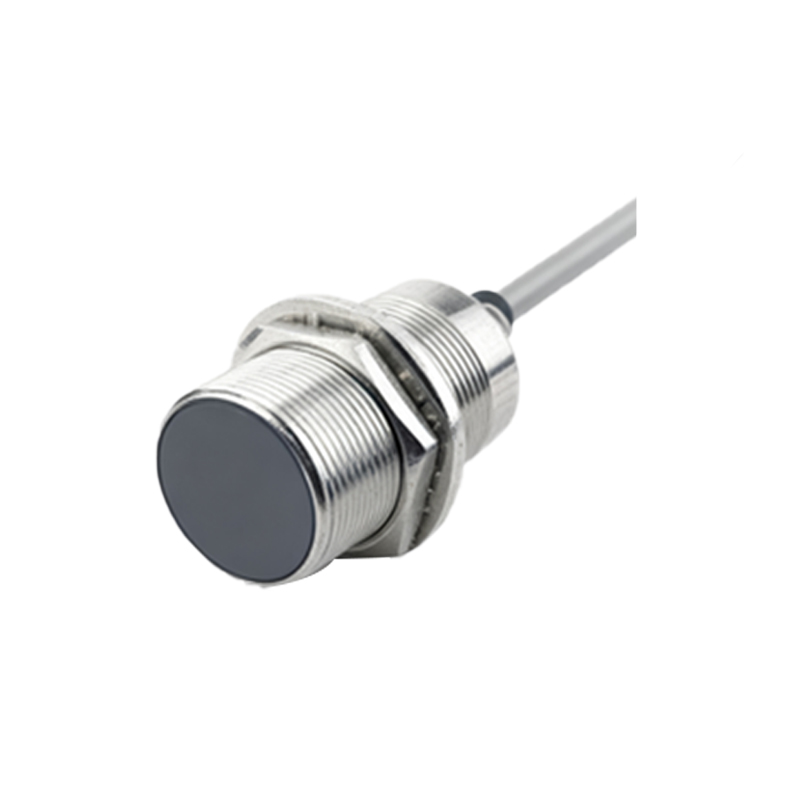
Key design considerations include the selection of IR wavelength, often around 850 nm or 950 nm, which balances detection efficiency and minimal interference. Optical components like lenses or filters may be integrated to focus the IR beam and block unwanted wavelengths. Additionally, environmental factors such as dust, humidity, and temperature can affect performance, necessitating robust housing and calibration.
Infrared proximity sensors are widely deployed across industries. In manufacturing, they are used for object detection on conveyor belts, part positioning, and safety interlocks to prevent machinery collisions. In consumer electronics, they enable features like automatic screen dimming in smartphones when held to the ear during calls, or touchless gesture control in devices. Automotive applications include parking assistance systems and occupancy sensing for airbag deployment. Their non-contact nature makes them ideal for scenarios where physical wear or contamination is a concern.
Despite their advantages, IR sensors have limitations. They may struggle with highly reflective or absorbent surfaces, and performance can degrade in direct sunlight or with interfering IR sources. However, ongoing advancements in signal processing and sensor fusion—combining IR with other technologies like ultrasonic or capacitive sensing—are enhancing accuracy and reliability.
In summary, infrared proximity sensors leverage the properties of infrared light to detect objects without physical contact. By understanding their operational principles, engineers can effectively integrate these sensors into diverse systems, driving innovation in automation and smart technology. As the demand for intuitive human-machine interfaces grows, IR proximity sensors will continue to be a cornerstone of modern sensing solutions.