In the realm of industrial automation and electronic control systems, a common point of confusion arises regarding the nature of proximity sensors and their relationship to transistors. This article aims to clarify this topic by examining the fundamental principles, components, and functions of both devices, highlighting their distinct roles in electrical engineering.
A proximity sensor is a non-contact device designed to detect the presence or absence of an object within a specific range without physical interaction. It operates based on various physical principles, such as electromagnetic fields, capacitance, or infrared light. Common types include inductive, capacitive, ultrasonic, and photoelectric sensors. These sensors are widely used in applications like object detection, position sensing, and safety systems in manufacturing, robotics, and automotive industries. Their primary function is to convert the detected presence into an electrical signal, typically a digital output (e.g., a switch signal) or an analog voltage, which can be processed by control units like PLCs (Programmable Logic Controllers).
On the other hand, a transistor is a semiconductor device used primarily for amplification, switching, and signal modulation in electronic circuits. It consists of three terminals—emitter, base, and collector—and functions by controlling the flow of electrical current between two of these terminals through a small input at the third terminal. Transistors are fundamental building blocks in modern electronics, found in everything from microprocessors and amplifiers to power regulators. They operate based on semiconductor physics, enabling precise control over electrical signals.
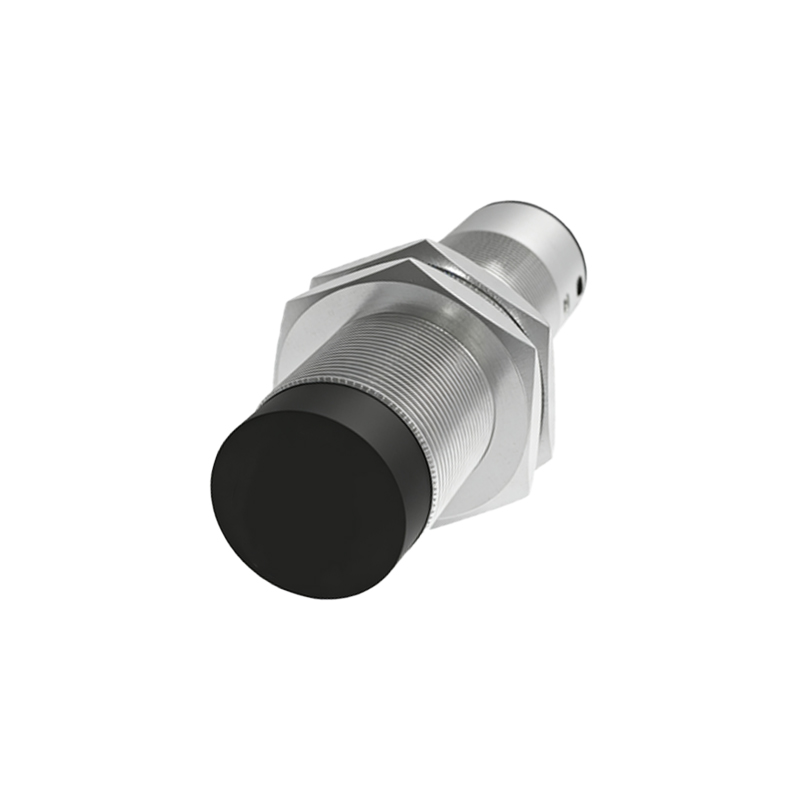
The key distinction lies in their purpose and construction. A proximity sensor is a complete system that may incorporate transistors as part of its internal circuitry. For instance, in an inductive proximity sensor, an oscillator circuit generates an electromagnetic field, and when a metal object disrupts this field, the change is detected and processed by electronic components, which often include transistors for signal amplification or switching. However, the sensor itself is not a transistor; rather, it utilizes transistors along with other elements like coils, capacitors, and integrated circuits to achieve its detection function. In contrast, a transistor is a discrete component that performs specific electrical tasks within a larger system.
Another aspect to consider is the output mechanism. Proximity sensors typically provide an output signal that interfaces with control systems, such as a PNP or NPN transistor output configuration. This terminology refers to the type of transistor used in the sensor's output stage to switch the load (e.g., a relay or PLC input). For example, a sensor with an NPN output uses an NPN transistor to sink current to ground, while a PNP output uses a PNP transistor to source current from the positive supply. This does not mean the sensor is a transistor; instead, it employs a transistor as an output driver to enhance compatibility with different electrical setups.
In summary, proximity sensors are not transistors. They are complex devices that integrate various electronic components, including transistors, to perform detection tasks. Transistors serve as essential parts within these sensors, enabling functions like signal processing and output switching. Understanding this difference is crucial for engineers and technicians when selecting, installing, or troubleshooting systems in industrial and electronic applications. By recognizing the unique roles of each, professionals can optimize system design and ensure reliable operation in diverse environments.