Electrical noise, often referred to as "noise floor" or "background noise," is an inherent and critical consideration in the application of proximity sensors. This phenomenon represents the random, unwanted electrical signals that can interfere with a sensor's ability to accurately detect a target. In industrial automation, where precision and reliability are paramount, effectively managing this noise is essential for optimal system performance.
The noise floor originates from various sources, both internal and external to the sensor system. Internally, thermal agitation within electronic components, such as resistors and semiconductors, generates Johnson-Nyquist noise. This is a fundamental physical limit present in all conductors. Shot noise, arising from the discrete nature of electrical current, also contributes, particularly in photoelectric and certain inductive sensors. Externally, electromagnetic interference (EMI) is a dominant culprit. This can be radiated from sources like variable frequency drives (VFDs), welding equipment, radio transmitters, and even other machinery on the factory floor. Conducted noise enters through power lines or shared ground paths, often coupled from these same noisy devices.
The impact of a high noise floor on a proximity sensor is direct and detrimental. It can cause false triggering, where the sensor indicates a target presence when none exists. Conversely, it can lead to missed detections, where a valid target is not registered. This reduces the sensor's effective sensing range and degrades its repeatability. For analog output sensors, noise manifests as signal instability or jitter, making precise distance measurement challenging. In digital communication protocols, noise can corrupt data packets, leading to communication errors between the sensor and the controller.
Fortunately, a systematic approach grounded in sound electrical engineering principles can significantly mitigate noise issues. The first line of defense is proper sensor selection and installation. Choosing a sensor with appropriate shielding, often designated as "EMC compliant" or with specific noise immunity ratings (e.g., 10V/m per IEC standards), is crucial. Physical installation is equally important: keep sensor cables as short as possible and route them away from high-power cables, motor leads, and other potential noise sources. A separation distance of at least 20-30 cm is recommended, and cables should never be run in parallel with power lines over long distances. If crossing is necessary, do so at a 90-degree angle.
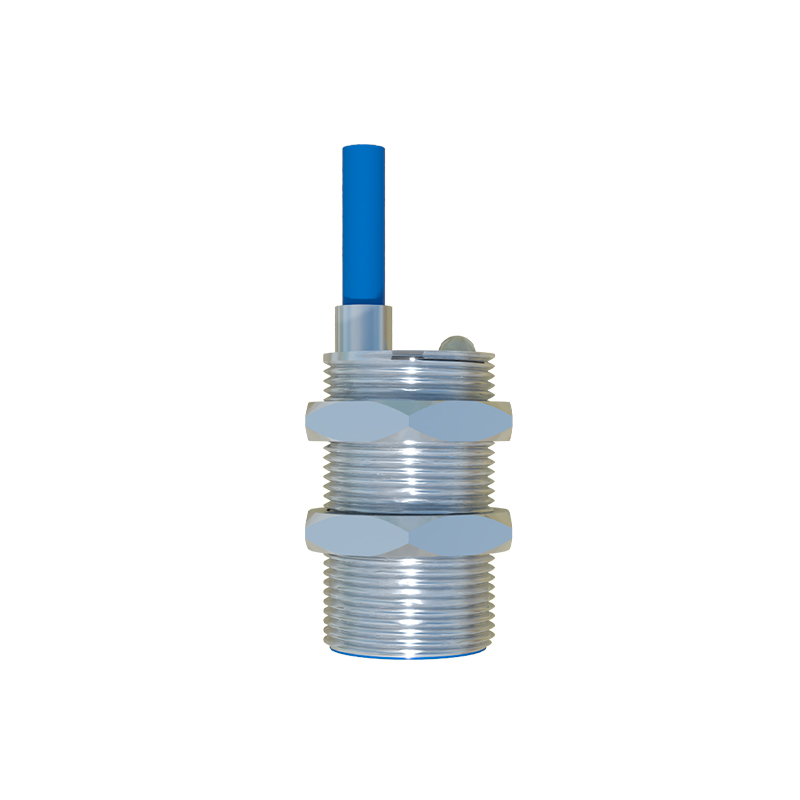
Shielding and grounding form the cornerstone of noise control. Always use shielded cables for sensor connections. The shield, typically a braided copper mesh, must be grounded properly—but at one point only, usually at the controller or system ground. A "ground loop," created by connecting the shield at both ends, can actually become an antenna for noise. For the sensor body itself, ensure a solid, low-impedance connection to the machine chassis or dedicated ground point if specified by the manufacturer.
Electrical filtering is another powerful tool. Many modern proximity sensors incorporate built-in low-pass filters that attenuate high-frequency noise. These can often be adjusted; increasing the filter time constant (response time) will improve noise rejection but may slightly delay the sensor's output signal. For DC sensors, installing a ferrite core or bead on the cable near the sensor or controller connection can absorb high-frequency EMI. In severe noise environments, external signal conditioners or isolators can be employed to break ground loops and provide clean, amplified signals to the PLC.
For the power supply, use a stable, regulated, and preferably dedicated supply for sensitive sensor circuits. Noise on the power rail can directly modulate the sensor's operation. Installing a line filter or a transient voltage suppressor (TVS) on the power input can clamp voltage spikes and filter out conducted noise.
Finally, a thorough system commissioning and diagnostic procedure is vital. Use an oscilloscope to inspect the sensor's output signal in the actual operating environment. This visual inspection can reveal the presence and characteristics of noise superimposed on the signal. Troubleshooting should be methodical: temporarily power down nearby suspect equipment to identify noise sources, check all connections for integrity, and verify grounding schemes.
In conclusion, the noise floor is not an insurmountable obstacle but a manageable parameter. By understanding its sources—thermal, shot, and predominantly EMI—and implementing a holistic strategy encompassing proper product selection, meticulous installation, rigorous shielding and grounding, and strategic filtering, engineers can ensure that proximity sensors operate with the high reliability and precision demanded by modern automated systems. A quiet electrical environment is the foundation upon which consistent and accurate sensing is built.