In modern industrial automation, proximity sensors play a critical role in detecting the presence or absence of objects without physical contact. Among various types, non-decaying proximity sensors have gained prominence due to their stable performance and longevity. This article delves into the operational principles, design considerations, and practical applications of these sensors, providing insights for engineers and technicians in the electrical and automation fields.
Non-decaying proximity sensors, often referred to as non-depleting or stable-output sensors, utilize electromagnetic, capacitive, or inductive technologies to detect objects. Unlike traditional sensors that may experience signal degradation over time, these sensors maintain consistent detection capabilities without output decay. The core principle lies in their ability to generate a stable electromagnetic field or capacitive coupling, which remains unaffected by environmental factors such as temperature fluctuations, humidity, or material wear.

Electromagnetic non-decaying sensors operate based on the eddy current principle. When an AC current passes through a coil within the sensor, it generates an alternating magnetic field. If a conductive object enters this field, eddy currents are induced in the object, causing a change in the sensor's oscillation amplitude. The sensor's circuitry is designed to monitor this change without decay, ensuring reliable detection even after millions of cycles. Key components include a ferrite core, oscillator, demodulator, and output circuit, all optimized for minimal energy loss and long-term stability.
Capacitive non-decaying sensors, on the other hand, detect objects by measuring changes in capacitance. These sensors consist of two electrodes forming a capacitor. When an object approaches, the dielectric constant between the electrodes changes, altering the capacitance. Advanced designs incorporate feedback mechanisms to compensate for any potential drift, thereby preventing output decay. This makes them ideal for detecting non-metallic materials like plastics, liquids, or granular substances in harsh industrial environments.
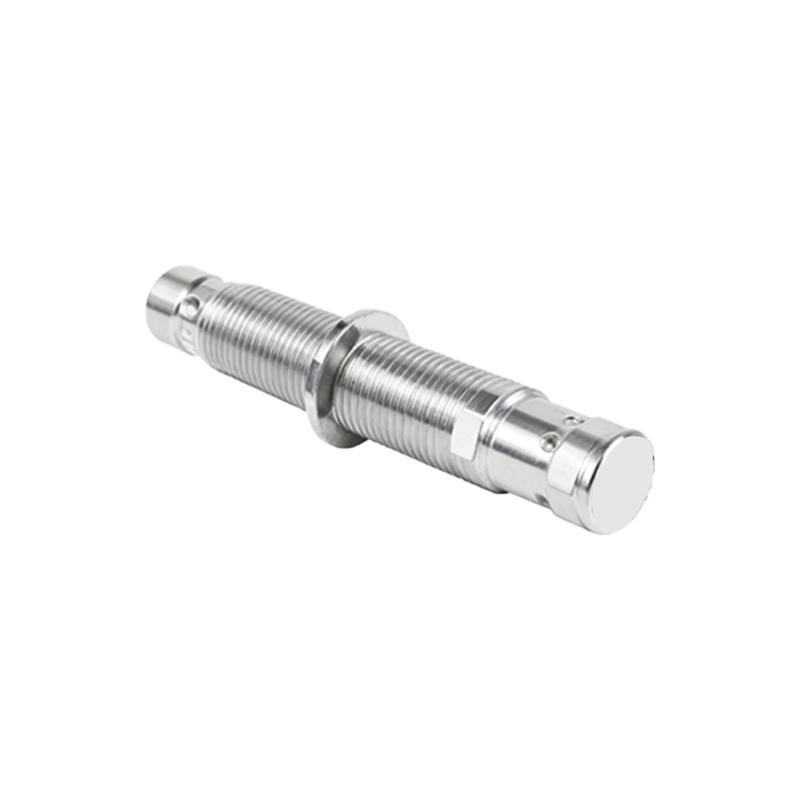
Inductive non-decaying sensors are similar to electromagnetic types but are specifically tuned for metallic objects. They rely on the principle of electromagnetic induction, where a high-frequency oscillator creates a magnetic field. The presence of a metal object alters the field's characteristics, triggering a signal. To achieve non-decaying performance, these sensors use high-quality materials such as temperature-stable coils and robust housing, along with signal processing algorithms that filter out noise and maintain consistency.
Design considerations for non-decaying proximity sensors focus on durability, precision, and adaptability. Engineers must select materials that resist corrosion, such as stainless steel or nickel-plated brass for housings. The sensing range is calibrated to avoid false triggers, typically ranging from a few millimeters to several centimeters. Additionally, these sensors are often equipped with LED indicators for status monitoring and programmable outputs (e.g., NPN, PNP, or analog signals) to integrate seamlessly with PLCs (Programmable Logic Controllers) and other automation systems.
In practical applications, non-decaying proximity sensors are widely used in manufacturing, packaging, automotive, and robotics industries. For instance, in assembly lines, they ensure precise positioning of components without wear-related failures. In hazardous environments, their sealed designs (meeting IP67 or higher standards) protect against dust and moisture, enabling reliable operation in outdoor or washdown settings. Case studies show that these sensors reduce maintenance costs by up to 30% compared to conventional sensors, thanks to their extended lifespan and minimal calibration needs.
Future trends in non-decaying proximity sensor technology include the integration of IoT (Internet of Things) capabilities for real-time monitoring and predictive maintenance. Smart sensors with wireless connectivity can transmit data on performance metrics, allowing engineers to optimize processes and prevent downtime. Research is also ongoing into miniaturization and energy-efficient designs, which could expand their use in sectors like medical devices or consumer electronics.
In summary, non-decaying proximity sensors represent a significant advancement in industrial sensing, offering reliability and efficiency. By understanding their principles—whether electromagnetic, capacitive, or inductive—engineers can leverage these tools to enhance automation systems. As technology evolves, these sensors will continue to drive innovation, supporting smarter and more resilient industrial operations. For professionals in the electrical field, staying updated on these developments is essential for maintaining competitive edge and operational excellence.